
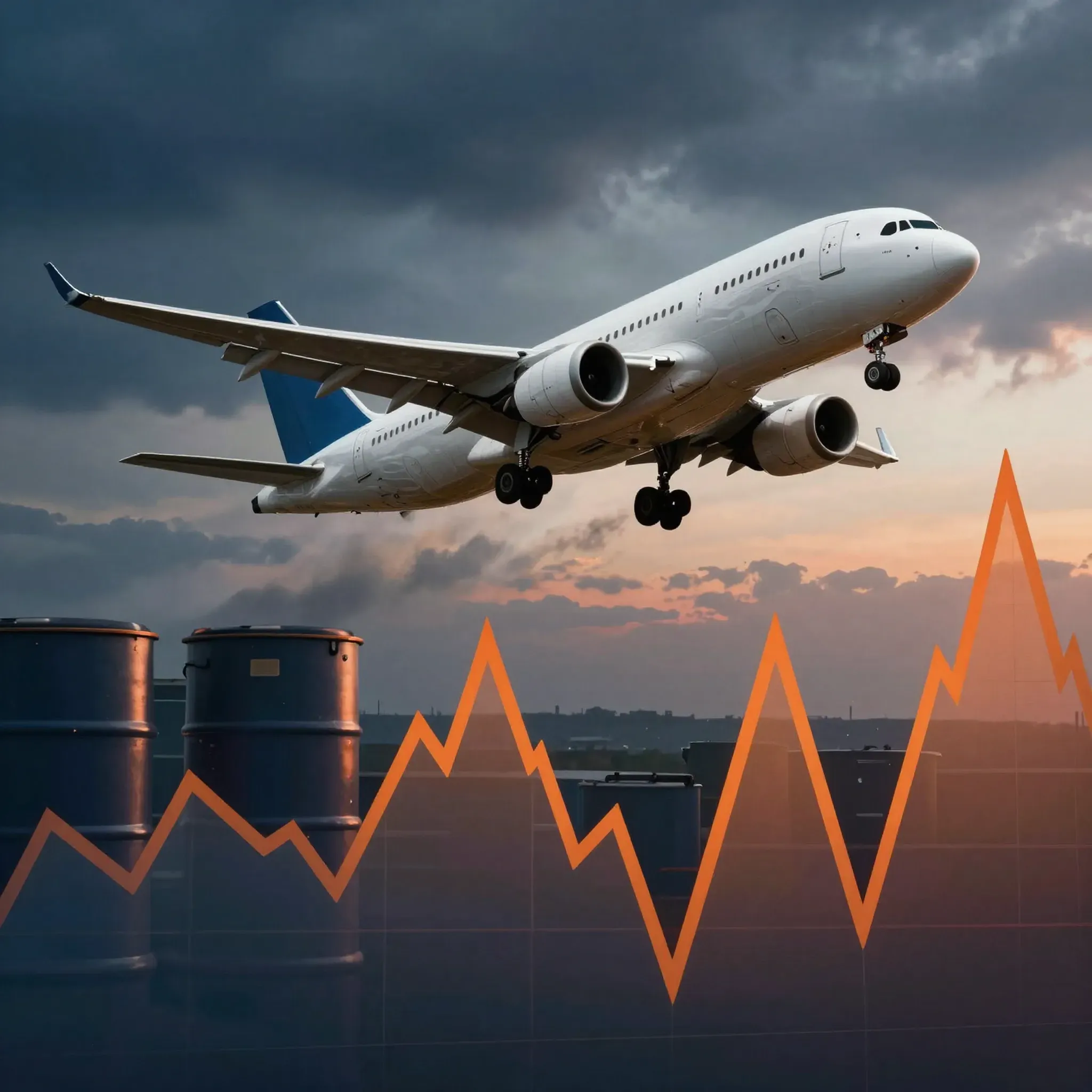
Global airlines remain highly sensitive to fluctuations in fuel prices and are not facing one of the biggest drawbacks since the pandemic recovery after 2020. With oil markets swinging dramatically amid geopolitical tensions in the Middle East, airlines are adjusting their prices to protect margins and maintaining operational feasibility.
Oil Prices Driving Airlines Costs
The ongoing conflict involving Iran and the neighbouring Middle East countries have triggered a sharp rise in the global oil markets with crude prices towards $120 per barrel at their peak. This sudden increase has directly impacted aviation turbine fuel (ATF), which is a refined fuel used in aircraft engines (Wall Street Journal). Fuel remains the most significant operating expenses for the airline industry, indicating the cost of 20-25% of the total airline operating costs, making it particularly vulnerable to rapid changes in fuel prices (Arab News). Airlines which are operating with high fuel prices on aviation fuel such as India the impact can be much worse. As a result, airlines across Asia, Europe and North America are implementing fare increases and fuel surcharges to manage the rising costs.
Airlines Passing the Cost to Passengers
Several global airlines such as Qantas and Air New Zealand have confirmed an increase in ticket prices on international flights as jet fuel costs climb (Reuters). Meanwhile, Air India has introduced a fuel surcharge across its domestic and international flights from March (NDTV). The surcharge varies depending on routes but international flights are seeing an increase from $10 to as much as $90 depending on destination and flights (NDTV).
Airspace Disruptions Adding to the Problem
Beyond fuel costs, airlines are also facing operational disruptions due to airspace closures in the Middle East. Several major flight corridors are affected by this conflict forcing airlines to reroute and fly longer routes to avoid conflict zones. This adds to the additional fuel consumption and increase in operational complexity. The particularly longer distance routes between Europe, Asia, and Australia which typically pass through Middle Eastern airspace. Major Gulf carriers such as Emirates, Qatar Airways, and Etihad normally account for one-third passenger traffic between Europe and Asia, while carrying more than half of passengers between Europe and Australia (Arab News).
Conclusion
The sharp rise in airlines fares and fuel prices reflects on the aviation industry’s response to the volatile oil markets due to the US-Iran conflict. With jet fuel price increasing and key air routes disrupted, airlines are adjusting pricing strategies to maintain profits and operational stability. If volatility persists, travellers may face prolonged period of higher ticket prices as airlines continue to manage rising operational costs. At InsightSphere, we track how geopolitical developments and energy markets can shape economic outcomes.