
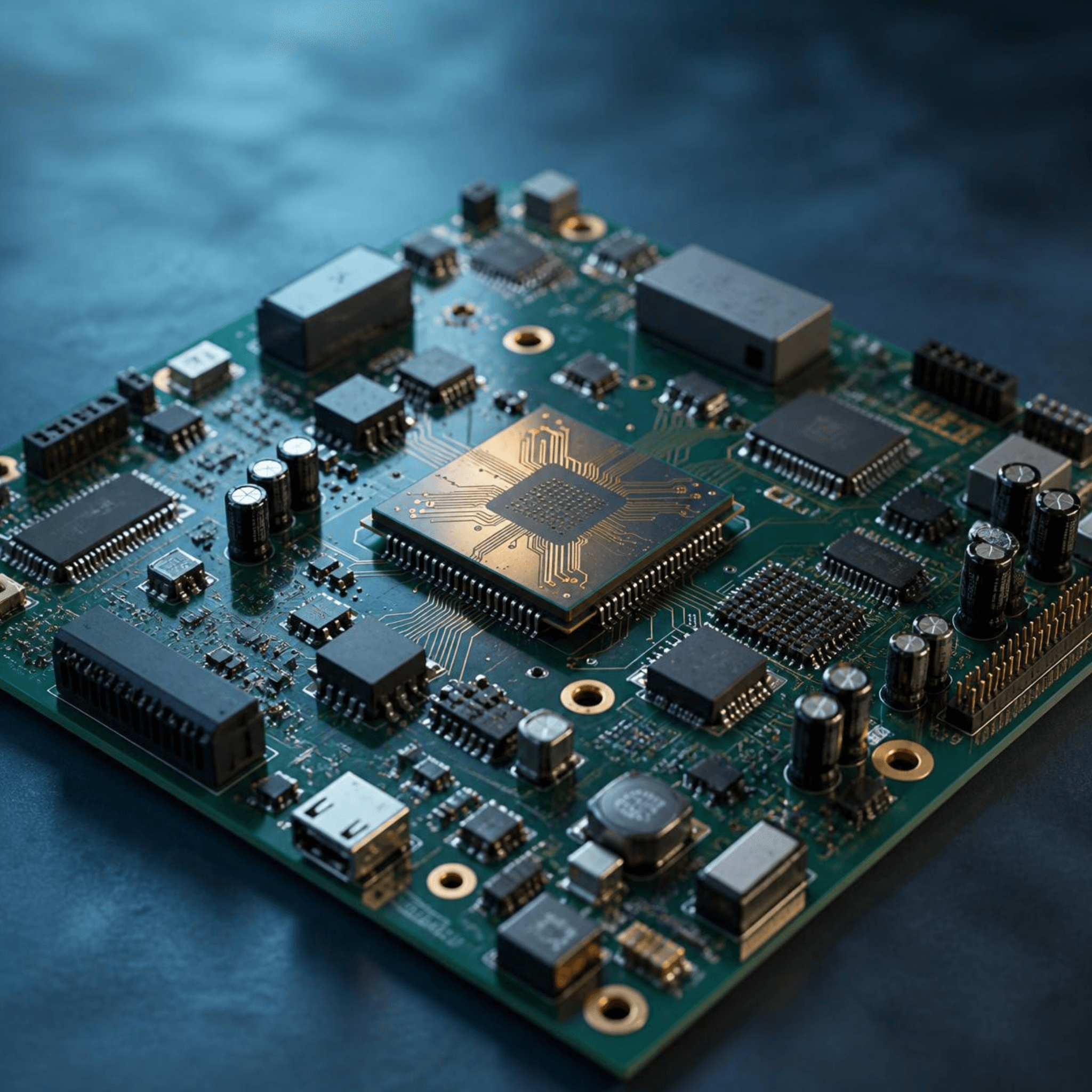
Businesses cannot build long-term AI roadmaps around hardware they may not be able to procure next quarter. So when Alibaba steps forward with a homegrown alternative capable of powering advanced AI models and autonomous agents, it is answering a question that the entire Chinese technology industry has been asking out loud. Alongside the chip, Alibaba also upgraded its Qwen large language model series and laid out a multi-year semiconductor roadmap. This is not a headline grab. It is a blueprint.
Domestic Stack Gains Momentum
When Alibaba launches a new AI chip at this level of reported performance, three times more powerful than its previous generation, the conversation around China's semiconductor gap starts to look a little different. The Zhenwu M890 is built specifically for the kind of compute-intensive workloads that modern AI demands, the training runs, the inference at scale, and the enterprise deployments that cannot afford bottlenecks. Alibaba is not just selling a chip here. It is building a full vertical stack that connects silicon to cloud to foundation models to business applications, all under one roof. The new AI server architecture it introduced alongside the chip, is part of that same logic. When you control the whole system, you stop being vulnerable to any single point of failure in the supply chain. That is a lesson Chinese firms have learned the hard way over the past few years.
Control Over Compute Deepens
Every time Alibaba launches a new AI chip with this kind of infrastructure ambition, it forces a rethink of what AI competition actually means. For a long time, the race was framed around models. Who has the best benchmark scores, the sharpest reasoning, the most capable multimodal system? That framing is not wrong, but it is increasingly incomplete. The companies pulling ahead are the ones that do not have to ask permission for their compute. Alibaba's move could reduce what Chinese enterprises pay for AI infrastructure while removing the geopolitical risk that has shadowed every procurement decision involving foreign chips. For anyone watching capital markets, the direction is clear. Sovereign AI capability is no longer a nice-to-have. It is becoming a valuation factor.
China's AI Strategy Evolves
Each time Alibaba launches a new AI chip with this level of vertical integration and long-term planning behind it, it becomes harder to dismiss China's AI ambitions as derivative or dependent. What is happening now is structural. The goal is not simply to replace Nvidia with a domestic alternative. The goal is to build an ecosystem where foreign hardware becomes optional rather than essential. That shift, if it holds, has consequences well beyond China's borders. It changes how global enterprises think about vendor risk, how investors price technology sovereignty, and how the next decade of AI infrastructure gets built. The race for AI leadership is no longer just about who writes the best model. It is about who owns the ground it runs on. At InsightSphere, we decode the strategic shifts shaping AI, capital markets, and the technology ecosystems redefining global competition.