
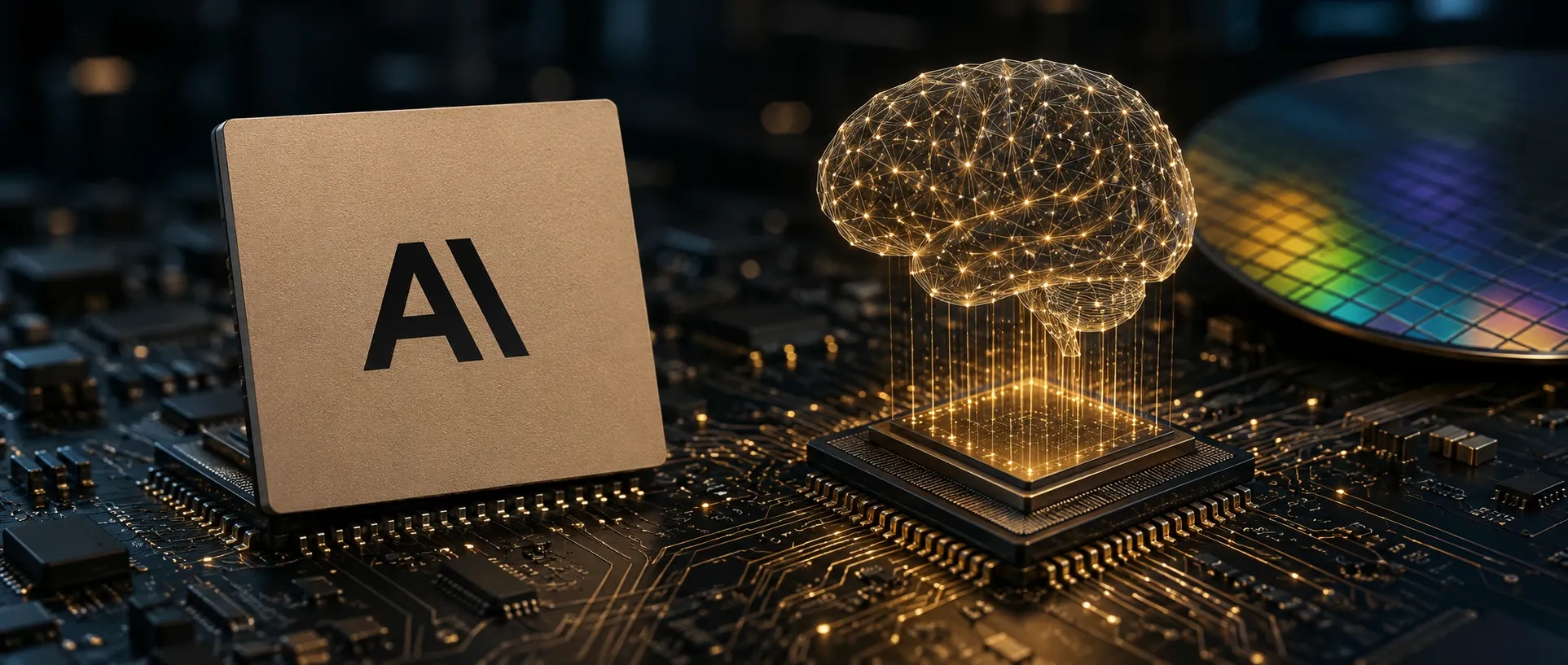
AI Labs Move Downstack
Anthropic has pulled in Amir Salek, the former Google executive who once ran Alphabet's custom silicon program and had a hand in shipping seven generations of Tensor Processing Units. He now joins Anthropic's compute team and will report directly to compute lead James Bradbury. The hire confirms what many in the industry had already suspected: Anthropic is laying the groundwork for its own semiconductor initiative, and the race among AI labs is expanding well beyond who builds the smartest model.
Custom Silicon Takes Shape
Salek spent years at Google scaling enterprise chip programs before moving to private equity firm Cerberus Capital Management, where he served as senior managing director after leaving Google in 2022. That mix of deep technical grounding and operational leadership is exactly what Anthropic needs as it starts actively recruiting for a hardware division built around Claude.
The company is not cutting ties with its current suppliers, though. Nvidia, Amazon and Google remain part of the mix, even as Anthropic works to design chips tailored to its own workloads and reduce its exposure to the supply chain bottlenecks squeezing the entire industry. Anthropic is hardly alone in this pursuit either. OpenAI has been building its own custom Jalapeno chip alongside Broadcom, with deployment expected later this year, showing this is quickly becoming a defining trend among frontier labs rather than a one-off move.
Compute Becomes Competitive Advantage
The scale of Anthropic's infrastructure ambitions is already visible in its recent deal-making. The company committed an initial $250 million to UK chip firm Fractile and has separately locked in additional data center capacity through agreements with Riot Platforms and Volta Infra Holdings. These moves suggest Anthropic is playing on two timelines at once, securing near-term compute while quietly building toward long-term hardware independence.
For Nvidia, this adds to a longer-running pattern of AI labs looking to reduce their reliance on off-the-shelf GPUs and explore custom accelerators of their own. Google and Amazon, both still counted among Anthropic's chip suppliers, face a similar tension. They remain critical infrastructure partners, yet their biggest customers are increasingly determined to own more of the stack themselves. What used to be treated as a line item on a budget sheet is turning into something companies see as a genuine strategic asset.
AI Race Goes Vertical
Anthropic's push into custom silicon is a strong signal that the next phase of AI competition will not be decided by model performance alone. It will play out across chips, data centers, and energy supply just as much as it does across algorithms. As compute becomes scarcer and workloads grow more specialised, the labs willing to invest in owning their own infrastructure, the way Anthropic is doing with Salek's hire and its Fractile and Riot Platforms agreements, may end up with a real edge in how fast and how cheaply they can scale.
As AI companies move deeper into hardware, the competitive landscape is being redrawn. InsightSphere helps you see where it is heading.