
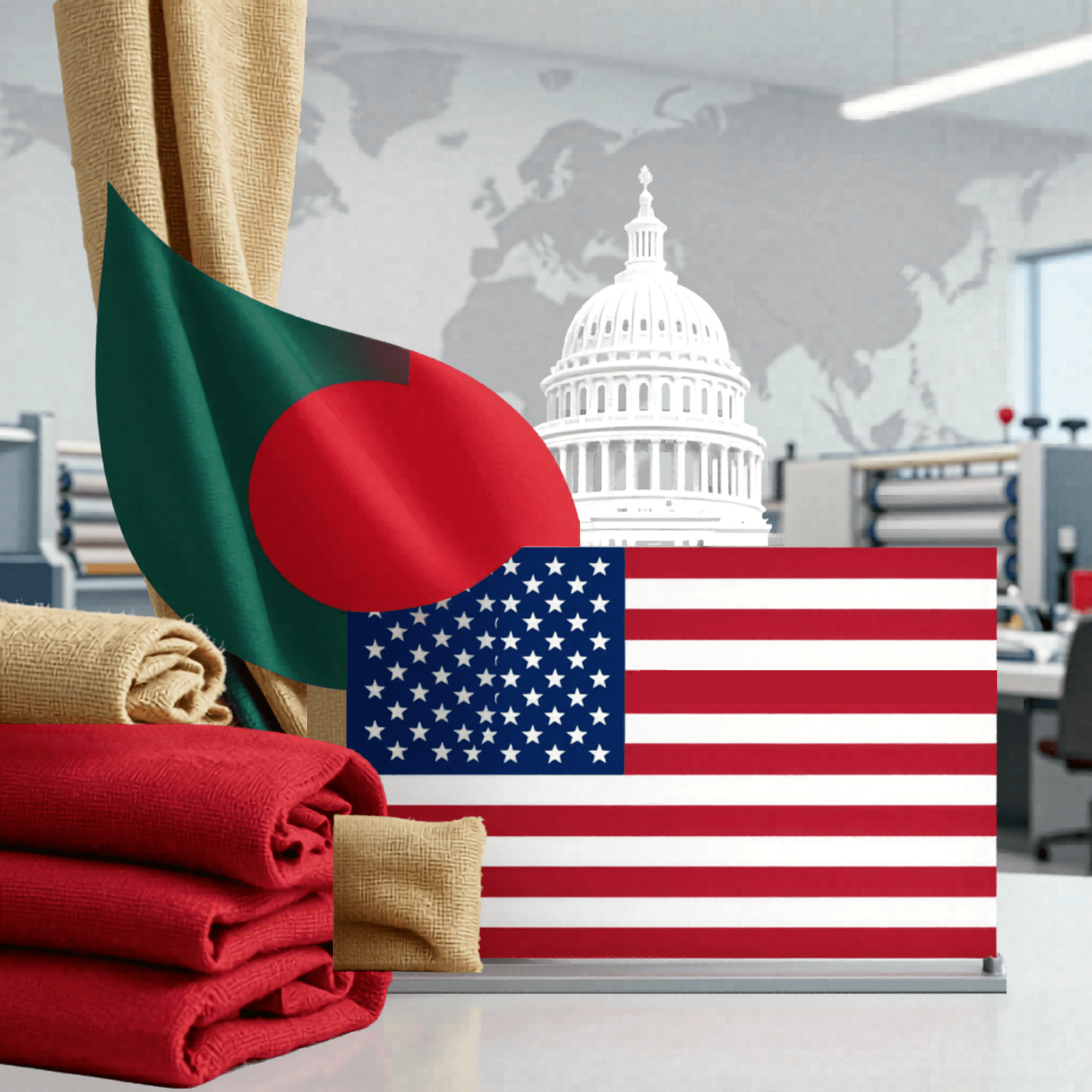
Tariff Reductions Boost Exports
The United States has reduced the tariffs on Bangladeshi textile products and apparel exports to almost 19%. However, there are certain garments made using U.S produced products and synthetic fibres will have zero reciprocal tariffs into the American market. Bangladesh’s readymade garment (RMG) sector accounts for more than 80% of the country’s export earnings. This sector alone has roughly 4 million workers and contributes to almost 10% of national GDP which is very high stakes attached to improved market access in the United States (Investing). These negotiations spanned for almost nine months, reflecting its strategic importance due to rising global trade tensions and shifting supply chain.
Strategic Trade-Offs in Supply Chains
While the tariff reduces a major concession from Washington, the agreement requires Bangladesh to provide a preferential market across the American goods. These include machines, medical devices, agricultural products such as soyabean and dairy and other materials (NST). Also, Bangladesh is committed to increasing imports of American cotton and complying with intellectual property aligned to the U.S. standards. The country has pledged to support trade reform initiatives at the World Trade Organization (The Business Standard).
U.S.-Bangladesh Cotton Supply Chain
The agreement is expected to significantly expand Bangladesh’s imports of the U.S. cotton which lies under the zero-tariff exemption. According to this estimate, Bangladesh could increase U.S. cotton imports by approximately 1 million bales in 2025 to 2.1 million by 2028. This share is crucial for American cotton in Bangladesh’s total imports by roughly 12 to 25%, import value doubling about $987 million (Financial Express). Bangladesh has started infrastructure developments including 600 acres of land for a cotton storage and logistics hub to accommodate American cotton imports.
Competitive Ripple Effects
The deal also introduces new competition within the global apparel industry especially in South Asia, where Bangladesh, India, and Vietnam dominate the textile market. The Tariff plans initially in India were reduced to 18%, placing Bangladeshi exporters under pressure to maintain cost. However, Bangladesh’s zero-tariff pathways for apparel made using American cotton could create selective advantages for the U.S retail brands seeking to reduce import costs. Bangladeshi garment exports recently recorded a strong rise of almost 13.8% year-on-year to reach $7.55 billion in one single cycle demonstrating a broader global demand for textile industries (Financial express). The U.S.-Bangladesh trade agreement marks an important milestone in the global textile trade, balancing tariff relief with supply-chain stabilization. By linking tariff exemptions to American cotton usage, the deal aims to bring a new model of trade cooperation between industries and supply chain. This arrangement is likely to serve as a template for future trade agreements developed around interdependence of supply chain rather than simple tariff negotiations. Follow InsightSphere for real-time market insights to help navigate complex global economic shifts.