
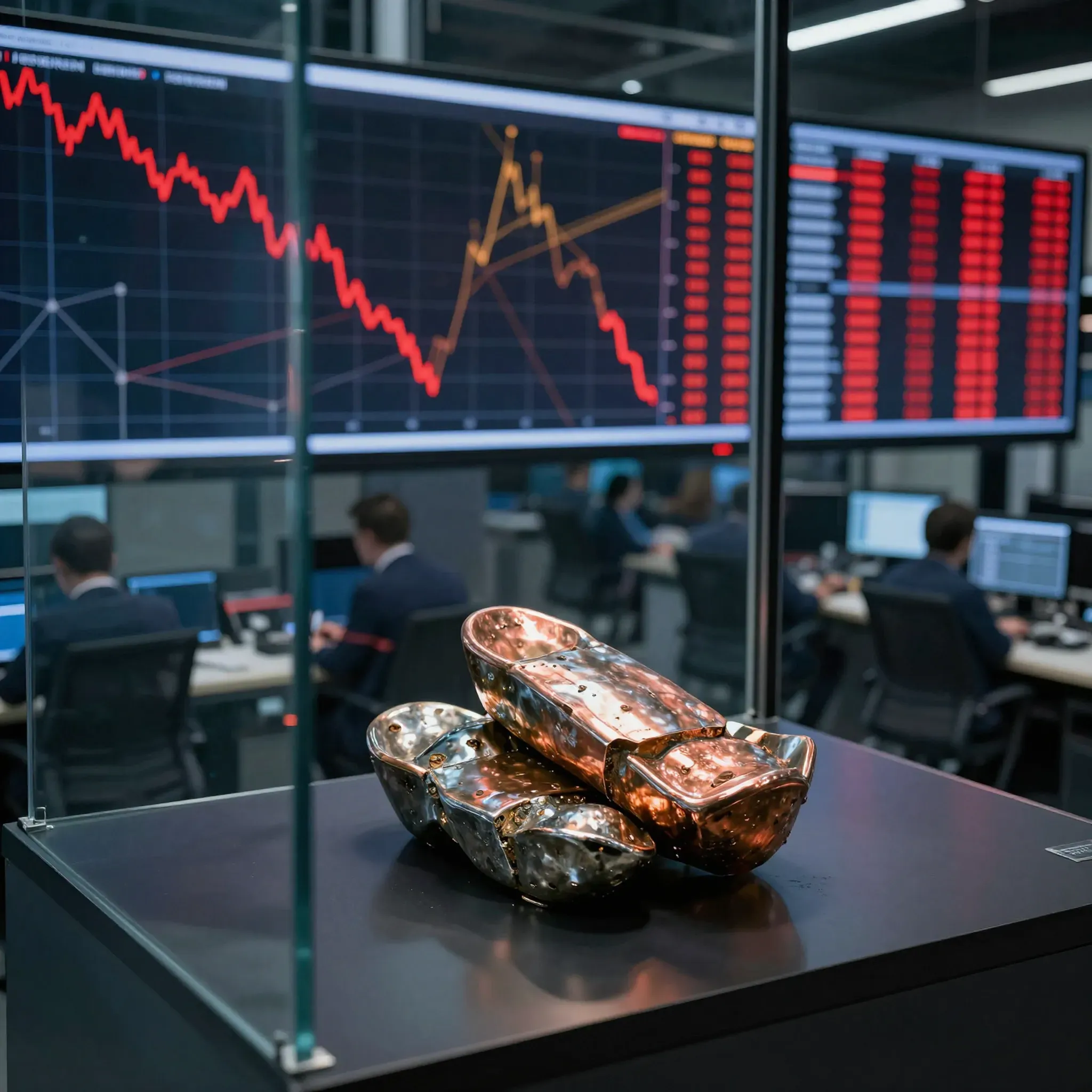
The real weight on prices is coming from something far less predictable: the ongoing uncertainty surrounding Iran and what an unresolved conflict means for the arteries of global trade. Sentiment has turned cautious, energy risks are rising, and industrial commodities are reacting to a world that feels increasingly unstable. The market is not just pricing in supply and demand anymore. It is pricing in fear.
Commodity Markets React
Across the London Metal Exchange and other global trading floors, the mood has been defensive. Copper, often the most watched of the base metals, has been sliding as traders pull back from positions they are no longer comfortable holding. Aluminium and zinc have followed closely. Much of the anxiety traces back to the Strait of Hormuz, one of the world's most critical shipping corridors, where ongoing tensions have raised serious concerns about trade flow disruptions. When that waterway becomes uncertain, oil prices climb, and when oil prices climb, the cost of running factories, smelters, and logistics networks goes up with it. A stronger US dollar has only added to the difficulty, making commodities more expensive for buyers operating in other currencies and cooling demand further. Across the board, investors are stepping back and waiting to see how things unfold.
There is a reason analysts pay close attention to base metal prices when they want to understand where the economy is heading. These are not financial instruments sitting in a vault somewhere. They go into the wires, beams, pipes, and machines that keep industrial economies moving. When their prices fall together, it usually means something is softening underneath the surface. Right now, that something is manufacturing confidence and construction appetite, both of which appear to be retreating in the face of rising costs and an uncertain global outlook. Businesses are hesitating on capital decisions. Energy costs are eating into margins. The impact of these supply chain disruptions isn’t limited to commodities; it’s spreading across the broader economy. What we’re seeing is a global system becoming more cautious, with businesses and markets preparing for a period of continued uncertainty.
Volatility Becomes Structural
What makes this moment particularly significant is not the price moves themselves but what is driving them. For a long time, commodity markets moved primarily on production data, inventory levels, and demand forecasts. Those fundamentals still matter, but they are increasingly being overshadowed by geopolitical developments that no model can reliably predict. How long the conflict around Iran lasts, whether the Strait of Hormuz remains disrupted, how central banks respond to inflation pressures, and how far the dollar runs are all variables that could shift the outlook dramatically in either direction. Industrial businesses and commodity investors are now operating in an environment where the news cycle and the price chart move together. That is a harder world to plan in, and markets are only beginning to fully reckon with it. At InsightSphere, we connect the dots between geopolitics, commodity markets, and the forces shaping global economic direction. Because in markets like these, context is not background. It is the story.