
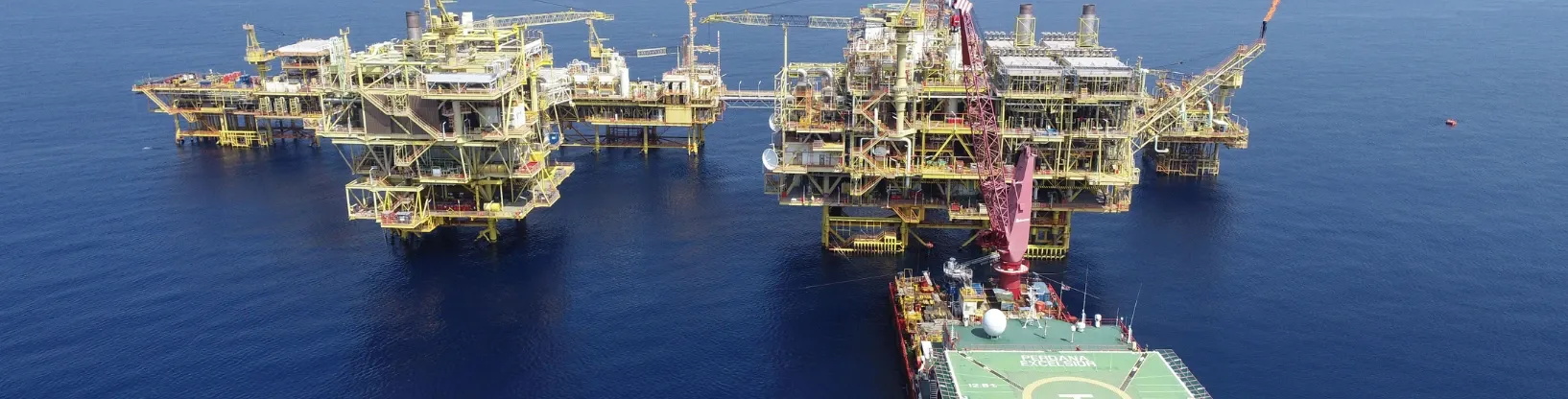
Brent and WTI extend losses
Brent crude futures fell 70 cents, or 0.75%, to $91.88 per barrel. In contrast, US West Texas Intermediate (WTI) futures declined 78 cents, or 0.90%, to $86.07 per barrel, during the trading session on Monday.
Both benchmarks had also fallen sharply in the previous session. Brent settled 5.85% lower at $92.57 per barrel on Monday, 9 November, after touching its lowest level since 31 August. WTI ended the session at $86.85 per barrel, down 4.38%.
The latest decline follows a difficult week for crude markets, with Brent losing around 16% last week, marking its steepest weekly fall since the beginning of the COVID-19 pandemic.
Trump signals restraint but keeps pressure on Tehran
Trump's comments followed appeals from regional leaders, including Qatar's prime minister, during discussions at the White House. In an interview with CNN, Trump said fresh military action was highly unlikely if Iran agreed to a strong agreement.
However, Washington has not withdrawn its pressure on Tehran. Trump said the US would continue its naval blockade of the Strait of Hormuz, a critical shipping route for global oil supplies. He also warned that the US had identified 38 Iranian bridges that could be destroyed within an hour if military action became necessary.
Supply concerns continue to weigh on outlook
The decline in crude prices also reflects improving supply expectations. According to a Reuters survey, OPEC oil production increased in October, led by Saudi Arabia, Kuwait and Iraq, despite export restrictions.
Separately, estimates cited by JPMorgan put the global oil supply surplus at 1.4 million barrels per day in October, highlighting the pressure from rising production and relatively weak demand. The prolonged disruption around the Strait of Hormuz has also affected refinery operations. Global refinery inputs fell by 4.8 million barrels per day, or 6%, in April-June 2026 compared with the previous quarter. They recovered by 1.8 million barrels per day in the third quarter as refiners adjusted to alternative supply routes.
China recorded the biggest decline, with refinery inputs falling by 2.1 million barrels per day in the second quarter and another 0.8 million barrels per day in the third quarter. India, South Korea and Japan together saw their crude inputs decline by more than 1 million barrels per day in the second quarter before recovering by 0.8 million barrels per day in the following quarter.
For now, the market appears to be responding more to hopes of diplomatic progress than to evidence of a lasting settlement.