
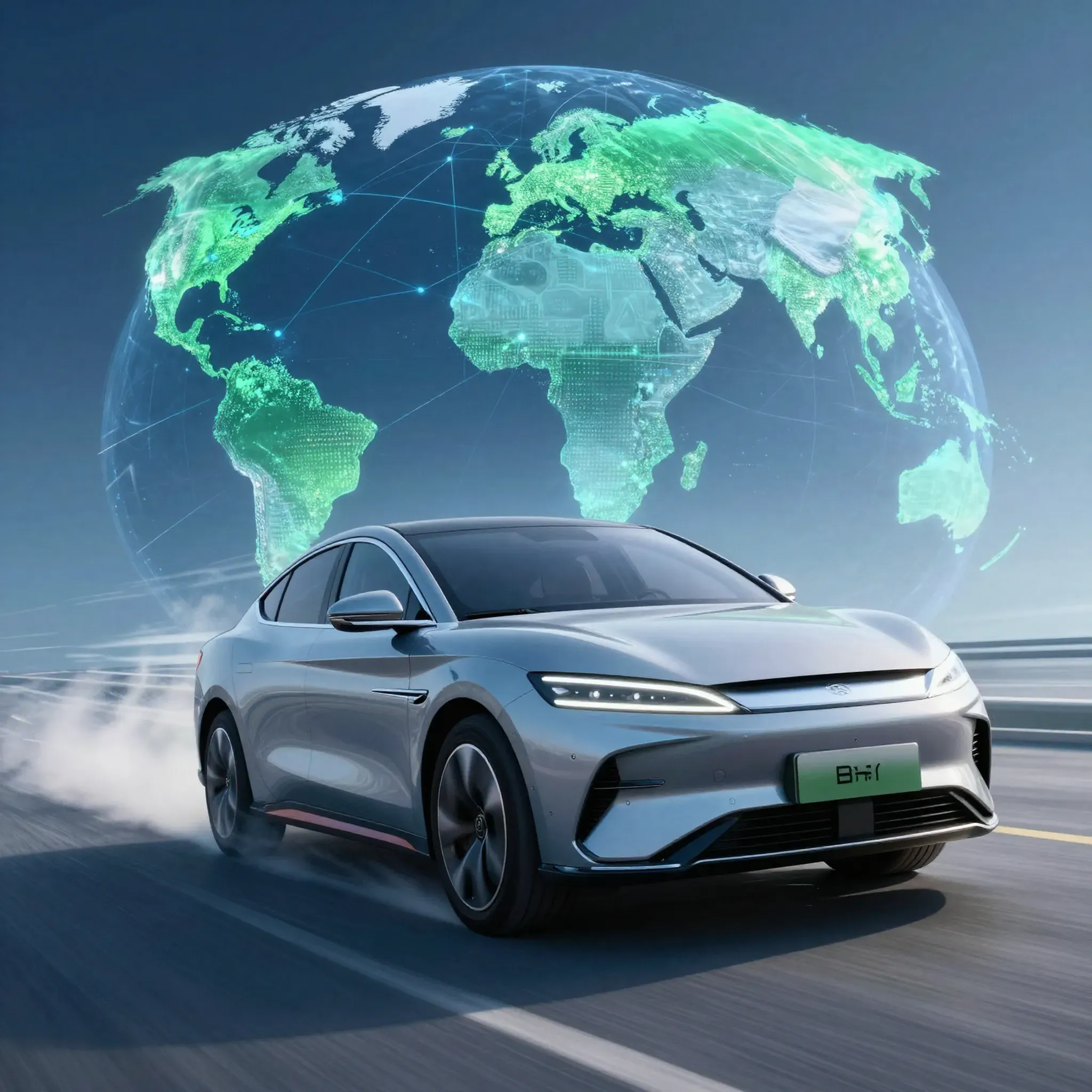
The development reflects the trend of globalization and EV competition due to scaling, cost efficiency and supply chain optimization.
Rise in Export Business
BYD’s export competitiveness is back after a strong demand in Europe, Southeast Asia, and Latin America. The company is planning on expanding its international foothold with the help of direct exports, local contacts and manufacturing initiatives. According to the International Energy Agency, global EV has surpassed 14 million units in 2023 and with conscious energy usage has seen a continuous growth expected in the next decade. With increase in domestic competition is increasing, Chinese manufacturers are looking for a more sustained growth. BYD’s ability to improve production and offer competitive vehicles has made it into a leading player in the world.
Cost Advantage
BYD’s success lies in its ability to integrate a vertically integrated model. Unlike many competitors, the company produces its own batteries, semiconductors and other components allowing it to control costs and maintain supply chain resilience. The battery itself costs a huge lump in the EV industry, roughly around 30-40% of the total vehicle cost. And BYD’s in-house battery production provides a competitive advantage offering its vehicles at a fair price challenging both manufacturers and new entrants. This cost advantage reflects on the market that affordability is a major barrier to EV adoption.
Expanding Globally
BYD has been actively entering new markets with new products offering local demand and regulatory requirements. In Europe, the company is expanding its products to passenger vehicles as well as commercial vehicles. In southeast Asia and Latin America, it is rather focussing on affordability and infrastructure increase. The company is investing heavily in local manufacturing to navigate trade barriers and reduce logistics costs. This strategy aligns with the industry shift towards localization of supply chains due to geopolitical considerations and regional trade policies.
Navigating Challenges
Despite its growth, BYD faces challenges in the international market due to trade barriers and regulatory frameworks. Several regions in Europe have different scrutiny policies and import restrictions on Chinese EVs, raising concerns about the domestic industry protection. Safety standards, emission regulations and certifications across markets need continuous adaptation of product design and manufacturing.
Future Outlook
If BYD surpasses its export assumptions as predicted, it will enforce its status as one of the leading companies in the global EV market. The company’s ability to execute this and also managing regulatory risks and competition will determine its sustainability and its growth. With increasing EV adoption, export performance will become crucial and a key indicator of this growth, operational efficiency and strategic execution. At InsightSphere, we analyse the forces that shape the global transition leading to electric mobility, and help companies like BYD redefine global competition.