
Strategic Tensions Intensify
The Iran conflict sits at the heart of this summit's renewed urgency. Both the United States and China share an interest in reopening the Strait of Hormuz, through which a fifth of global oil and gas flows passed before the conflict began. However, their paths toward that shared goal diverge sharply. The U.S. Treasury has sanctioned five Chinese private oil refiners for processing Iranian crude, and Beijing responded by publicly ordering companies to disregard those sanctions, even as its financial regulator quietly advised state-owned banks to limit new lending to the blacklisted firms. The critical question now is how much pressure Beijing is genuinely willing to apply on Tehran, and what it will demand from Washington in return. Beyond Iran, Taiwan is also set to feature prominently, with Beijing seeking assurances against further U.S. arms sales to the island, while the two sides are also expected to finalise deals spanning agricultural purchases and commercial aviation.
Markets Face Repricing
The business community is paying close attention. An American business delegation, including Blackstone CEO Steve Schwarzman and Citigroup CEO Jane Fraser, is expected to accompany Trump to Beijing. Their presence signals that corporate interests are now deeply embedded in what was once purely diplomatic terrain. Since the fragile October 2025 trade truce, U.S.-China tensions have cooled just enough to stabilise markets. Still, the United States arrives at this summit facing uncomfortable vulnerabilities in supply chains tied to rare-earth elements and permanent magnets, materials processed almost entirely in China. The two leaders are expected to seek an extension of that trade truce, which had rolled back certain export controls, including rare earth shipments to the United States, minerals essential for manufacturing everything from consumer electronics to advanced military systems. Companies across energy, manufacturing, logistics, and advanced technology are no longer simply managing economic cycles. They are navigating geopolitical terrain.
Global Systems Converge
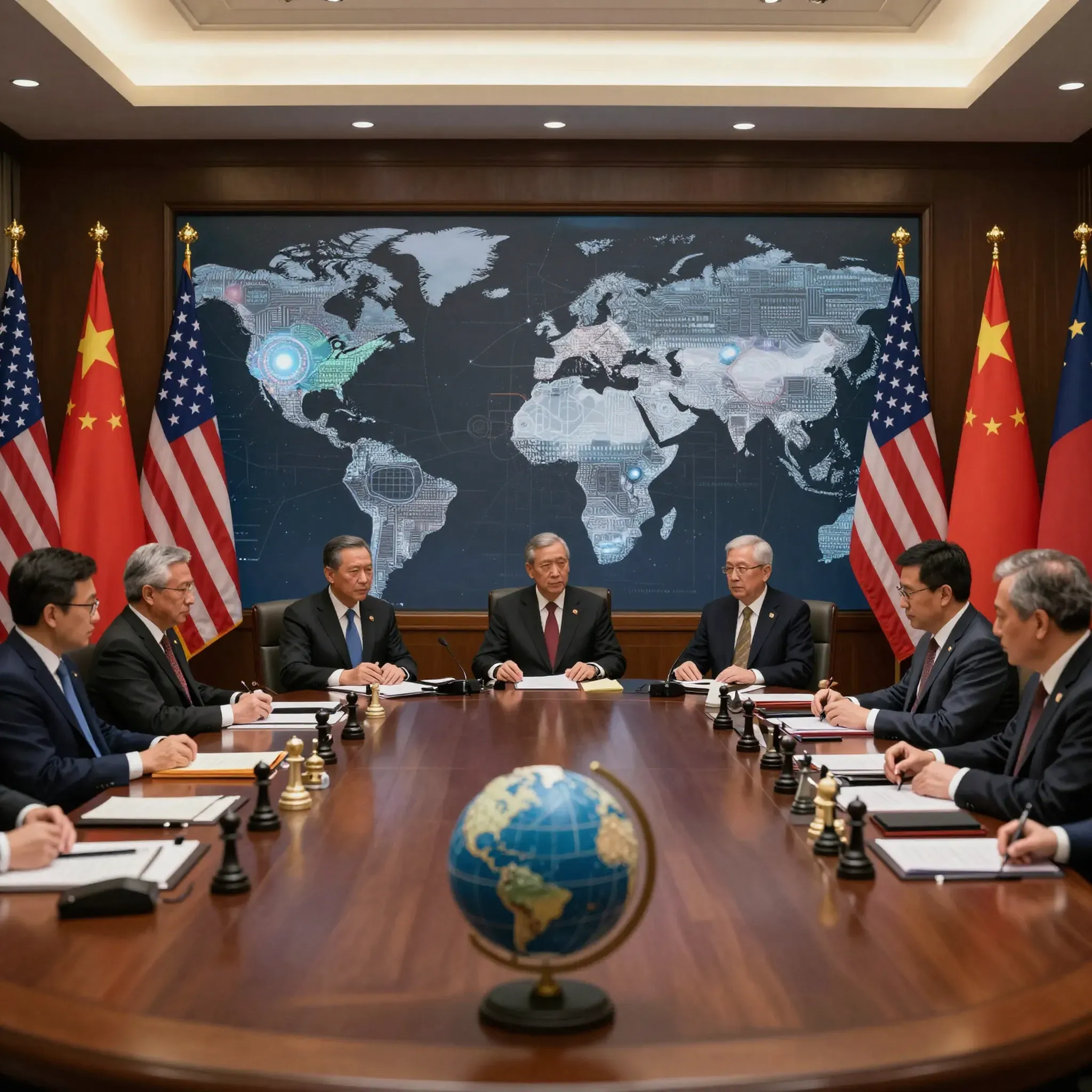
The meeting at which China confirms Xi-Trump Summit dates is more than a bilateral announcement. Borders between diplomacy, trade, and conflict have quietly dissolved, and this summit is where that reality becomes impossible to ignore. A regional conflict in the Middle East is now directly reshaping capital markets, supply chain decisions, and diplomatic timelines across the world. For business leaders and investors, geopolitical resilience is no longer an optional strategic layer. It is a core operational requirement. The decisions made in Beijing over the next two days will ripple across oil markets, semiconductor corridors, rare earth negotiations, and AI governance frameworks for months to come. The future of global stability may well depend on whether these two powers can manage strategic competition without fracturing the interconnected systems the world economy relies upon. InsightSphere decodes how geopolitics, energy security, and technology competition are redefining the future of global markets and strategic decision-making.