
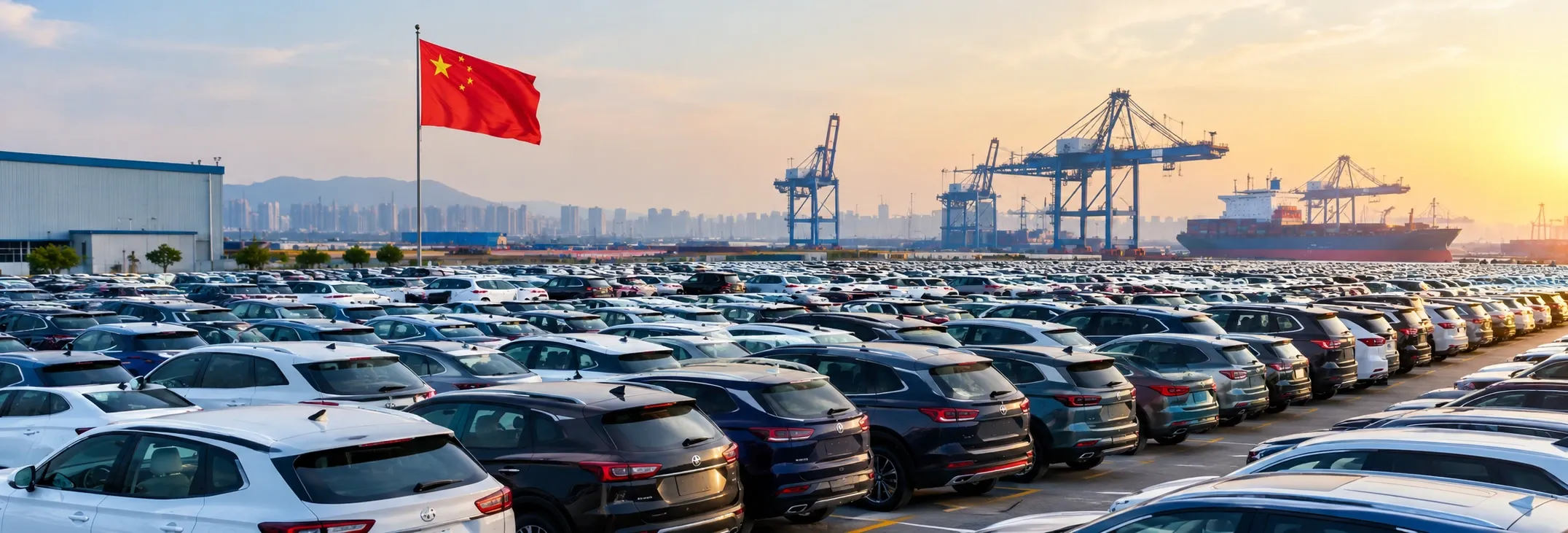
Pressure Builds Across the Auto Industry
August brought another decline in China’s auto market. Factories turned out 2.68 million vehicles, while 2.71 million were sold. Compared with August last year, output was 4.7% lower, and sales were down 5.1%.
New-energy vehicle (NEV) sales reached 1.64 million units during the month, an increase of 17.8% from a year earlier. NEVs accounted for 60.6% of total new-car sales.
Capacity Expansion Squeezes Margins
The shift is forcing manufacturers to adjust after years of capacity expansion. Reuters reported last year that Chinese automakers had production capacity equivalent to roughly twice the country’s annual vehicle output. Vehicle manufacturers’ profit margin fell to 1.5% in the first half of 2026, its lowest level in nearly a decade, according to official data cited by Reuters.
Beijing Targets Price Wars and Excess Capacity
Chinese authorities have focused on curbing “irrational competition” in the auto industry. MIIT said such competition has wasted resources and weakened incentives for innovation, with measures covering supplier payments, product quality and online marketing.
Authorities plan to strengthen industry entry and exit mechanisms, support the withdrawal of outdated capacity and encourage mergers and acquisitions. The National Development and Reform Commission also supports integrating research and production resources to reduce duplicated investment and competition between similar products.
Consolidation Could Reshape the Market
The policy shift comes as consolidation gathers pace. Reuters reported on September 15, 2026, that Guangzhou Automobile Group was planning to acquire part of FAW Group’s stake in an unnamed joint venture with an overseas-listed company, with Chinese state media identifying the venture as FAW Toyota. The potential transaction could bring Toyota’s two major Chinese operations closer together.
The deal highlights pressure on domestic and foreign manufacturers. China has more than 100 competing auto brands, while established foreign companies have lost market share to local producers such as BYD, Geely and Chery.
For investors, restructuring could reduce price competition over time, but the adjustment also carries costs for manufacturers with underused plants, weaker brands or exposure to declining segments.
Automakers Turn to Overseas Markets
Competition at home is pushing Chinese automakers to put more emphasis on overseas sales. Vehicle exports reached 1.01 million units in August, 65.3% higher than a year earlier. NEV exports grew even faster, rising 134.8%.
The government is supporting overseas expansion through investment, logistics and regulatory measures. Chinese vehicles are now sold in more than 200 countries and regions, according to the Ministry of Commerce.
Can Overseas Growth Absorb Excess Capacity?
Export growth could provide an outlet for some of the industry's excess production, but it also exposes manufacturers to tariffs, trade restrictions and political scrutiny in major overseas markets.
The immediate policy priority remains domestic: reduce inefficient capacity, limit price-driven competition and allow stronger companies to gain scale as weaker operations exit. How quickly this translates into healthier margins will depend on whether restructuring results in actual plant closures, mergers and capacity reductions.
The bigger question is whether China can reduce excess capacity at home while its automakers continue expanding their presence in overseas markets.