
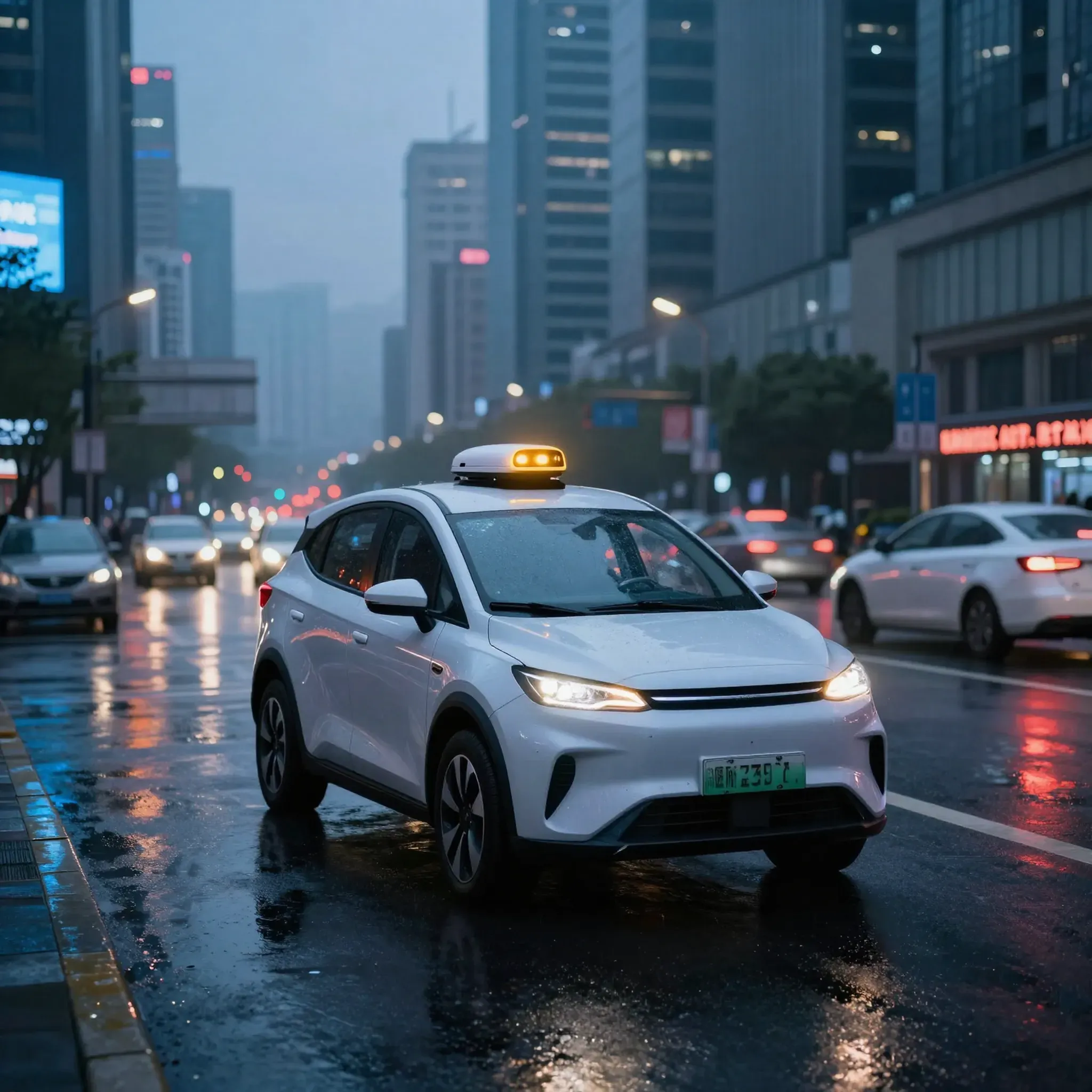
What followed was a swift regulatory response that has effectively frozen the industry's forward momentum. China has now put the brakes on new autonomous vehicle permits, and for an industry used to moving fast, that pause carries serious weight. The incident has put a spotlight on the growing scrutiny surrounding real-world AI deployment and raised fundamental questions about how fast this technology should actually be moving.
Outage Triggers Action
On March 31, more than 100 Apollo Go robotaxis stalled across city streets in Wuhan. Local police attributed the disruption to a system fault, though Baidu has yet to publicly explain what caused the breakdown. Authorities launched an investigation and suspended Baidu's local operations while the probe continues. The government's response escalated quickly from there. Three agencies, including the Ministry of Industry and Information Technology, convened a meeting with officials from cities running robotaxi or autonomous driving pilot programs, calling on local governments to conduct full self-reviews and enhance safety monitoring. Beyond the investigation, regulators moved to halt the issuance of new licenses entirely. The suspension prevents self-driving companies from adding new robotaxis to their fleets, starting new test projects, or expanding into new cities. Competitors like Pony.ai confirmed their existing services in Beijing, Shanghai, Guangzhou, and Shenzhen are continuing to operate normally under current approvals. Regulators had already mandated safety audits and tighter oversight earlier in April, meaning the freeze arrived on top of a compliance environment that was already tightening.
Regulation Tightens Cycle
Something has quietly shifted in how this industry is expected to grow, and businesses operating in this space are only beginning to feel the weight of it. For years, the autonomous mobility sector in China operated on a model built around speed, rapid fleet expansion, and aggressive city-by-city rollout. That model now faces a structural obstacle that it cannot simply outpace. Reliability and safety have become the primary barriers to expansion, not technology readiness or market demand. Companies that depend on continuous fleet growth and geographic expansion face genuine operational risk in this environment. This is not the first time Wuhan has found itself at the center of an autonomous vehicle controversy. Two years ago, residents took to the streets over fears that driverless taxis would cost human drivers their livelihoods, and regulators responded by freezing approvals in late 2024 before permitting resumed in early 2025. That episode should have been a warning sign. Regulatory intervention is no longer an outlier in this industry. It is part of the operating rhythm now. And underneath all of it is a truth no growth forecast fully captures: trust in technology that operates without a human at the wheel is earned slowly and lost quickly.
AI Deployment Recalibrates
Autonomous driving is entering a phase of measured, regulation-driven growth, and the companies that navigate it successfully will be the ones that treat safety frameworks as a strategic asset rather than a compliance burden. Future expansion will almost certainly be tied to proven system reliability and standardized safety standards that regulators can consistently evaluate and enforce. More broadly, what is happening in China reflects a shift that is underway across AI-driven industries globally. The move from experimentation to controlled integration is no longer optional. Real-world deployment has exposed the gap between what these systems achieve in test conditions and how they perform in the unpredictable complexity of daily urban life. Regulation is fast becoming the defining factor in how next-generation mobility systems scale, and the companies that build with that reality in mind will be far better positioned than those still betting on speed alone. At InsightSphere, we cut through the noise to bring you the analysis that actually matters, where technology meets policy, and where today's decisions shape tomorrow's industries.