
Energy Strategy Pays Off
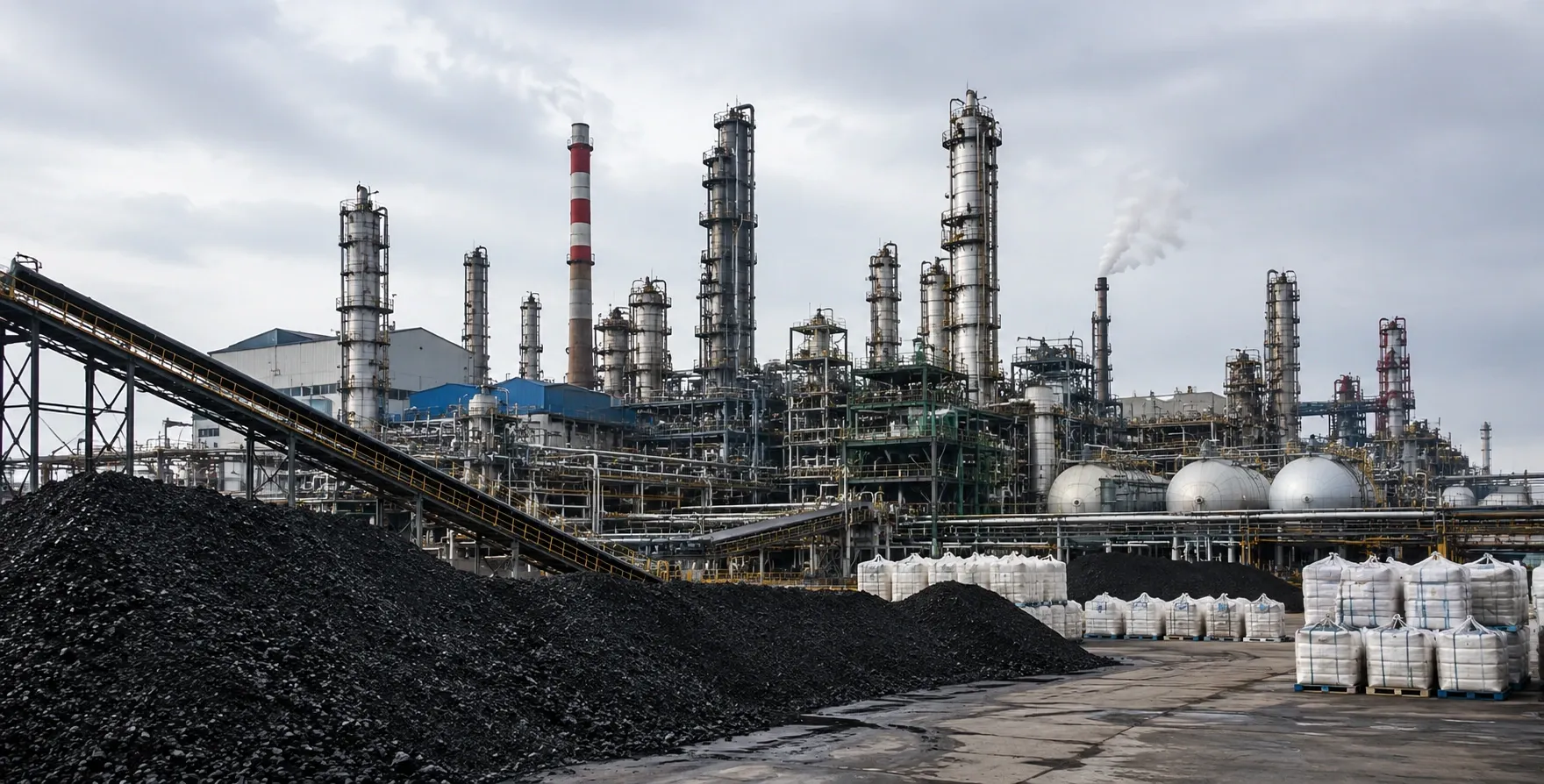
China's long-term bet on coal-based chemicals is finally showing its true value, and the timing could not have worked out better. For years, Beijing pushed its industrial sector to cut its dependence on imported crude oil by investing heavily in coal-based chemical production, even when the payoff wasn't immediately clear. That patience is now paying off. Ningxia Baofeng Energy, the country's largest player in this space, has just posted its strongest-ever profit numbers, and the reason is fairly simple. While global oil prices spiked sharply due to the conflict in the Middle East, Baofeng's coal-based production costs barely moved, giving it a massive edge over oil-dependent rivals.
Coal Replaces Imported Oil
Baofeng reported a first-half profit of 9.73 billion yuan, or roughly $1.4 billion, a sharp jump from 5.72 billion yuan in the same period last year. The real story, however, is the second quarter. As crude oil touched a four-year high amid disruptions through the Strait of Hormuz, Baofeng's net income for the quarter hit 6.1 billion yuan, its best three-month performance since going public in 2019. In its own filing, the company noted that while oil-linked feedstock costs surged, domestic coal prices rose only modestly, keeping its cost base largely intact. Coal already dominates China's chemical industry, accounting for close to 85% of the country's methanol and ammonia output, with the sector consuming around 390 million tons of coal in 2024 alone. Baofeng alone controls about 5.2 million tons a year of coal-to-olefins capacity, roughly a third of China's total, a scale advantage that few competitors can match.
Energy Security Meets Margins
What this really shows is that China's decade-long push for energy self-reliance is now translating into hard financial results. Analysts at Morgan Stanley have pointed out that Baofeng's access to cheap domestic coal means it can stay profitable even when Brent crude falls into the $30s per barrel, a level that would squeeze most oil-based chemical producers into losses. That kind of cost cushion becomes extremely valuable whenever global oil markets turn volatile. For chemical manufacturers outside China who remain tied to imported crude, competing against this structurally cheaper cost base is becoming increasingly difficult.
Resilience Becomes Competitive
Baofeng's record profits are a clear signal of how strategic infrastructure choices made years ago can quietly reshape a company's competitive position. What started as a national push for energy security has evolved into a genuine industrial advantage, one that becomes even more visible during periods of oil price volatility. As geopolitical tensions keep shaping energy markets, companies with strong access to domestic resources are likely to pull ahead of those still relying on imports.
Going forward, the real advantage may not come from producing things cheaply, but from actually controlling the resources that make cheap production possible in the first place.