
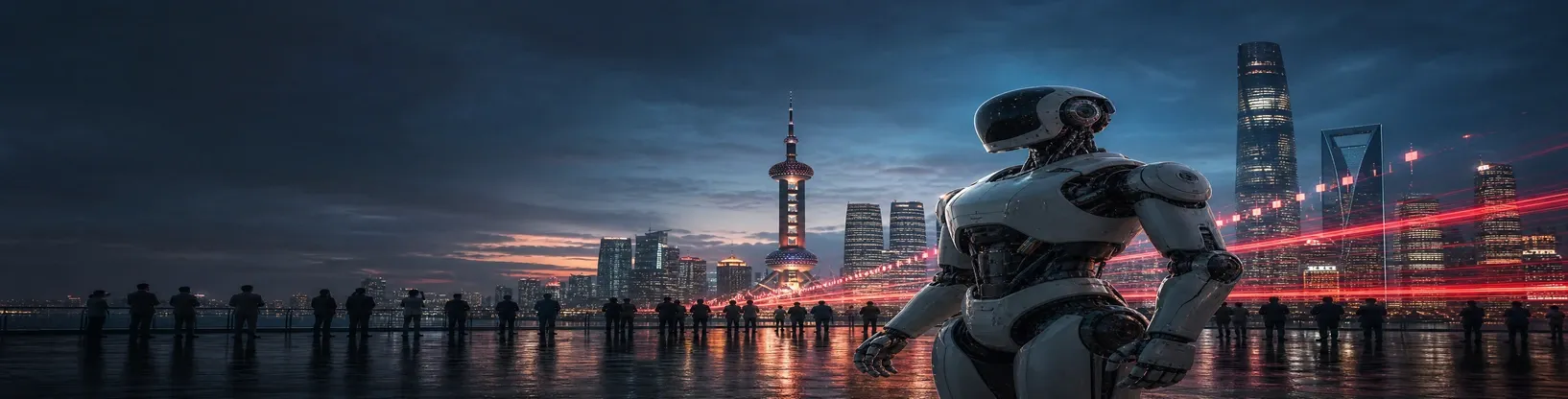
Robotics Enters Markets
Humanoid robotics has officially entered the public market. Unitree Robotics, the world's largest maker of humanoid robots, made its stock market debut in Shanghai this week, and the reaction from investors was nothing short of explosive. Shares closed their first day of trading up more than 460%, offered at 150.80 yuan and finishing at 845 yuan. The listing on Shanghai's Star Market, often described as China's answer to the Nasdaq, is being read as a milestone moment for Beijing's broader ambitions in robotics and a signal that this technology is now being priced as a serious growth sector rather than a research curiosity.
Unitree Draws Capital
Unitree, formerly known as Yushu Technology Co Ltd, was founded in 2016 and has grown into one of the few genuinely profitable players in the sector, posting a net profit of 278 million yuan in 2025 after shipping more than 5,500 humanoid robots last year. The company is based in Hangzhou, part of a so-called golden cluster zone of robotics firms that has benefited heavily from government backing. This factor helped triple the number of Chinese robotics companies between 2020 and 2024.
Unitree built its brand partly through spectacle: its G1 robots performed martial arts routines during China's Spring Festival Gala earlier this year, and its machines are currently competing in the 2026 World Humanoid Robot Games in Beijing. That visibility, paired with aggressively low pricing compared to Western rivals, has made Unitree a company investors wanted a piece of well before trading even opened.
Robotics Becomes Investable
Unitree is not the first Chinese humanoid maker to go public; UBTech listed in Hong Kong nearly three years ago, but this is the first mainland listing of its kind, and analysts expect it to act as a bellwether for the wider industry. More companies, including Leju Robotics and AgiBot, are reportedly preparing to follow with their own listings.
The competitive pressure on price is real too: Unitree's robot dogs start around $2,700, a fraction of the roughly $70,000 charged for Boston Dynamics' Spot. Meanwhile in the US, Tesla, Amazon and Boston Dynamics are all racing to bring humanoid robots to factories and warehouses, but none have matched Unitree's delivery pace. That gap has not gone unnoticed in Washington, which moved in July to restrict imports of Chinese-made humanoid and quadruped robots over national security concerns, prompting Beijing to accuse the US of politicizing trade.
Capital Follows Automation
Unitree's blockbuster debut shows that investor appetite for humanoid robotics is very real, even as experts caution that robots remain years away from reliable use in everyday homes, with battery life, privacy and durability still unresolved. For now, the immediate opportunity sits in factories, hospitals and industrial settings rather than living rooms. Whether this enthusiasm holds beyond the opening day rally will depend on Unitree and the wave of competitors behind it, proving they can turn viral demos into lasting revenue.
Follow the signals today that could define the industries and investment opportunities of tomorrow.