
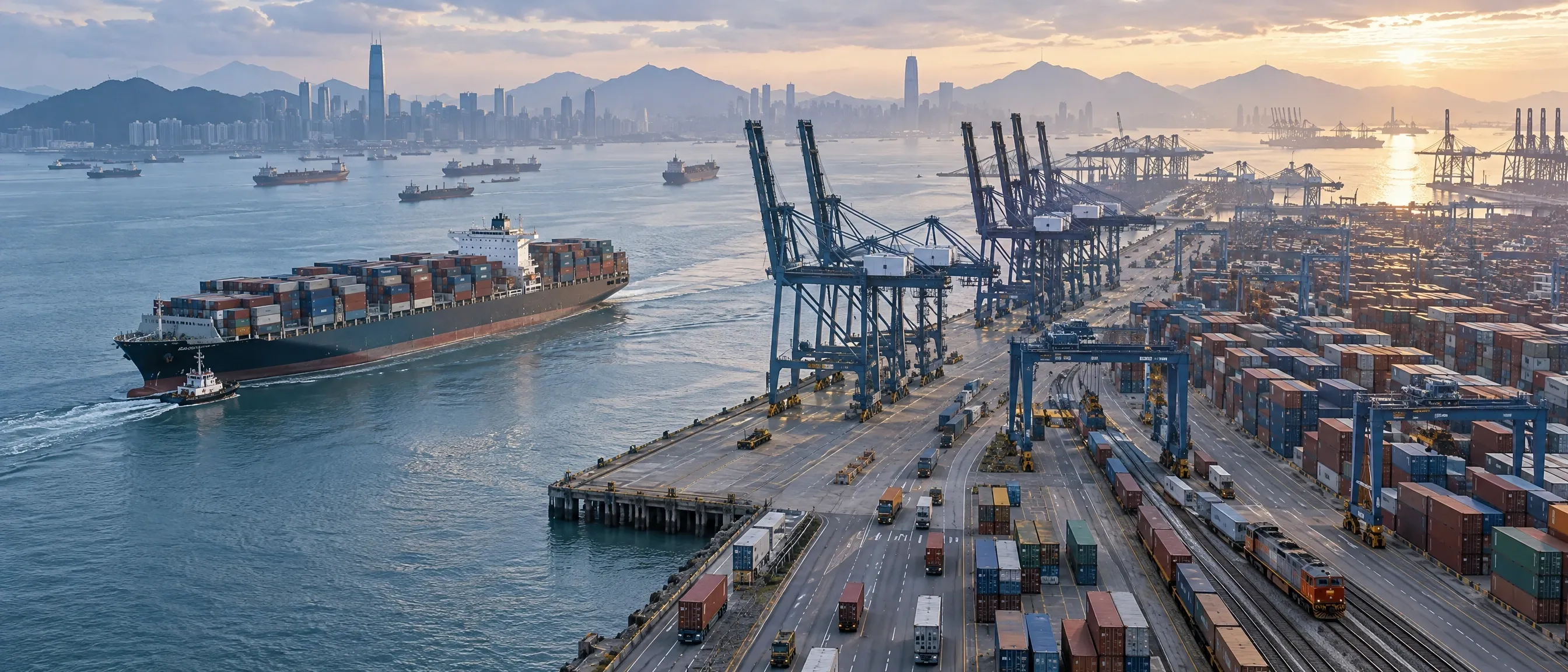
A Record Week at the Ports
Xi landed at Joint Base Andrews on Wednesday for his first US state visit in over a decade. Bloomberg linked the record port traffic to exporters moving goods before the next stage of the trade agreement became clear. The Busan truce, reached in October 2025, lowered the effective US tariff on Chinese goods from 57% to 47% and was originally set to expire in November 2026. Treasury Secretary Scott Bessent said on Wednesday that the two sides had agreed to extend it to January 10, 2027, following an eight-hour negotiating session with Chinese Vice Premier He Lifeng at JPMorgan’s New York headquarters on September 20, 2026. That session also produced a formal agreement on a US-China Board of Trade, a body first proposed during Trump’s May 2026 visit to Beijing.
August Data Set the Stage
Shipments to the US roughly doubled their growth rate in a single month, climbing 34.4% in August after managing just 17% in July, according to customs data. That was the standout in a broader export figure of 25% year-on-year growth, slightly below what economists had forecast. Imports, meanwhile, are running even hotter than exports, at 28.2%. The acceleration has come largely from demand tied to the global AI buildout, with semiconductors and computing hardware driving much of the growth. That has offset weakness in domestic demand, where a prolonged property downturn has continued to weigh on activity. More than half of the roughly 6,500 product categories China ships to the US have grown in volume this year compared with 2025, even as Washington has moved to curb low-value parcel imports from platforms such as Shein and Temu.
What the Board of Trade Still Has to Settle
Negotiators are working to define a roughly $30 billion basket of “non-sensitive” goods that would qualify for reduced tariffs under the new Board of Trade framework. Around ten product categories are reportedly under discussion, but the two sides remain divided on scope. Rare earths and other critical minerals, where China controls the bulk of global refining capacity, remain a separate and unresolved point of friction: Washington wants secure access, while Beijing wants assurances that export licensing will not be used as a bargaining chip. Analysts have suggested Xi has little reason to rush into concessions, given the strength of China's current trade position. Scott Kennedy of the Centre for Strategic and International Studies has instead pointed to Trump's side of the equation, saying he remains unsatisfied with Beijing's offers and wants to keep pressure on. Wu Xinbo of Fudan University described the relationship as having become “more transactional” rather than resolved.
Exporters won't know which goods qualify for the lower tariffs until negotiators finish that list, and they have until January 10, 2027, to finish it. What happens to shipping volumes after that date is the part nobody at this week's summit answered. This is the second time in under a year that Washington and Beijing have pushed this deadline forward rather than resolved it. Whether it holds a third time is the question left open.