
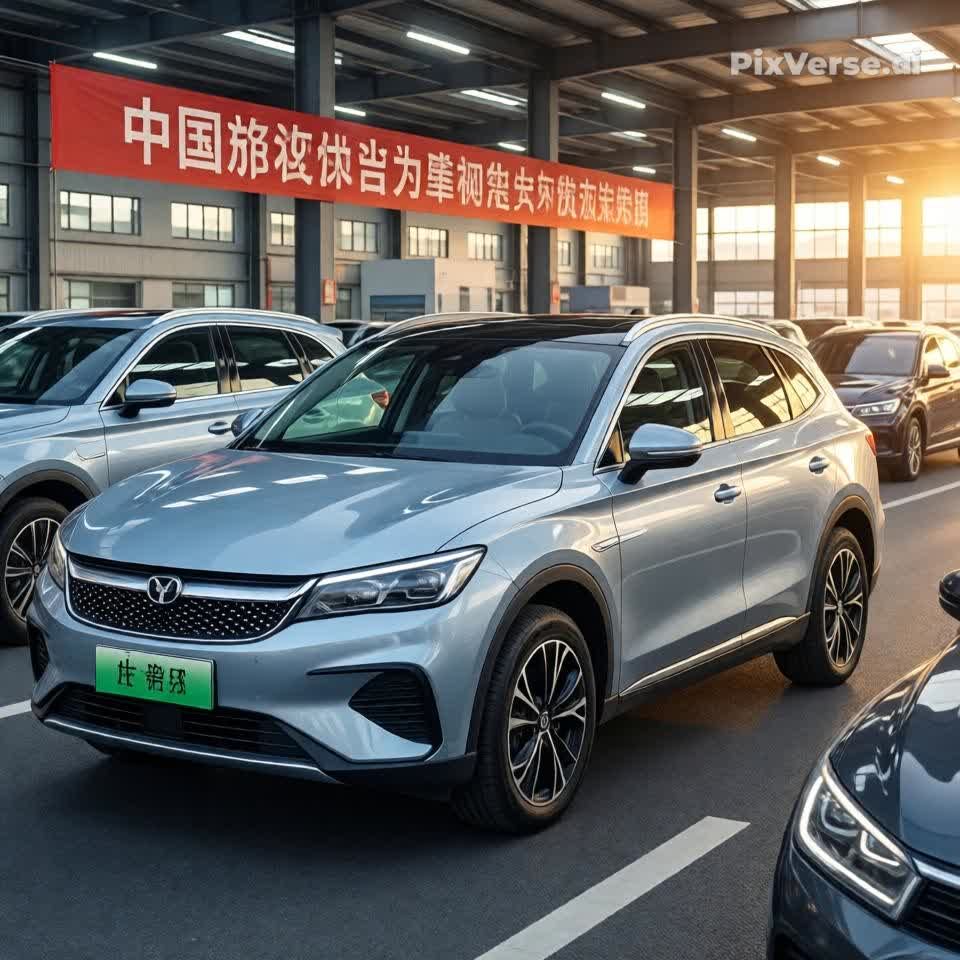
China’s EV market has long been viewed as a global pioneer in the industrial sector accounting for a majority share of global production and sales. According to industry data, manufacturers have produced and sold almost 50% of electric vehicles of total automobiles for a single country in 2025 (Business Standard). However, this success came with fierce competition among hundreds of domestic EV brands and triggered a massive price cutting. This strategy, according to authorities, has corrupted profits and led to unsustainable rat-race competition. At the core of China’s concerns is the accelerated cut-throat competition due to rise in prices and discounting fearing oversupplying. Industry experts highlight that major price reduction strategies result in smaller profit margins squeezing small manufacturers out of the market. The government policy comes due to weak growth graphs. The deflation in the country’s economy grew roughly 5% in 2025, and is still struggling with the downwards rice pressures. This decision is linked with regulatory push in Beijing's broader efforts to balance prices and mitigate deflation risks, in the declining EV sector (Bloomberg).
Economic Stakes in the Sector
The intensity of competition has an adverse effect on the performance of firms such as BYD, which will become the world’s largest EV manufacturer in 2025, is now facing price challenges and slowing domestic demand. Industry stakeholders have highlighted that continuous price cutting, while beneficial for short-term growth, is dangerous for long-term structural benefits. (Investing) The China Association of Automobile Manufacturers (CAAM) and other industry associations have flagged that disorderly competition could impact supply chains stability and dealer networks, affecting consumer confidence (Business Standard).
Policy Measures while Balancing Growth
During the state council meeting, China’s leadership suggested several reforms designed to provide a framework for unbiased competition. The core policies of which are increased price monitoring, strengthening cost investigations to minimize low-cost prices, and supplier payment commitments. Regulators emphasized on adoption of technological advancements providing competitive edge and measurable outcomes (The Business Times). While China’s strategies reflect market concerns while maintaining the automobile sector’s dynamic and systemic risks. The EV industry plays a significant role in China's economic growth, particularly towards the carbon-neutral transport and sustainability approach of the country under the Made in China 2025 initiatives. China’s EV policies target pricing practices, cost transparency and sustainability. Analysts suggest this is a gradual shift from high production growth to technology-driven growth trajectories (Bloomberg). Yet, implementation remains a major roadblock particularly in industry navigating slow demand and evolving customer needs. Beijing’s vow to address competition highlights a major moment in the evolution of the world’s largest EV market, signalling a balance between economic stewardship and industrial strength. As regulators and industry leaders work towards a sustainable future, the global automobile industry is transforming with implications beyond China’s borders. Follow InsightSphere to interpret China’s EV policies reshaping the global automotive industry.