
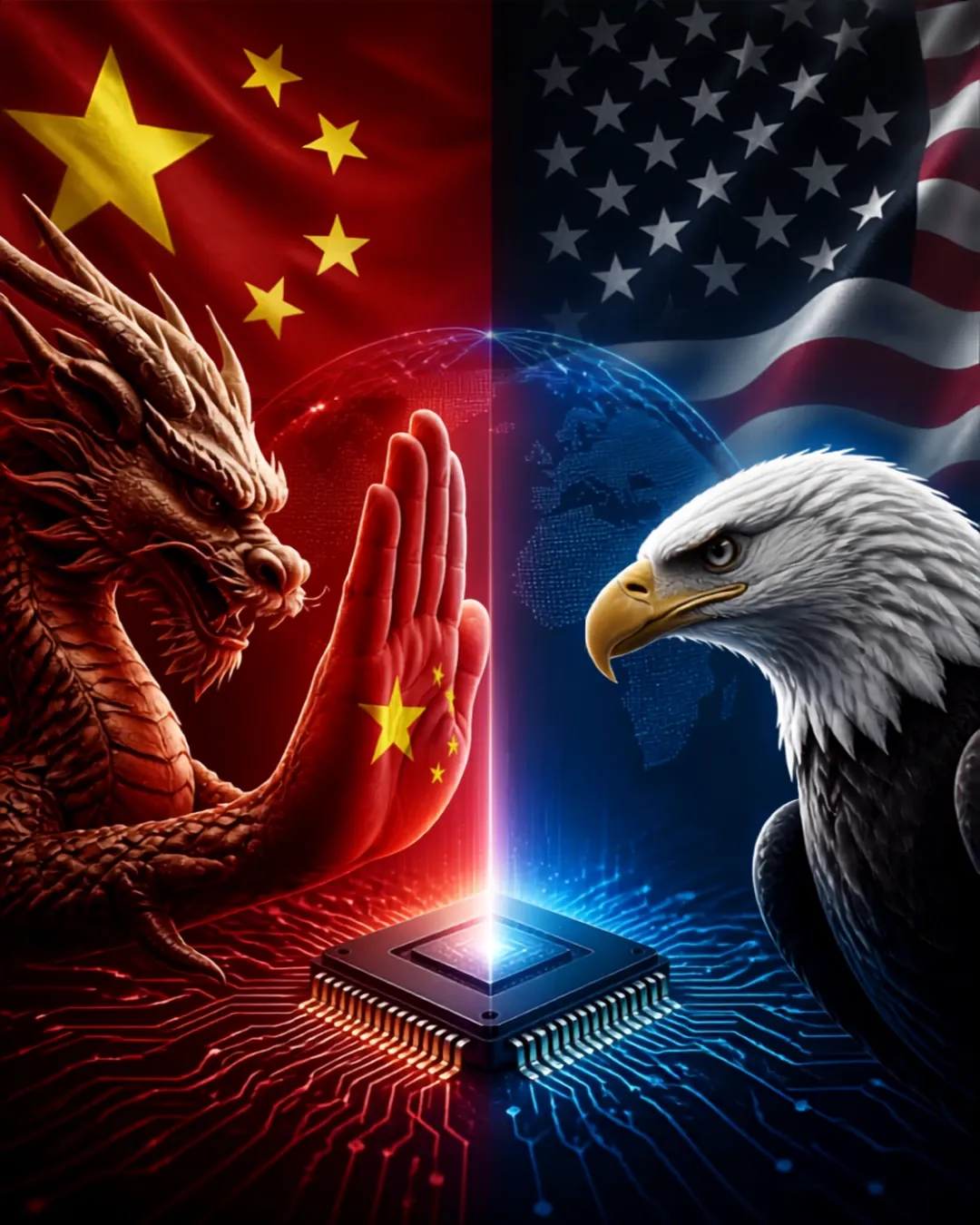
Technology Rivalry Deepens
China has issued a fresh warning to the United States, cautioning that the expansion of technology restrictions threatens to derail the delicate progress made toward stabilizing bilateral relations. In a commentary published this week, the People's Daily, the official mouthpiece of the Communist Party, accused Washington of engaging in what it called unilateral bullying, pointing directly to the FCC's recent move to tighten restrictions on foreign-made robots and power inverters, two sectors where Chinese manufacturers hold a dominant position globally.
Diplomatic Pressure Intensifies
The commentary, credited to Zhong Sheng, a byline long used by Beijing to voice its official stance on foreign policy matters, argued that measures framed around national security or non-discrimination are, in practice, targeted efforts to suppress Chinese companies and their products. The timing is notable. The FCC is reportedly drafting an order that could ban Chinese-made data centre components altogether, and regulators are also weighing restrictions on new models of Chinese optical transceivers, the components responsible for enabling high-speed data transfer within and between data centres.
A separate report from the House Select Committee on China added further pressure, revealing that regulatory gaps have allowed 3 previously blacklisted Chinese telecom firms to maintain indirect access to America's network infrastructure. All of this arrives just weeks before Xi Jinping's expected US visit, a trip many had hoped would build on the momentum from the two leaders' May summit in Beijing.
Supply Chains Face Strain
Markets reacted almost immediately. Shares of Zhongji Innolight, a major Chinese optical equipment maker, fell as much as 14% in Shenzhen trading before paring losses, while competing suppliers in the US, Europe, and Japan saw gains, a clear signal that investors are already pricing in a shift away from Chinese vendors. Yet the picture is more complicated than it appears. Chinese firms currently supply over 50% of the global high-speed transceiver market, meaning cloud providers may have few realistic alternatives in the near term. This gap could ultimately temper how aggressively these restrictions are enforced.
There is also the question of circumvention, since Chinese manufacturers could reroute production through Southeast Asian factories, depending on how regulators define a Chinese-made transceiver. China exported roughly $61.6 million worth of transceivers to the US in June alone, just 8.7% of its worldwide shipments and only 0.2% of its total exports that month, yet shipments still rose 27% year on year in H1. Malaysia has meanwhile emerged as the top destination for these exports, receiving $260 million worth in June alone.
Innovation Becomes Leverage
What is unfolding is no longer a simple trade disagreement. It has become a broader contest over who controls the infrastructure powering the next generation of digital technology. As Washington expands its scrutiny and Beijing signals that patience has limits, technology policy is increasingly functioning as a lever in the wider relationship between the two economies, one capable of reshaping global supply chains long before any tariff ever does.
As technology policy reshapes global competition, InsightSphere delivers the market intelligence business leaders need to stay ahead.