
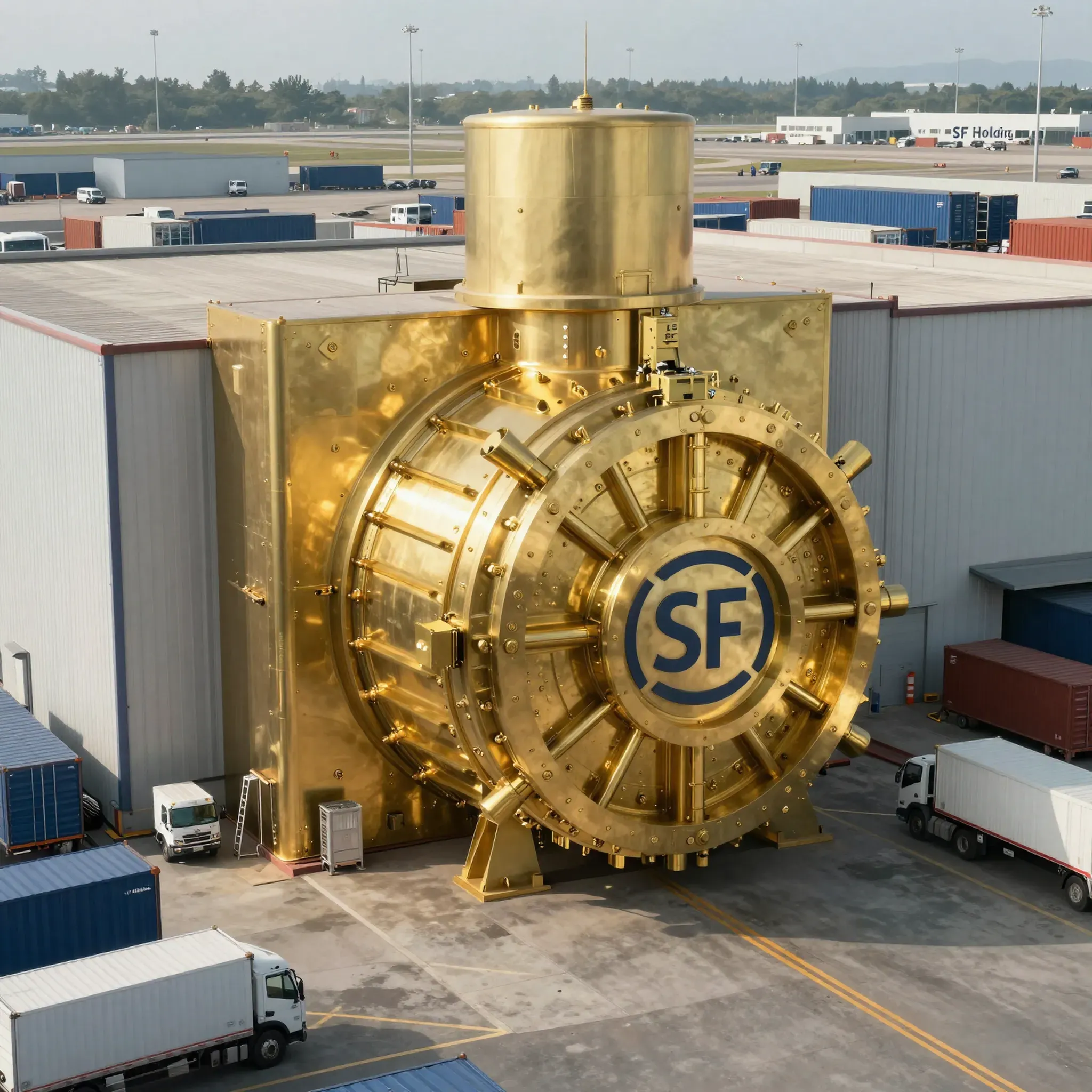
The move positions SF Holding at the intersection of two powerful trends: the global rise in physical asset demand and Hong Kong's accelerating push to become Asia's foremost gold hub. This is not a company chasing novelty. It is a company reading the infrastructure opportunity correctly.
Premium Logistics Expands
SF Holding's vault entry falls amid a deliberate, government-backed effort to transform Hong Kong's role in global bullion markets. Hong Kong has secured the backing of major international and Chinese state-owned banks, including HSBC, Standard Chartered, Bank of China, and ICBC, as part of its push to develop a gold clearing system and attract institutional participation from central banks and sovereign buyers. The city is not building around retail investors. It is constructing the plumbing for institutional-grade custody, settlement, and trade, and private operators like SF Holding are stepping in to fill the physical infrastructure gap. What makes SF Holding's move feel earned rather than opportunistic is that the company is not starting from zero. It already operates bonded warehouses, secure transport corridors, and cross-border logistics at a significant scale. Repurposing that muscle for high-value asset storage is a natural extension, not a leap. Gold has nearly doubled in value over the past two years, climbing past $3,700 an ounce, with Goldman Sachs projecting it could reach $5,000 if even 1% of privately held Treasury holdings shifted into bullion. In that kind of market, reliable and well-located storage stops being a background service and starts being the product itself.
New Margin Frontiers
For any logistics firm navigating thin margins and intense competition in its core delivery business, gold custody offers a refreshingly different equation. Institutional clients such as banks, commodity traders, and wealth managers are not shopping on price. They are looking for operational credibility, regulatory compliance, and the confidence that their assets are genuinely secure. SF Holding can offer all three without having to reinvent itself entirely. Hong Kong is also intensifying its rivalry with Singapore, which is simultaneously expanding its own gold storage capacity and working with banks including JPMorgan and UBS to build bullion liquidity and attract central bank deposits. The race to become Asia's dominant bullion hub is real, and the companies and cities that establish trusted custody infrastructure early will be difficult to displace later. Reputation in this business compounds slowly and erodes fast.
Geopolitics Shapes Infrastructure
There is a larger story here that goes beyond one company opening one vault. China's broader strategy, which includes the Shanghai Gold Exchange launching its first offshore vault in Hong Kong and the People's Bank of China easing restrictions on gold imports, is designed to build a financial system with greater independence from the dollar and more international reach for the yuan. SF Holding's vault, whether by deliberate alignment or commercial instinct, fits neatly inside that architecture. The companies that will matter most in the next decade of global finance are not always the ones issuing the assets. Sometimes they are the ones deciding where those assets live, how they move, and who gets to touch them. SF Holding just put its hand up for that role. At InsightSphere, we decode the market shifts where logistics, finance, and strategic infrastructure begin to converge, shaping the next era of global business.