
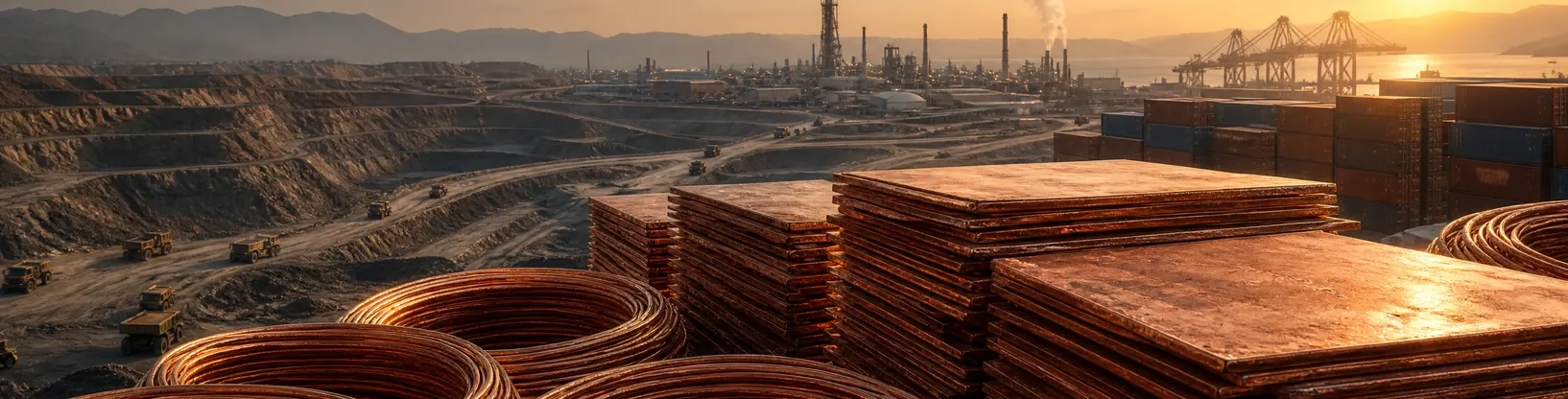
Copper Tests Historic Highs
On Wednesday, copper climbed for the fourth day in a row, moving closer to its all-time high as traders kept on dealing with the tight short-term supply. Benchmark three-month copper on the London Metal Exchange increased by 0.4% to $14,410.50 per ton, getting nearer to the record intraday level of $14,527.50, which was reached as far back as January. The metal has now risen by about 16% since the beginning of the year, a trend that is due to both real physical scarcity and the market still being caught up with the dramatic price squeeze from last week.
Physical Supply Remains Constrained
The rally is taking place even though the most severe part of last week's crisis is beginning to subside. At times, spot copper was trading at a premium of over $500 per ton against three-month futures on the LME, a spread so wide as to indicate genuine stress regarding the physical availability of the metal. Although that gap has since narrowed, it is still well above the level that traders consider normal. For example, on Wednesday the September contract was $150 per ton higher than the October contract, a sharp increase from just under $50 a day earlier.
A large part of the pressure stems from nearly two months of uncertainty about a possible decision by the White House on refined copper import tariffs, a situation which has caused the metal to keep flowing steadily into US ports and away from the rest of the world. Warehouse data is also contributing to the anxiety. A shipment of copper into the LME warehouses last week temporarily alleviated the pressure, but a request on Monday to withdraw more than 50,000 tons once again sparked concerns almost immediately. At the same time, warrant stockpiles at the Shanghai Futures Exchange have now been falling for five days running.
Infrastructure Demand Meets Scarcity
There is a more fundamental structural issue underlying the day-to-day fluctuations in price. Demand from artificial intelligence data centers, the expansion of renewable energy, and the upgrading of power grids are increasing steadily, and all of these demands are competing for a metal that is already in short supply. The situation has been made worse by problems on the supply side. Disruptions in copper mining in Indonesia, the Democratic Republic of Congo, and Chile alone accounted for an estimated 338,000 tons of lost global copper output in the first six months of the year, according to the consultancy Project Blue. Analysts from Jinrui Futures stated that copper prices are still supported by their underlying fundamentals, mentioning 106,000 yuan, or about $15,770, per ton as a key support level on the Shanghai Futures Exchange, where prices are currently close to 109,000 yuan.
Copper Becomes Strategic Infrastructure
The situation in the copper market has gone beyond simply being a trading issue; it is in fact an indication of how competition for critical raw materials will influence the next stage of both the AI and clean energy developments. Should mining disruptions continue, and US stockpiling go on at the same time that demand for infrastructure is rising, copper's movement towards record levels might turn out to be less a sudden surge and more a sign of what is to come.
InsightSphere decodes the market signals behind the resources, investments, and technologies shaping the next economic cycle.