
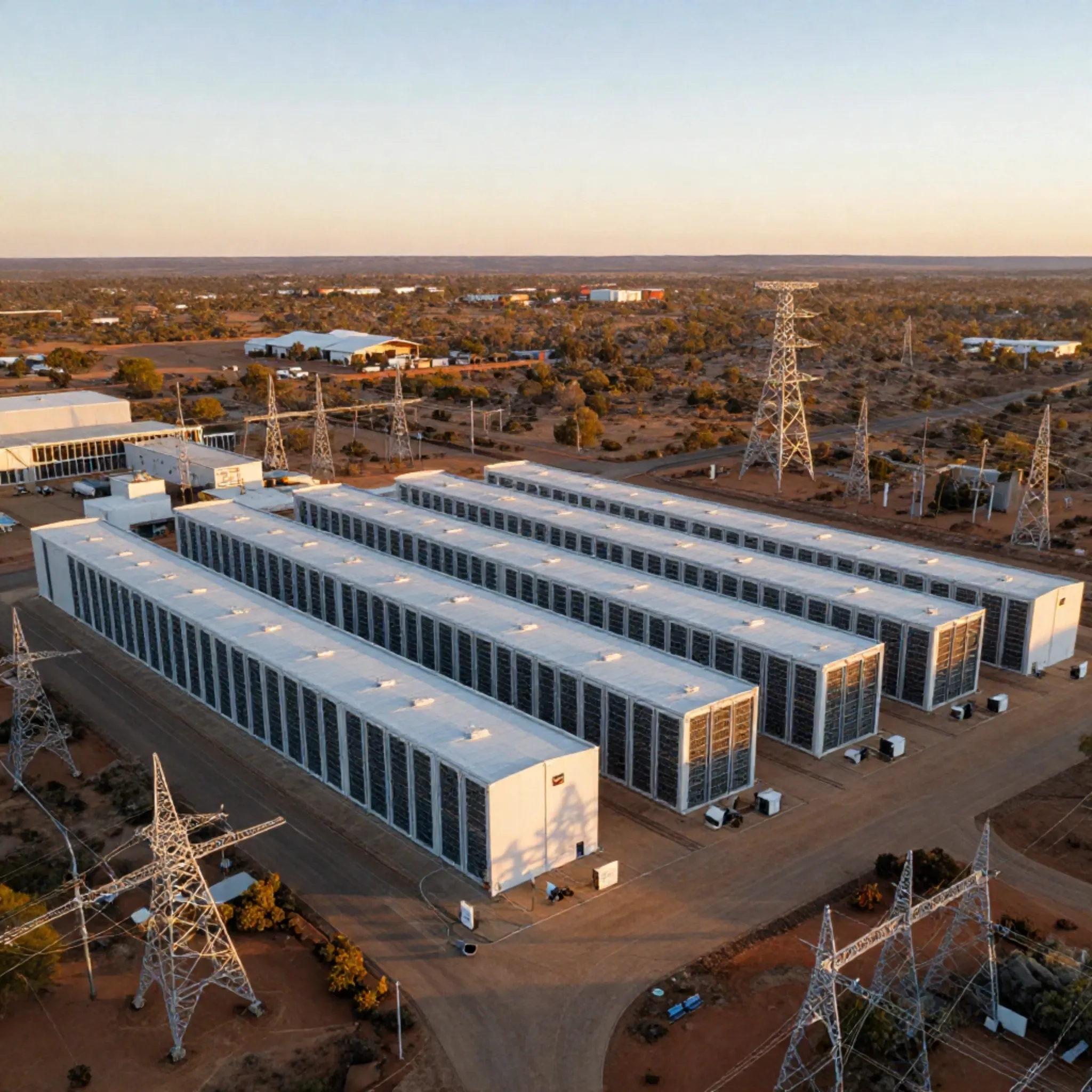
Infrastructure Demand Accelerates
The operator's projections put annual electricity consumption from data centres at around 34 TWh by 2050, driven largely by rapid AI adoption, the expansion of cloud computing, and the growth of hyperscale facilities. This category of demand barely featured in earlier grid forecasts, a sign of how quickly the sector has moved from a minor consideration to a defining variable. Data centres are not acting alone in pushing demand higher either. The electrification of transport, the shift toward electric heating and cooling in buildings, and the gradual move away from fossil fuels in industrial processes are all adding pressure at the same time. Together, these trends mean renewable generation, battery storage, and transmission networks will need to expand well beyond what was previously planned, with digital infrastructure now treated as a permanent part of that equation rather than a temporary spike.
Energy Becomes Competitive
For companies building or operating large-scale computing facilities, reliable access to electricity is quickly becoming as important as the availability of computing chips. Where a data centre can be built, and how quickly it can be connected to the grid, increasingly depends on whether that location can guarantee a stable and sufficiently large power supply. This shift is opening clear opportunities for utilities, renewable energy developers, battery storage providers, and grid infrastructure companies, all set to benefit from years of sustained capital investment as the system is upgraded. For technology firms, the lesson is becoming harder to ignore. Future growth in AI will not be determined by computing capacity alone, but also by whether a company has secured long-term access to electricity that is affordable, reliable, and increasingly low-carbon. Energy strategy, once a background concern, is moving toward the centre of corporate planning.
Digital Growth Redefined
Australia's forecast illustrates a pattern now playing out across much of the world, where AI growth is becoming tied as closely to energy infrastructure as it is to hardware or software. As governments and investors compete to attract data centre development and the jobs and revenue that come with it, regions able to offer dependable, large-scale, and increasingly clean electricity may gain a genuine advantage over those that cannot. The story emerging from Australia is therefore not only about AI. It is about whether energy systems built for an earlier era of demand can be reshaped quickly enough for the one now arriving. InsightSphere decodes the forces redefining technology, infrastructure, and long-term competitive advantage.