
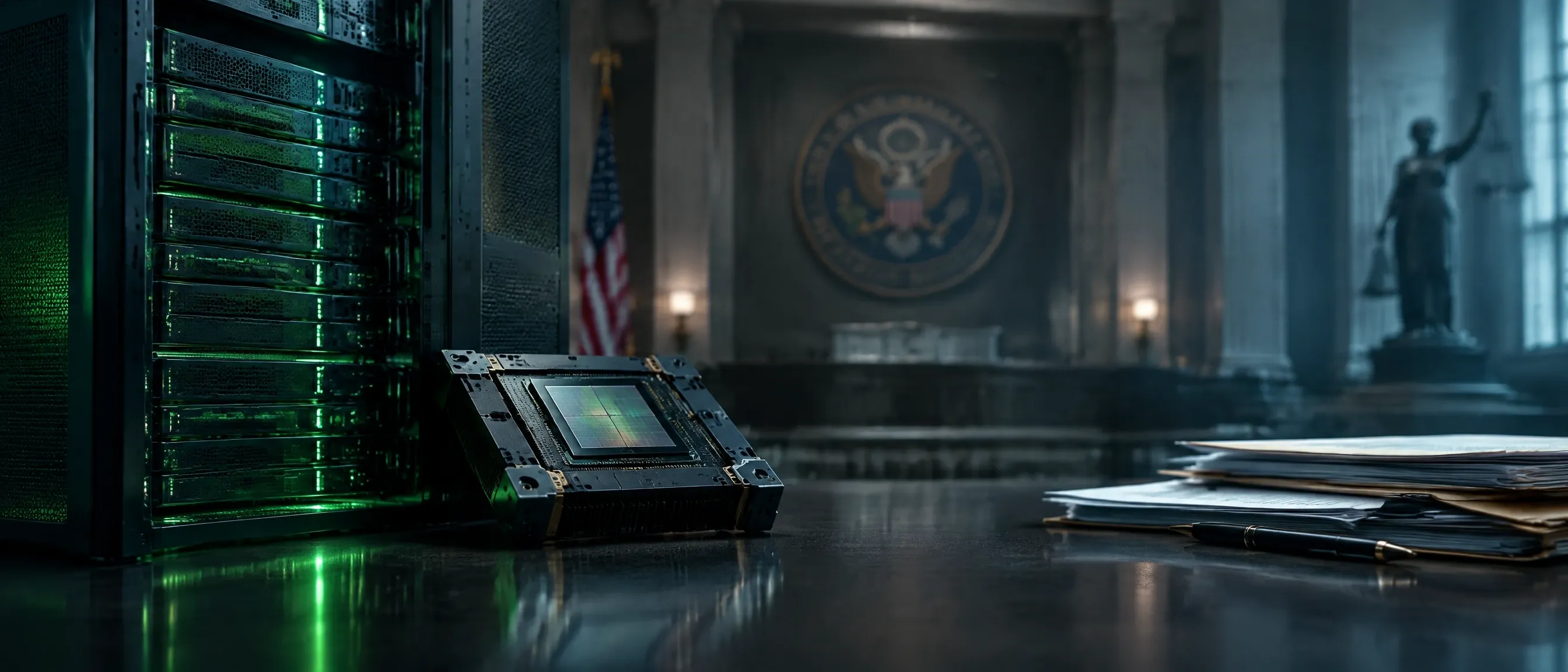
AI deal structures face scrutiny
Nvidia is currently under new regulatory scrutiny regarding the way it arranged its partnership with the AI chip start-up Groq. The U.S. Department of Justice is now examining whether the arrangement was designed specifically to avoid formal antitrust review. Instead of purchasing Groq, Nvidia obtained a non-exclusive license to its inference chip technology and also hired several of Groq's top staff members, including founder Jonathan Ross. Groq remains a separate company in name, and it is precisely this distinction that the investigators want to look into.
DOJ examines Nvidia's strategy
The agreement was first made public at the end of last year and had a cost of about $17 billion. Soon after it was announced, the Justice Department started asking questions and has since forwarded Nvidia a formal request for information, as a Reuters report based on a New York Times account states. Since the transaction was presented as a licensing arrangement combined with the appointment of executives rather than as an acquisition, it did not go through the normal merger review procedure, which is usually required in the case of large corporate transactions.
Nvidia has objected to the suggestion that anything improper occurred, with a company representative saying that the Groq arrangement is a proper illustration of how the American business system is intended to function, since it rewards entrepreneurs and promotes innovation. Neither Groq nor the Justice Department has at this stage given any public comment on the issue. Should the regulators later decide that Nvidia had mishandled the deal, the company might be subject to financial fines, although it appears that the authorities would not attempt to get Nvidia to cancel the transaction altogether.
AI consolidation faces new barriers
At a time when licensing agreements and arrangements based on talent have become a preferred method for large tech companies seeking to expand their AI capabilities without having to face the oversight associated with a conventional buyout, if the Department of Justice concludes that Nvidia's method has gone beyond the acceptable limit, other companies considering similar arrangements might be obliged to ease up and reconsider their strategies. For smaller AI startups, this introduces an element of uncertainty when it comes to how they deal with partnerships, exits, and licensing negotiations with the bigger firms, as the criteria defining what constitutes an acquisition could soon change.
AI competition enters regulatory spotlight
The Nvidia and Groq investigation captures a bigger tension playing out across the tech industry right now. Antitrust rules were largely written with straightforward mergers in mind, not the layered licensing and hiring deals that have become common in AI. How this case unfolds, whether it ends in fines, a settlement, or nothing at all, could set an early marker for how regulators treat similar deals going forward, shaping the way companies structure their next moves in the AI race.
Stay ahead with InsightSphere’s analysis of the deals, policies, and market forces reshaping AI.