
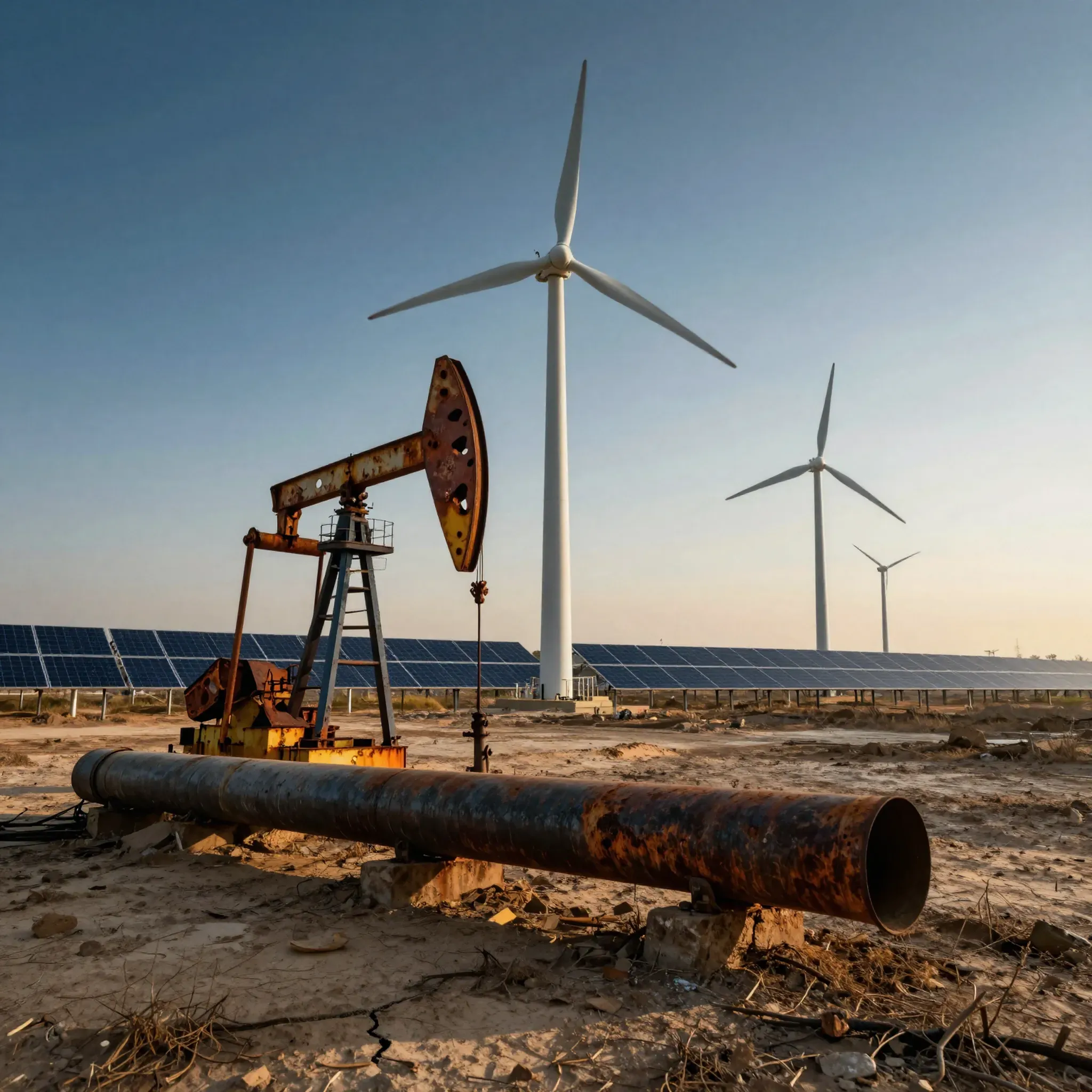
The European Central Bank isn't waiting for another post-mortem. Following the latest surge in oil and gas prices driven by Middle East tensions, the ECB is making its position clear that fossil fuel dependency is a structural economic risk, not a geopolitical inconvenience. And it's linking that risk directly to the inflation and growth pressures that keep landing on business balance sheets.
Fossil Fuel Dependence
Europe has always known this vulnerability existed. Russia's invasion of Ukraine in 2022 just made it impossible to look away. Energy prices surged, inflation hit 10.6% in October of that year, and economists put a name to what was happening: "Fossilflation." What the current Middle East conflict has confirmed is that not much has changed since. The transmission mechanism is identical to external disruption, energy price surge, inflation pressure, and weaker growth. The March 2026 ECB staff projections spell out how this latest shock is likely to play out. For business leaders managing European operations, the pattern is worth taking seriously. This isn't a one-off. It's a recurring feature of an economy that sources most of its energy from markets it doesn't control.
Renewables Offer What Fossil Fuels Never Could: Price Stability
ECB Executive Board member Frank Elderson didn't dress this up as a climate conversation. He framed it as an economic one, and the numbers support that framing. Europe spends nearly €400 billion every year on fossil fuel imports. The European Commission estimates clean energy investment will need to reach around €660 billion annually between 2026 and 2030. That figure looks significant until you set it beside what Europe is already spending on fuel it doesn't produce, priced by markets it doesn't influence, moving through corridors that a single conflict can disrupt overnight. Renewable energy, once infrastructure is built, has a structurally lower marginal cost. The energy itself is essentially free. Fewer external shocks reaching households, businesses, and financial markets means a more stable economic environment, which is precisely what the ECB is trying to protect.
What Rising Energy Costs Actually Mean for Business
For businesses, this isn't abstract. Higher energy costs show up in operating margins, logistics, and input pricing. If your business has meaningful European exposure, you're already navigating an inflation environment that keeps getting complicated by events entirely outside your control. The ECB's direction also signals how capital is going to move. Climate and environmental risks are being embedded into banks' supervisory frameworks, with implications for minimum capital requirements down the line. What that means practically is that financing costs will increasingly reflect a business's fossil fuel exposure, and that changes how CFOs need to think about the balance sheet. The investment direction isn't ambiguous either. Clean energy, sustainable infrastructure, and efficiency technologies are where institutional incentives and regulatory logic are converging. Businesses that move toward that shift reduce their exposure to the next shock. Those who hold back will absorb the cost of it.
Energy Strategy Is No Longer a Long-Term Question
Two energy crises in roughly four years have made one thing hard to argue against. Fossil fuel dependency isn't just an environmental problem. It is an inflation problem, a growth problem, and a financial stability problem, and every disruption to a pipeline or a shipping corridor makes the cost of not having addressed it clearer. For business leaders, the window to treat energy strategy as a long-term sustainability question is narrowing. It is becoming a near-term operational and financial one. The companies that see that shift early and build it into how they plan, invest, and manage risk will be far better placed when the next disruption arrives. At InsightSphere, we analyze macroeconomic shifts and their real-world impact on business strategy, capital markets, and global trade.