
Economic Strategy
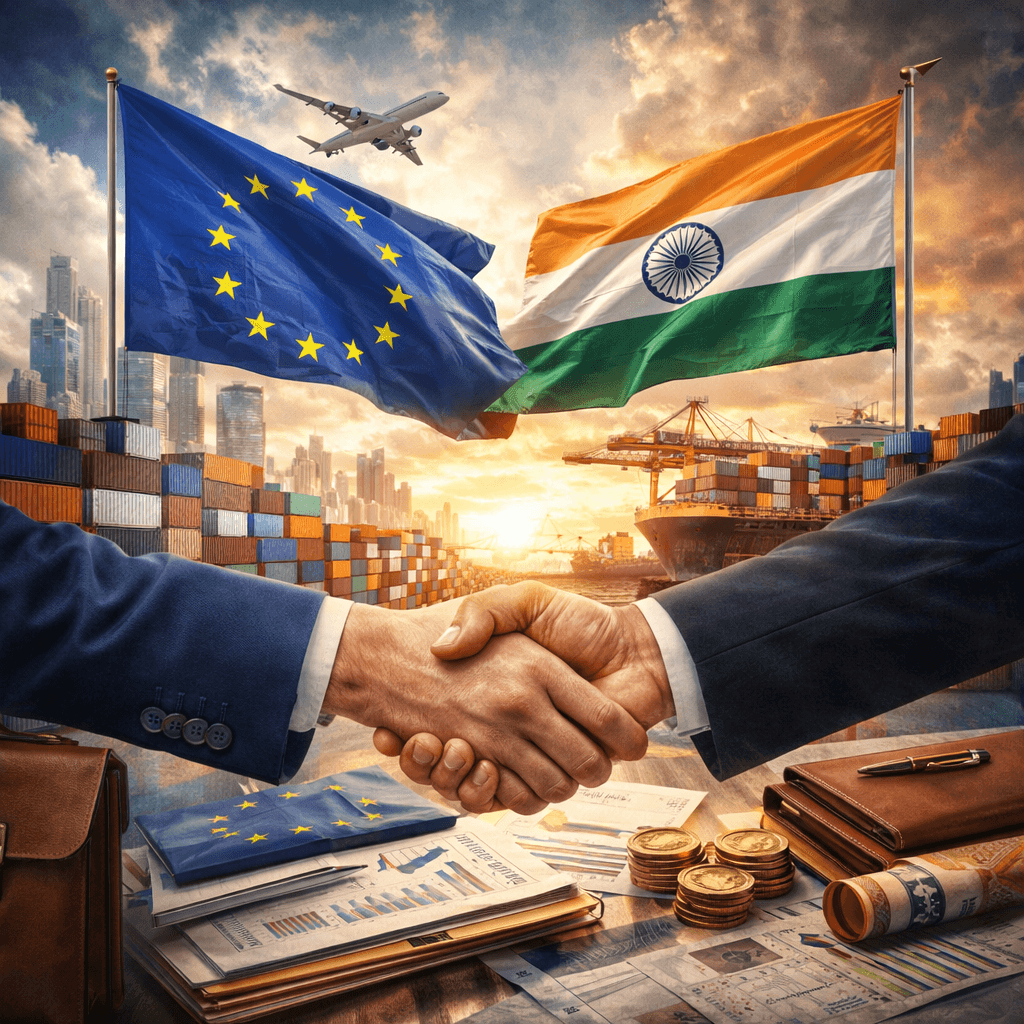
The trade between India and the EU has increased over the last few years, from $74 billion in 2020 to approximately $136 billion in 2025-265. The Indian exports are valued at $75.8 billion, while the EU exports are about $60.7 billion (India Briefing). This deal marks a strategic point against the rising U.S. tariff threats and reevaluating economic dependencies during the global crisis. European Commission President Ursula von der Leyen named this deal as the mother of all trade deals, for its potential to open India’s economy to EU goods and services. Indian Prime Minister Narendra Modi praised it by asserting the importance of major opportunities for the citizens of India and Europe.
Tariff Cuts Amid Geopolitical Tension
Under the agreement, tariffs on 96.6% of EU goods exported to India will be reduced or completely eliminated, generating up to €4 billion (~ $4.7 billion) in duty saving for European exporters (The Irish Times). Similarly, for Indian exporters, 99% of exports by value will be reduced in the EU market, across garments, textiles, leather, footwear, and engineering products (Business Standard). The most notable changes will be observed on European cars from current import duties of 110% to 10% under phased timelines (Reuters). These reductions aim to enhance customer choice while enabling manufacturers to expand their customer base globally. While the agriculture and processed food sectors where tariffs exceeded 150% will be cut down significantly over time (mint). EU plans to eliminate tariffs on all marine products, leather goods, chemicals and metals to increase competitiveness. With the U.S. regulated tariff plans and China’s expanding influence in Asia, the EU and India trade agreement will be mutually beneficial in a broader bilateral partnership improving supply-chain efficiency and geopolitical stability.
Challenges over Local Competition
Despite broad enthusiasm, the deal has welcomed domestic scrutiny, where critics argue that rapid tariff reductions could lead to competitive pressures in the local market and MSMEs. Concerns over tariffs, safeguard measures and intellectual property rights are expected to increase using the unfolding processes.