
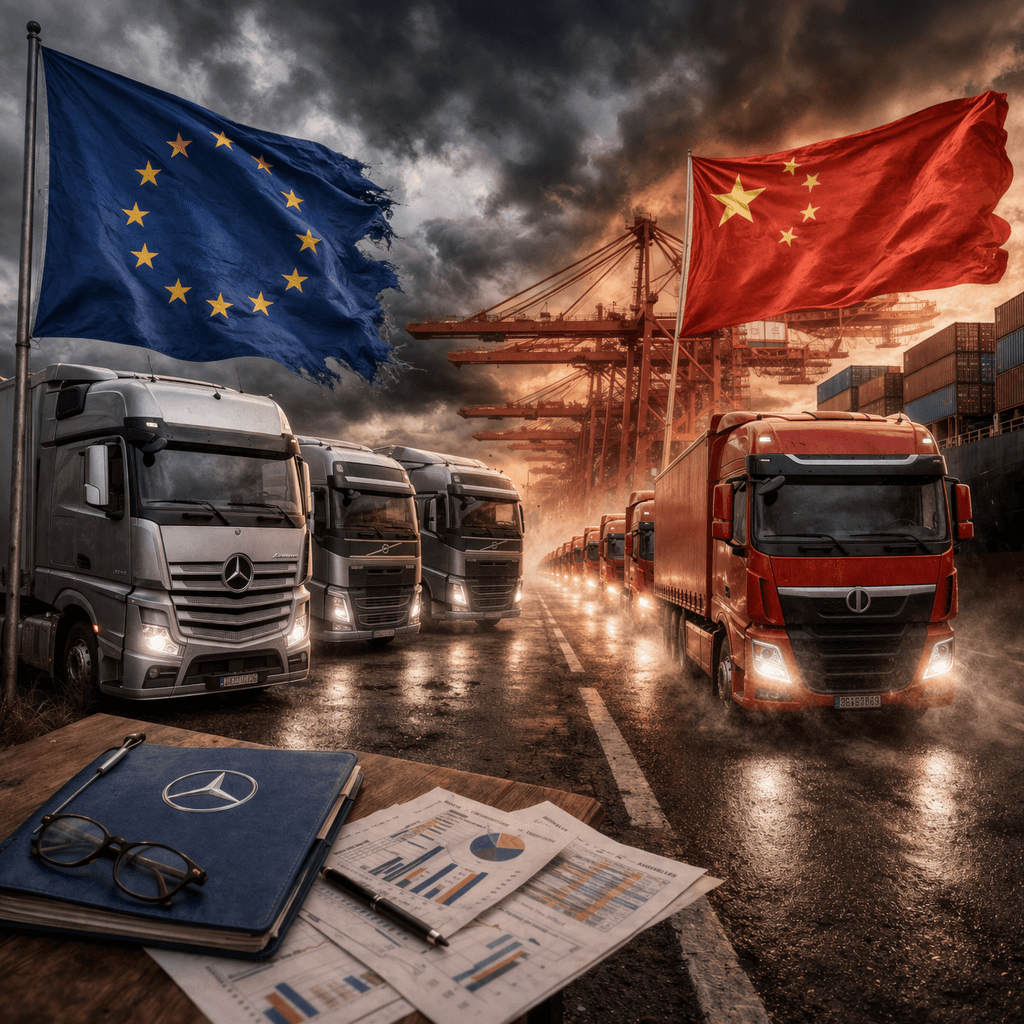
This shift is reflecting a broader global automotive market, where Chinese manufacturers are scaling with aggressive pricing strategies and rapid technological development that is reshaping dynamics across the vehicle industry.
Rising Chinese Manufacturers in the Truck Market
Chinese truck manufacturers are increasingly targeting overseas markets as domestic competition intensifies and production capacity expands. Companies such as BYD, FAW Group, and Dongfeng Motor are accelerating global expansion plans, particularly in Europe where demand for new-generation freight vehicles is rising. China has already established a strong foothold in electric passenger vehicles globally, and truck manufacturers are seeking to replicate that success in commercial transportation. China accounted for more than 60% of global electric vehicle production in 2025, according to estimates from the International Energy Agency. This scale advantage has allowed Chinese manufacturers to lower production costs significantly while rapidly improving battery and powertrain technologies. For European freight truck makers, this creates a new competitive environment where pricing pressure could intensify across multiple market segments.
Europe’s Truck Industry Under Pressure
Europe’s commercial vehicle sector is dominated by well-established manufacturers such as Daimler Truck, Volvo Group, Scania, and MAN Truck & Bus. These companies have built global reputations based on engineering quality, reliability, and extensive service networks. However, their vehicles typically command premium pricing, reflecting higher labor costs, advanced engineering standards, and stricter regulatory compliance. Chinese truck manufacturers, by contrast, are entering the market with significantly lower-cost models, often supported by strong domestic supply chains and government-backed industrial policies.
Electric Vehicle Transition
The shift toward zero-emission transport is reshaping the freight industry worldwide. European regulations aimed at reducing carbon emissions are accelerating the adoption of electric and hydrogen-powered commercial vehicles. The European Union has committed to reducing heavy-duty vehicle emissions by 45% by 2030, pushing manufacturers to rapidly expand their electric truck portfolios. Chinese manufacturers have invested heavily in battery technology and electric vehicle production capacity. As a result, they are increasingly able to offer electric trucks at prices that may undercut European competitors.
Conclusion
The arrival of low-cost Chinese truck manufacturers in Europe signals a significant shift in the competitive landscape of the global freight industry. While established European manufacturers retain strong technological and brand advantages, aggressive pricing and growing capabilities from Chinese rivals could reshape market dynamics in the years ahead. China’s strength lies in large-scale manufacturing, vertically integrated supply chains, and rapid technological deployment. European manufacturers, by contrast, continue to lead in engineering expertise, brand trust, and advanced safety systems. For industry leaders, policymakers, and investors, the challenge will be balancing innovation, competitiveness, and strategic resilience in an increasingly globalized transportation ecosystem. At InsightSphere (IS), we analyze the evolving intersection of global trade, technology innovation, and industrial strategy.