
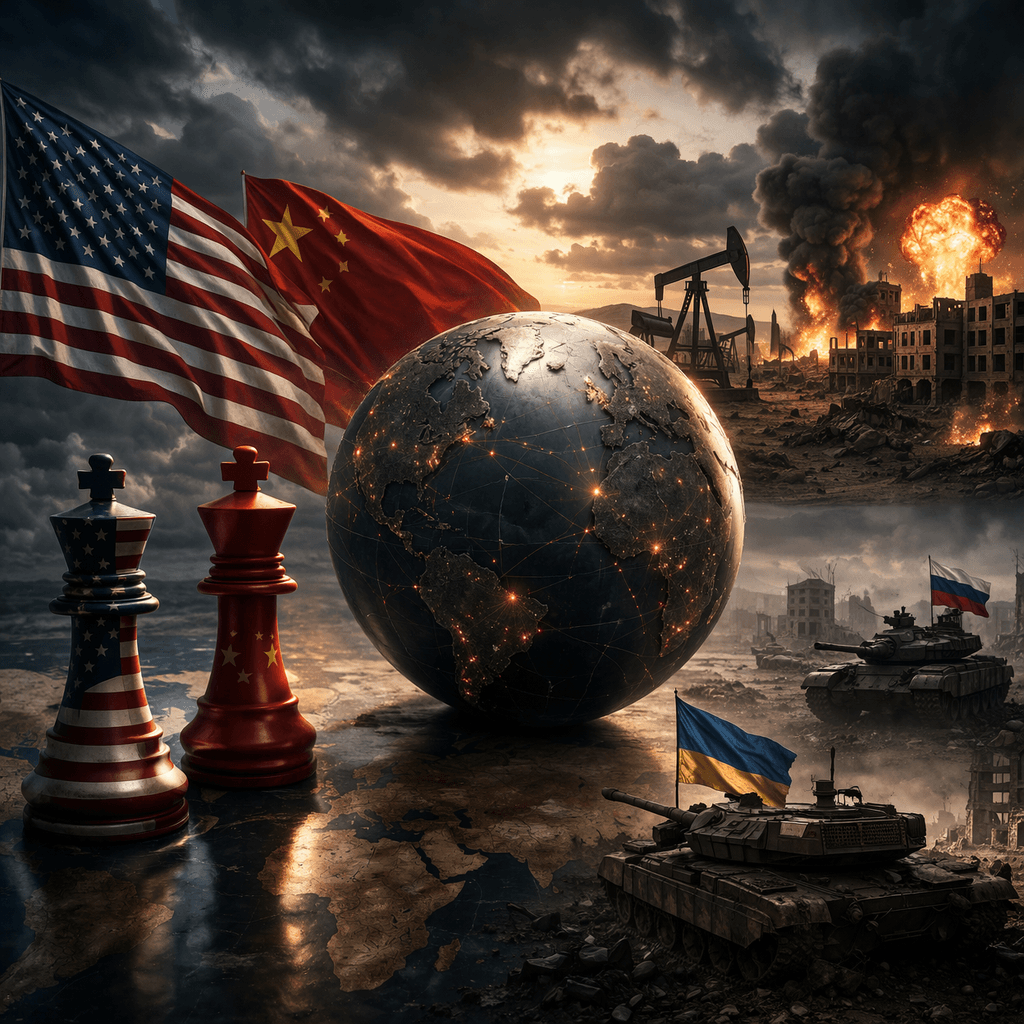
US-China Strategic Rivalry
The U.S.-China geopolitical competition is widely regarded as the defining rivalry since the 21st century. It started as tariff trade disputes have evolved into a competition involving technology, supply-chain, defense corporations and global trade influence. The United States has implemented export controls over advanced semiconductors and AI chips restricting China’s access to critical technologies. Beijing has doubled its domestic innovation initiatives under the Made in China 2025, increasing investments in AI and quantum computing to achieve self-dependency. According to McKinsey research, the United States reduced its share of manufactured goods imports from China by about 6% between 2017 to 2024, and increasingly imports from Mexico and ASEAN nations. This shift is to acknowledge the economic diversification and risk management amid geopolitical tensions.
Middle-East Volatility
The Middle East continues to remain a geopolitical risk driven by energy markets and regional conflicts. The Strait of Hormuz remains a critical point with almost 20% of the world’s seaborne oil trade passing through daily. The continued threat of Iran, proxy conflicts between Yemen and Syria, and the U.S.-Iran rivalry has huge impacts on the global energy markets. On January 29, Brent crude prices spiked by almost 3% to a $70 per barrel amid market concerns over potential U.S. military actions in the region. Analysts have projected that oil prices may remain elevated due to geopolitical risks, estimating that geopolitical tensions increase $3-4 per barrel to oil prices, despite oversupply risks and OPEC production decisions. Despite oil, the attacks and tension in the Red Sea have disrupted shipping routes, forcing alternative routes that increases time and cost in the global logistics chain.
Russia-Ukraine Conflict
The Russia-Ukraine war remains a major geopolitical risk with economic consequences since 2022. The conflict demonstrates Europe’s largest military confrontations since World War II that still influences commodity markets, sanctions and supply chains. Russian and Ukraine both being significant producers of energy, grains and industrial products, disruption have led to volatility in markets. The European natural gas prices have increased almost 7.5% and global oils and wheat prices have seen a hike of approximately 2% since the Russia-Ukraine military escalations. The U.S.-China competition, persistent Middle Eastern instability and enduring Russia-Ukraine war have shaped the global economic, security and market outcomes in past years. These conflicts exert pressures through commodity pricing, supply-chain fragmentation, trade routes, and investment risk premiums. The rising costs of managing these crises including hedging, supply chain diversification and scenario planning has become an operational component of the corporate risk frameworks. For investors and policymakers, a better understanding of these geopolitical dynamics is essential for strategic decision-making. Follow InsightSphere for analysis on global geopolitical risks, and market implications for investors.