
Carbon Claims Face Scrutiny
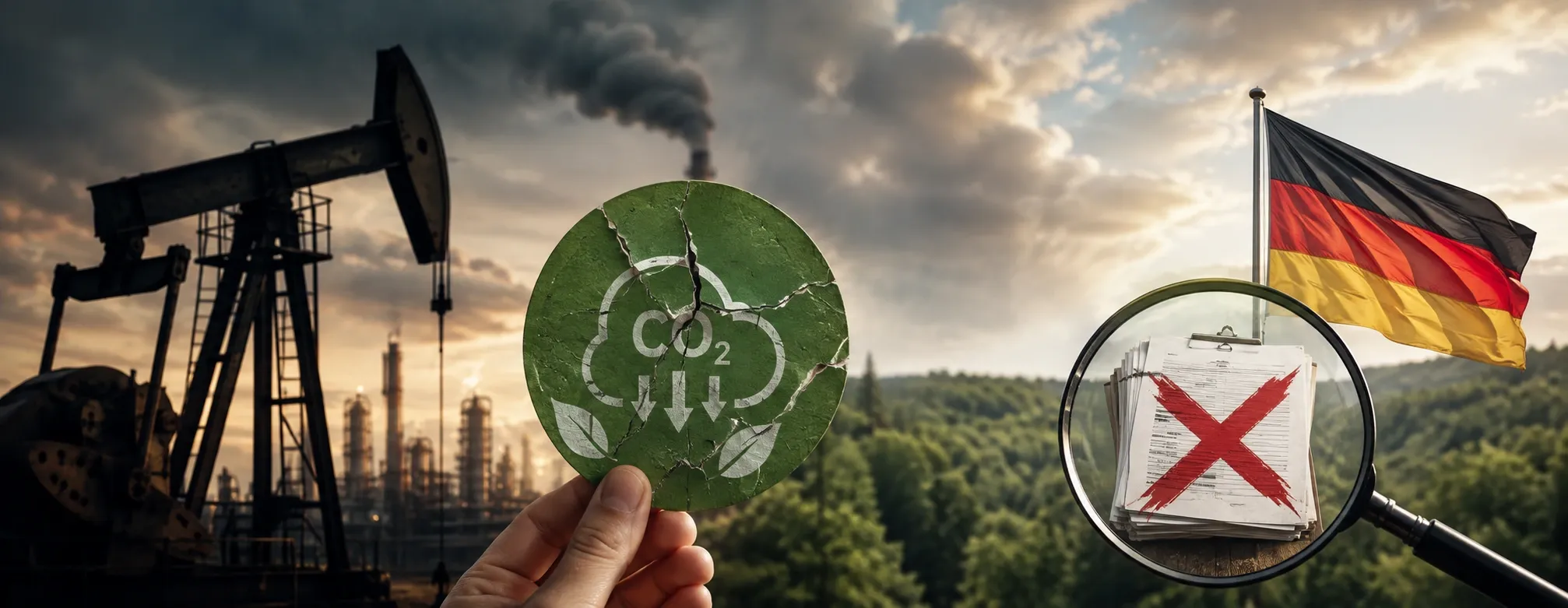
Germany has pulled the plug on a batch of carbon credits it now considers suspicious, and ExxonMobil turns out to be one of the buyers caught up in the fallout. A German Environment Agency report, dated mid-January and obtained through a Freedom of Information request, shows that authorities withdrew credits tied to 30 projects based in China. These projects had claimed to cut pollution linked to fossil fuel extraction, but the credibility of that claim did not hold up. This is the first time Berlin has publicly named companies caught in a scandal over upstream emissions reduction certificates that first came to light back in 2024. It reinforces a pattern the market has been circling for a while now, where the real test is no longer how many credits get issued, but whether the emissions savings behind them are actually true.
Germany Challenges Credit Validity
The numbers involved are not small. The 30 revoked projects had together claimed to save around 2.1 million tons of carbon dioxide, which is roughly the yearly exhaust output of 500,000 cars. One of those projects, funded through a Belgian arm of ExxonMobil, had claimed savings of nearly 96,000 tons of CO2, priced at about €44 per ton. That works out to close to €4.2 million spent on credits that Germany says can no longer be trusted. ExxonMobil has said it always operates within legal requirements and does not typically comment on ongoing investigations. The agency's report points to a Chinese consultancy, Beijing Karbon, as the main developer behind 45 projects flagged as suspicious, alleging the firm created a false appearance of legitimacy. Energy companies holding the voided credits have now been told to make up for the shortfall.
Verification Becomes Strategic
For companies caught in this situation, replacing voided credits with credible ones is not going to be cheap, and it will not be quick either. Buyers across the market are likely to start asking much harder questions before signing off on future purchases, pushing for independent, third-party verification instead of taking documentation at face value.
Regulators across Europe seem headed in the same direction. A separate Bloomberg investigation from May found that at least nine European countries had bought credits from projects showing similarly troubling red flags, some of which may not have existed in any real sense. For investors watching energy and industrial firms, this adds a fresh layer of ESG risk that did not exist in quite the same form a few years ago.
Carbon Markets Need Trust
What this episode really shows is that a carbon credit is only worth as much as the project standing behind it, and right now that foundation looks shakier than many assumed. As regulators dig deeper and investors pay closer attention, the companies that invest early in solid, verifiable sourcing are likely to come out ahead of those that do not. Volume alone will not carry this market forward anymore. Trust, traceability, and proof will.
The carbon economy is evolving. Track the regulatory shifts, market signals, and corporate strategies reshaping its next phase with InsightSphere.