
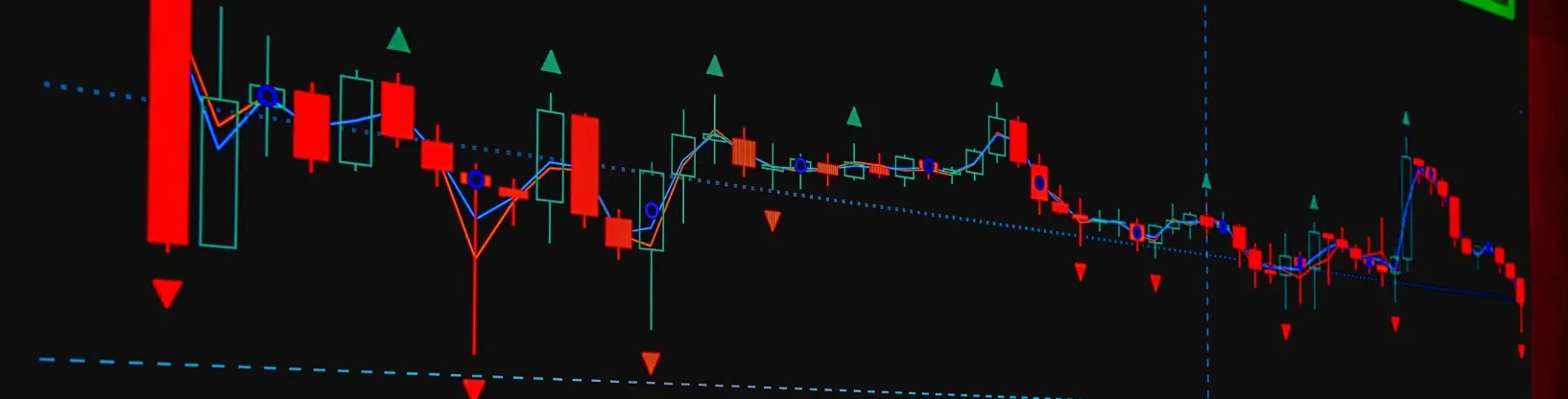
AI sell-off puts technology valuations under pressure
The recent correction reflects growing concerns about the cost of developing AI infrastructure, rather than a sudden decline in demand for the technology. Investors are increasingly questioning whether spending on data centres, advanced chips and computing capacity can translate into sustainable revenues.
The Nasdaq 100 declined 3.5% on 30 October, taking its October fall to 6.7%, its worst monthly performance since March 2025. The sell-off also erased more than $2 trillion from the Nasdaq 100 during October.
Disappointing results from major technology companies, including Alphabet, Amazon and Intel, have added to investor concerns. The focus has shifted towards the financing requirements of AI expansion, rising capital expenditure and the time companies may need to recover their investments.
The semiconductor sector has been particularly vulnerable, as chipmakers remain closely linked to expectations of continued AI infrastructure spending.
Asian markets react to fresh political uncertainty
The sell-off gathered momentum on 4 November after Democrats secured majorities in both chambers of the US Congress in the midterm elections. Investors fear that the political shift could lead to tighter scrutiny of AI companies and restrictions on data centre development.
Asian markets reacted sharply. Japan's Nikkei 225 dropped more than 4% during Wednesday's trading, reaching a five-month low. Technology-heavy indices in South Korea and Taiwan declined more than 3%, while SoftBank Group shares fell around 9%. Samsung Electronics, SK Hynix and Taiwan Semiconductor Manufacturing Company (TSMC) also came under pressure.
The concerns extend beyond Asia. US S&P 500 futures were down 0.35%, while Nasdaq futures fell more than 2% before recovering some losses. European futures were down 0.4%. The US 10-year Treasury yield declined six basis points to 4.906%, as investors moved towards safer assets.
Heavy AI spending raises questions about returns
The bigger concern is whether technology companies can generate enough cash to justify their infrastructure commitments.
Three of the four major hyperscalers, Amazon, Meta Platforms and Alphabet, reported negative free cash flow in their latest quarters. Amazon's deficit reached nearly $35 billion, against positive free cash flow of $430 million a year earlier. Meanwhile, Meta's future spending commitments climbed to $825 billion and Alphabet's exceeded $1 trillion.
Credit markets are also showing signs of concern. Trading volumes in credit default swaps linked to the 10 largest hyperscalers and chipmakers increased more than eightfold in 2026 to $176 billion through the previous week.
For investors, the question is no longer simply how quickly AI adoption will grow. It is whether the revenue generated from AI products and services will justify the enormous capital expenditure, borrowing requirements and valuations attached to the sector.