
EV Strategy Enters Reset
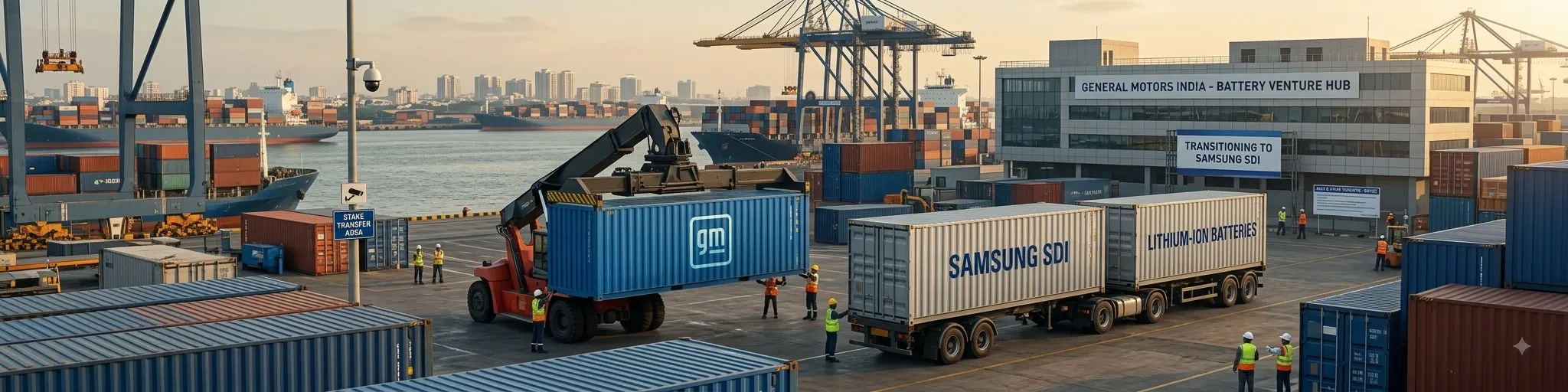
General Motors is walking away from its battery joint venture in Indiana, agreeing to sell its 49.99% stake to South Korea's Samsung SDI. The deal effectively dissolves the partnership the two companies built two years ago and hands Samsung SDI full ownership of the plant. At the heart of the decision is a simple reality: EV demand in the US has not grown at the pace either company expected when the venture was first announced.
Battery Ownership Changes Course
The Indiana facility, known as SDI-GM Synergy Cells Holdings, was originally built for 27 GWh of annual battery capacity, with mass production slated to begin in 2027. Now that Samsung SDI owns it outright, the plan is to diversify output across both EVs and energy storage systems (ESS) rather than betting solely on car battery demand. Interestingly, the two companies haven't fully parted ways. They've signed a fresh agreement to jointly develop next-generation prismatic batteries for future EV models, so the technology collaboration continues even without the joint venture structure. Reports earlier this year had already flagged that construction at the plant was moving slower than planned, a sign that this restructuring had been building for a while.
EV Capacity Meets Reality
For GM, stepping back from the EV means less capital tied up in large-scale battery manufacturing and more room to size production around actual demand rather than earlier projections. For Samsung SDI, taking full control means it can redirect the plant's output wherever the market needs it most, whether that's EVs or grid-scale energy storage, potentially getting better use out of the asset. This isn't an isolated move either.
GM took a similar step with LG Energy Solution back in March, converting a Tennessee battery plant to focus on ESS production instead of EV batteries. Together, these decisions suggest automakers are rethinking the "build big for EVs only" playbook. The bigger backdrop here is policy. The $7,500 federal EV tax credit expired last September, and soon after, GM and other automakers scaled back their manufacturing plans. Cars are still being built and sold, just at a pace that better matches what buyers are actually purchasing right now.
Growth Meets Capital Discipline
None of this signals GM giving up on EVs. It looks more like a recalibration, trimming exposure where demand hasn't caught up yet while keeping the technology partnerships that matter for the long run. As more battery makers explore dual-use facilities that can serve both EVs and energy storage, flexibility may become just as important as scale. The next stretch of the EV transition may be less about who builds the biggest factory and more about who uses their existing capacity the most effectively.
As the economics of EVs keep evolving, it's the companies that pair bold ambition with real financial discipline that will end up shaping what comes next.