
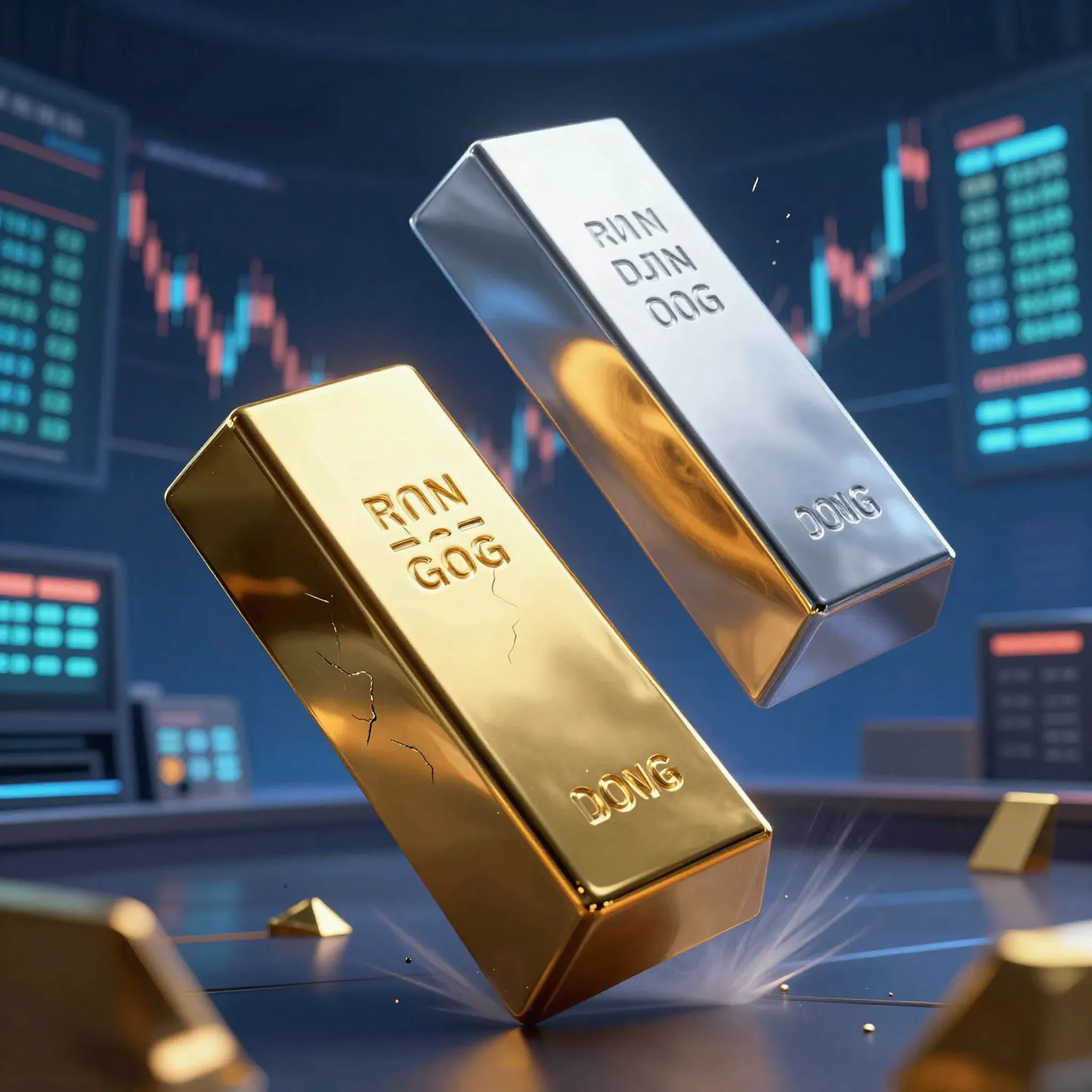
Gold suffered its largest single day decline since the 1980s, sliding more than 12% with a significant amount of $5,000 per ounce level. While silver on the other hand, experience 36% marking it the largest collapse in past years. This has come after a sustained growth over years, gold registered a 13% gain for a month and silver was still up 19% for January before the plunge.
From Record Highs to Reversals
Prices surged for months leading up to the selloff, due to increased demand, geopolitical tensions and monetary policies with investors. Over the past year, bullion benchmarks repeatedly hit all-time high, setting the stage for moves that left markets vulnerable to sharp declines. However, last week’s decline reflected a dramatic shift with a stronger U.S. dollar supported by macroeconomic data and expectation for a resilient Federal reserve. The dollar’s rise made precious metals more expensive in foreign countries, exaggerating the retreat. The selloff was not limited to gold and silver, but other industrial metals also experienced a sharp decline rippling the commodity market. For instance, copper prices recently surged above $14,000 per tonne in London, highest in years, retreated sharply after traders balanced their position following rapid gains (The Business Times). This broad unwinding of commodity prices demonstrates how interconnected metal markets influence global financial conditions.
Sharp Drops Triggered by Macro Drivers
Silver earlier traded at $110 per ounce in January, saw same day declines below $100 mark amid the selloffs, largest decline since the global financial crisis of 2008. Meanwhile, gold which was consistently above $5,000 per ounce retraced substantially to prices long-term technical support levels (Moneycontrol). For portfolio managers and traders, this extreme volatility poses serious challenges of navigating markets dominated by flows and technical momentum. Silver’s sharp decline after a record high is a reminder that the asset's role as an industrial commodity and financial hedge makes it sensitive to shifts in risk analysis. Gold, often perceived as a stable metal, highlights how quickly sentiment can shift when macroeconomic plans evolve and become technical indicators. Investors indicate that relative indexes of both gold and silver had climbed extremely high during the rally, indicating that the prices may be due to correction after extended buying pressures. The breaking price points of gold’s $5,000 mark and silver’s $100 mark triggered an automatic trading algorithm responsible for rapid downward pressure.
Looking Ahead
Despite the turbulence, long-term value of precious metals remains high supported by broader macroeconomic themes, including inflation, central bank buying and geopolitical risk premiums. Analysts caution that while short-term volatility may remain, precious metals continue to play a key role in diversifying portfolios. Follow InsightSphere for real-time analysis on volatile commodity markets helping investors navigate uncertainty in global markets.