
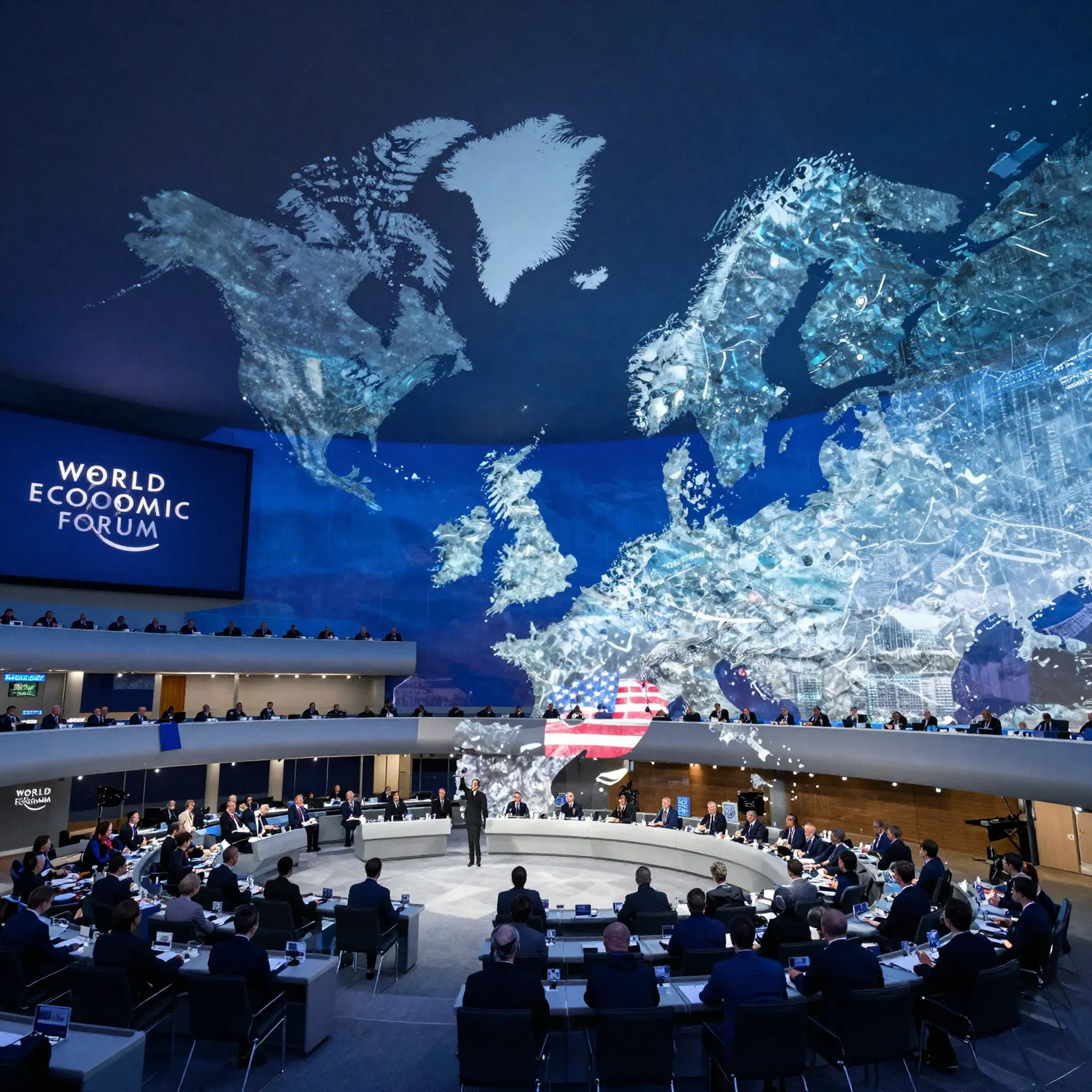
The Davos Moment
At Davos, U.S officials double as a strategic imperative for national security and Arctic dominance. European leaders denounced Washington’s claims, warning against the rhetoric that undermines NATO cohesion and transatlantic stability. Other European nations have shown willingness to retaliate if the issue escalates against U.S. claims into cohesive policies. This backlash was prominent and within days the U.S policymakers softened their tone, trailing back on the tariff threats and emphasizing on the diplomatic engagement. This points towards the constraints facing the world’s largest economy when geopolitical ambition clashes with alliances, structures and markets.
Why Greenland Matters
Greenland is critical in geographical position between three major domains - Military viewpoint in the North Atlantic and Artic - Critical minerals and rare earth metals - Emerging Arctic shipping routes due to climate change This makes the island central to missile defense, early-warning systems, and Arctic naval operations. While melting glaciers is opening new corridors for shipping routes, and geopolitical tension in the Red Sea shipping routes is reshaping the global trade routes. For Washington, the control of even influence over Greenland is more than tariffs but a larger competition with China and Russia in the North. However, Davos demonstrated strategic logic and did not guarantee political alignment. Sovereignty concerns, European unity and international law remain a powerful opposition to the U.S.'s ambition.
Alliance Politics
The Davos climbdown exposed the importance of alliances in the era of competing nations. NATO partners and European Union leaders emphasized on Greenland's future that is determined by its people and Denmark and not any foreign pressure. This reflects on the U.S. geopolitical initiatives that face rivals but pushback from allies concerned about strategic monopoly. In a scattered tech market, allies are less willing to coordinate their interests to Washington’s unilateral plan. One of the most striking elements of the Davos case was the reaction of the financial market. Investors and stakeholders reacted to tariff threats and geopolitical tension with currency markets highlighting the sensitivity of global capital flows.
Implications for Global Policy and Business
For global investors and corporate leaders, the episode taught several strategic lessons: - Geopolitical risk: Diplomatic risks can increasingly translate into financial instability. - Unity matters: Corporate strategies associated with defense, energy, and infrastructure must account for alliance politics and regulatory shifts. - Arctic control: Climate change is transforming the island into a central geopolitical area. Organizations working in defense, energy, logistics, and rare earth minerals must integrate Arctic geopolitics into their strategic planning. As geopolitical competition is increasing, executives and policymakers require data driven research that goes beyond headlines. InsightSphere delivers strategic intelligence on global policy shifts, geopolitical technological advancements, and economic shifts, helping leaders navigate uncertainty with clarity. In a world where nations become battlefields, data backed strategies become a competitive advantage.