
From government database to the phone in your hand
Per the Fuel Finder scheme, every petrol station in the UK must now report any price change within 30 minutes, or risk a fine. The scheme followed a recommendation from the Competition and Markets Authority (CMA), the UK’s competition watchdog, and the government says it now covers around 99% of fuel sold on UK roads. Its estimate is that a car-owning household could save around £40 a year by shopping around.
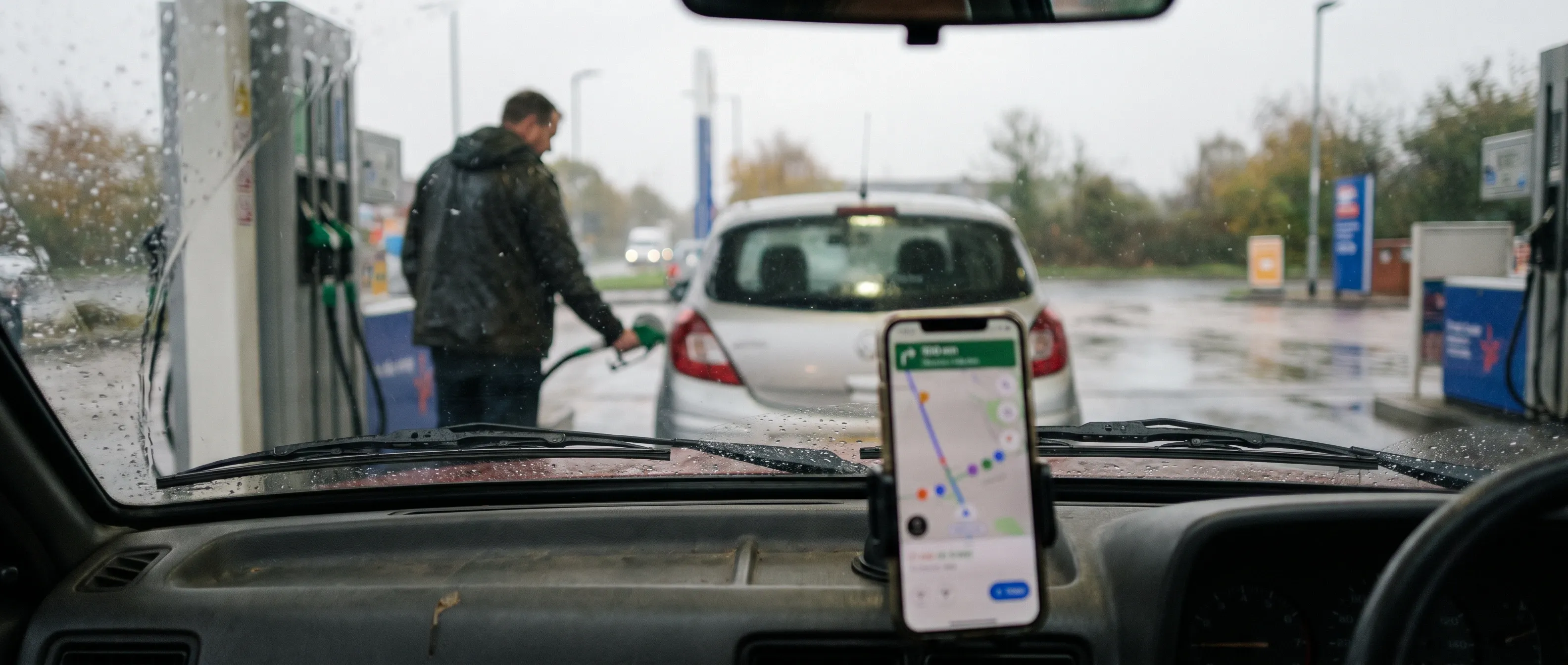
Until now, drivers had to find separate apps to access this information. Google Maps makes it easier by showing nearby petrol stations and their prices when users search for “petrol” or “fuel”. Waze, which is also owned by Google, already offers a similar feature.
What problem is transparency meant to solve?
When drivers cannot easily see other options, they are less likely to travel further for a lower price. This also gives retailers less reason to lower their prices. In August, the CMA warned that many retailers were slow to reduce prices when wholesale diesel costs fell, describing this as a “passive pricing strategy”. Edmund King, president of the Automobile Association (AA), argues that visibility should reduce what he calls "rampant price-matching", and that forecourts which "break rank" with lower prices will now stand out.
There are still some gaps in the data. Only around 90% of UK petrol stations have signed up for the scheme. This means some smaller stations may be missing. Drivers in some areas may therefore find that their local station does not appear.
The data may not always be up to date either. In September, around 200 stations appeared to have missed the deadline for updating their diesel prices.
Google says it will check the data and only display a price when it has “high confidence” in it. So, if a station appears on Google Maps without a price, it means Google does not have enough reliable data to show a price.
What to expect next
The government has told all remaining stations to start sharing their prices, and the CMA can take enforcement action against those that do not. Stations that fail to report their prices may be missing from Google Maps.
The first signs of success will appear locally. If easier price comparisons lead to stronger competition between nearby forecourts, or retailers pass falling wholesale costs on to drivers more quickly, it would suggest the scheme is improving price competition as intended.