
Premium Competition Accelerates
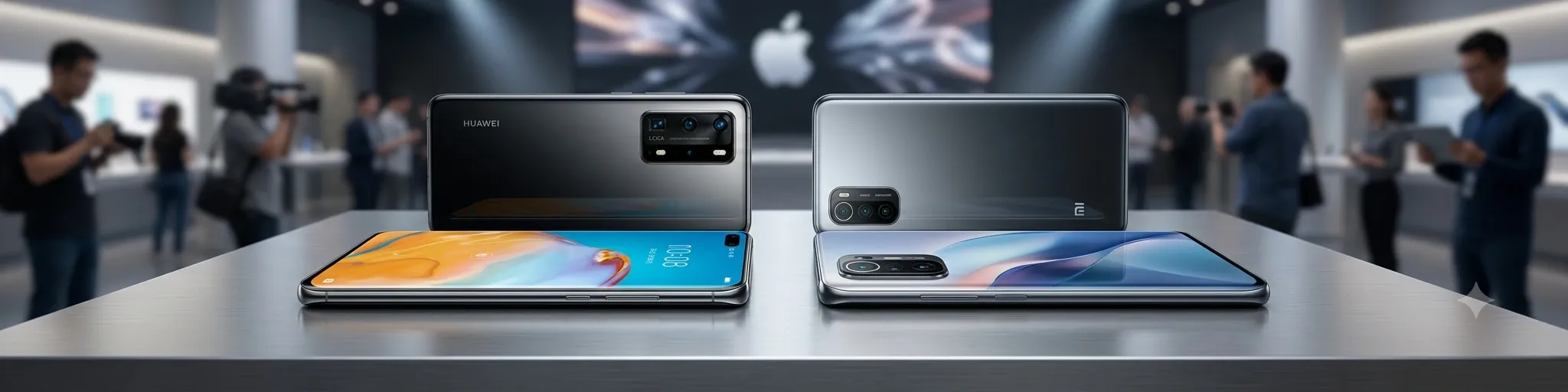
Huawei and Xiaomi are set to launch their most recent flagship foldable phones just a few days prior to Apple making its first entry into the market, which means there could be a direct clash between three of the world's top smartphone manufacturers. This timing is no coincidence. Since the foldable sector has moved on from being just a small-scale experiment to becoming a real battle for premium market share, pricing power, and technological prestige, each company wishes to secure its position before Apple acts.
China Moves Before Apple
On Monday, Huawei is going to launch the Mate XT 2, the follow-up to the trifold device it first launched two years ago. The new model has two folding mechanisms and makes use of Huawei's LogicFolding chip design, which in effect combines a full-sized smartphone with a tablet into one device. Later that day, Xiaomi will be launching its 18 Fold, a book-style foldable that goes even further in using technology developed at home, with memory chips from CXMT and Xiaomi's in-house Xring O3 processor providing power.
Interestingly, the passport-style design of this device is very similar to the one that is expected of Apple's rumoured foldable iPhone. Both companies are clearly making use of their launch dates as a statement, showing that Chinese manufacturers are still capable of competing at the forefront, even though Apple has been avoiding that market for years.
Premiumization Becomes Strategic
The smartphone industry is currently in a weak position. Counterpoint has stated that shipments could drop by 14% this year, which would be the biggest fall ever recorded, and Chinese manufacturers are among those most impacted since they depend so much on budget models. In response, companies such as Huawei and Xiaomi are placing more emphasis on the premium segments, for example, foldable phones, as there still remains room to raise average selling prices.
Xiaomi has seen a fall in profits for three quarters running, and Huawei's earnings have also declined, the main reason being higher memory costs. Apple's involvement could have two consequences in this area: on the one hand, analysts think it will expand the overall foldable market and draw in new customers, but on the other hand, it will also raise the level of competition for the companies which have been working in this field for years.
Foldables Reshape Market Leadership
It is expected that Apple will set the price of its foldable iPhone at more than $2,000, with forecasts showing it could account for almost a quarter of the global foldable market this year, its market share perhaps rising to 41% the following year. That would indeed be a significant shift. The initial moves by Huawei and Xiaomi are not merely an effort to get their products to market before Apple; rather, they are designed to draw in consumer interest and show technological credibility before Apple defines what a high-end foldable phone should look like. As the competition continues, one point is becoming clear: the next stage of the smartphone industry will be less about the number of units shipped and more about which company ends up in control of the technology, the ecosystem, and the premium customers.
For more detailed analysis, see InsightSphere to find out how this foldable race could affect margins, strategy and market leadership in the months to come.