
Real World Validation Begins
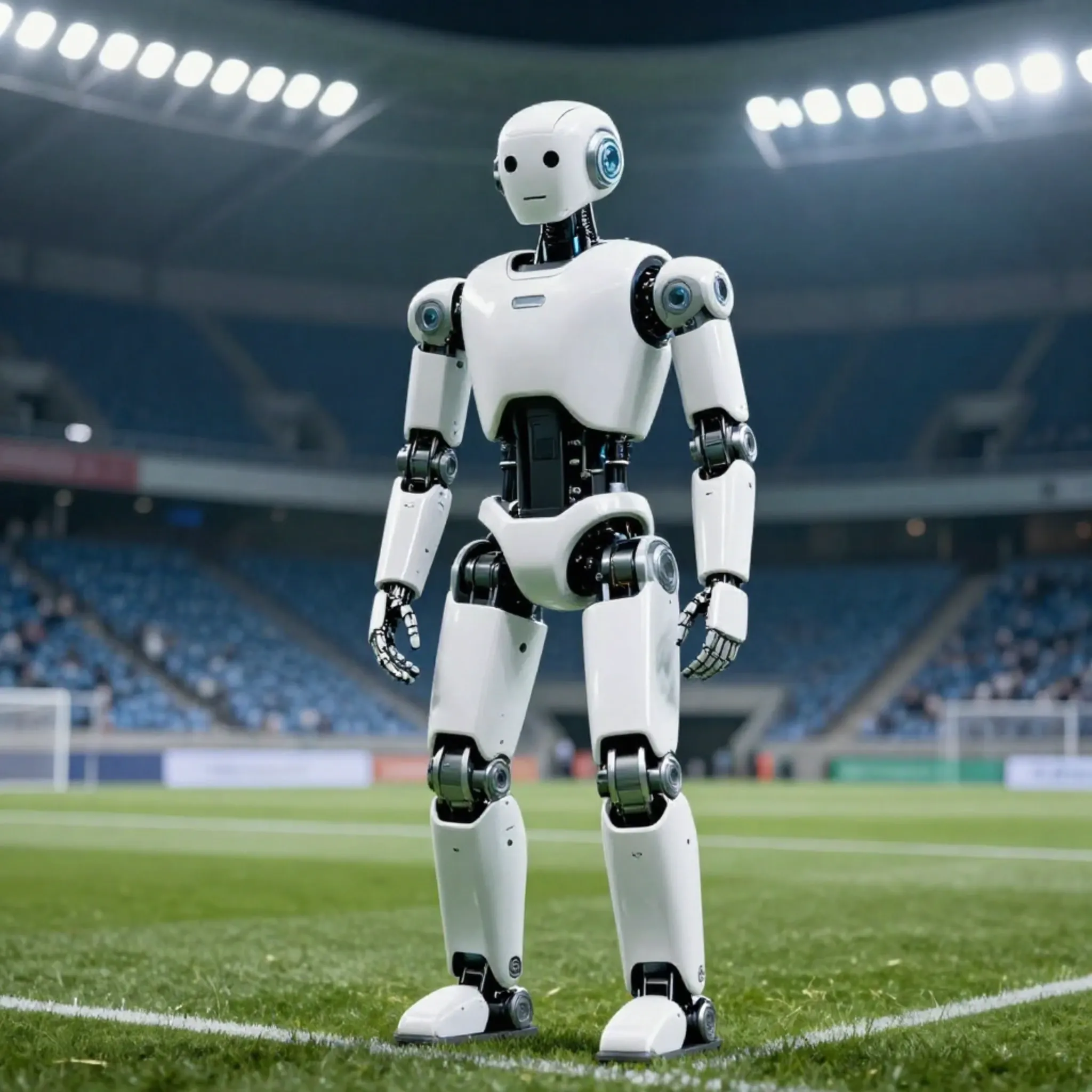
As halftime began, Atlas stepped out from the player tunnel and moved through a set of goal celebrations inspired by football stars like Harry Kane, Erling Haaland, Matheus Cunha, and Son Heung-min. Fans in the stands could not help but react as the robot glided through each celebration with a level of smoothness few expected from a machine. Once the routine wrapped up, Atlas made its way over to the referee and handed off the match ball, officially kicking off the second half in front of thousands watching live. Hyundai pointed out that this was also the first time the public had seen the production version of Atlas in action, after it was first introduced at CES 2026. Three technologies made the performance possible. Retargeting helped translate human movement into robotic form, reinforcement learning shaped those movements through countless simulated attempts, and whole-body control kept Atlas steady and coordinated the entire time. Put together, these systems let the robot hold its own in a live, unpredictable stadium rather than a quiet, controlled lab.
Automation Race Accelerates
This moment reflects something bigger happening across the robotics world right now, where humanoid machines are quietly shifting from research curiosities into something with real commercial weight. Hyundai tied the activation directly to its Next Starts Now campaign, which connects football with the company's broader innovation story. It also called back to its earlier School of Football content, where Atlas practiced similar moves, including a football trick known as the Ghost Rabona. A behind-the-scenes documentary titled The Training Ground, made with BBC StoryWorks, is expected to release soon after the match, giving people a closer look at everything that went into the performance. For Hyundai, all of this reinforces a shift in identity, moving from simply being a car company to becoming a builder of human-centered technology across mobility, AI, and robotics. Investors and industry observers are watching closely, especially as automakers explore robotics as a path toward new revenue beyond traditional vehicle sales.
Manufacturing's Next Workforce
What Hyundai pulled off at the World Cup says a lot about how far humanoid robotics has traveled from isolated lab demos. By putting Atlas in front of one of the most watched live audiences on the planet, the company showed that these machines can now handle coordinated, high-pressure tasks outside a research setting. As Hyundai keeps pushing forward with robotics and physical AI, this moment may end up being remembered less as entertainment and more as an early hint of where humanoid robots are headed next, potentially into factories, warehouses, and everyday industrial life. The companies that manage to blend serious technology with genuine human connection will likely shape what this next chapter looks like. InsightSphere delivers the market intelligence behind the technologies transforming industries and redefining business strategy.