
Commercialization Signals Accelerate
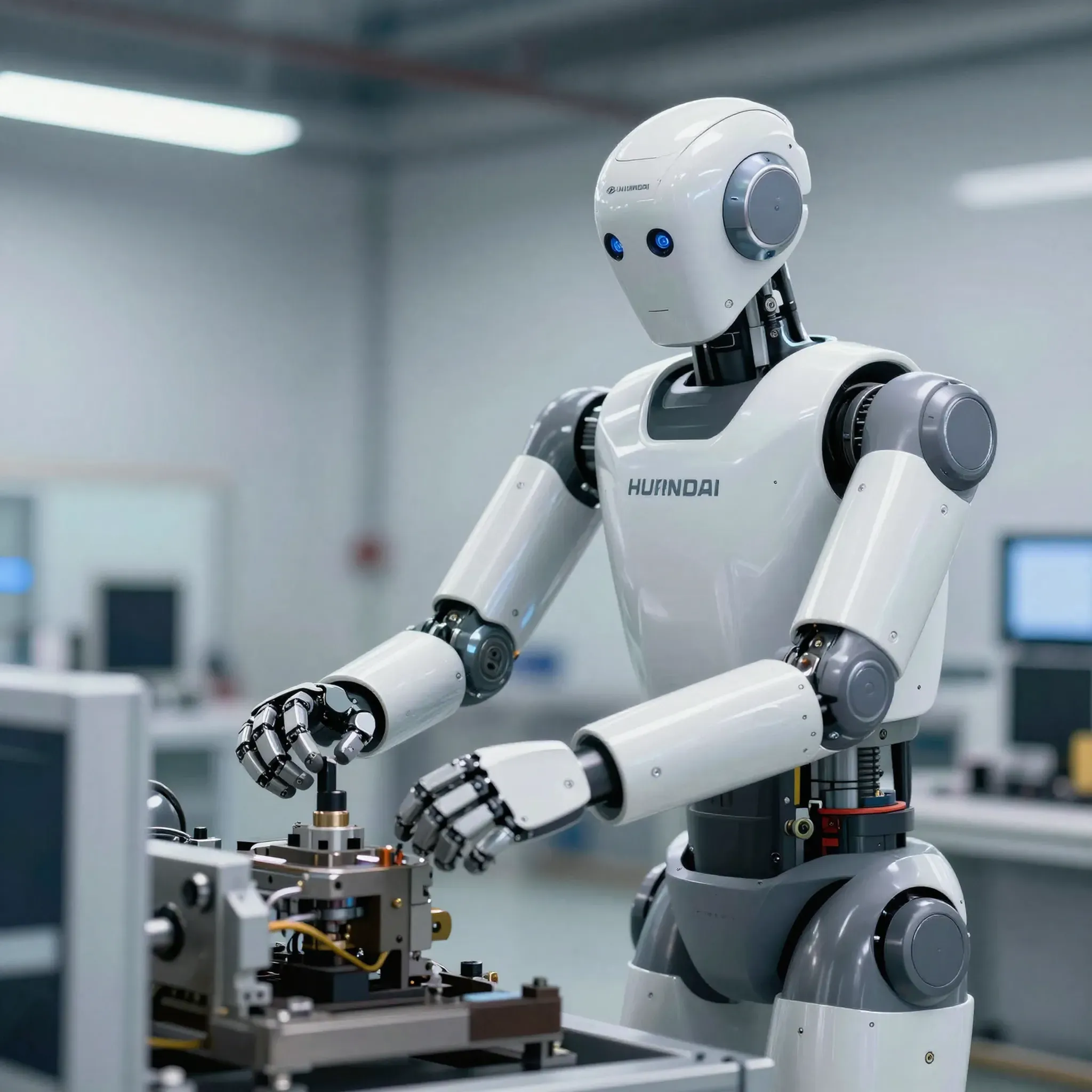
The demonstration featured fluid mobility, real-time balance correction, and what quickly became its most discussed moment, a fully executed handstand performed live before an audience of industry observers and press. The choice to go live rather than rely on pre-recorded sequences was itself the message. Controlled demonstrations have always been the comfort zone of the robotics industry, a space where failure can be edited out and impressions carefully managed. Passing a live performance test in front of enterprise buyers carries real operational risk, and clearing that bar publicly is precisely the proof point manufacturers need before committing to large-scale deployment contracts. Hyundai has made its intentions fairly clear. Atlas is not being built to sit in a showroom. The company wants it on the factory floor, moving parts, managing logistics, and handling the kind of repetitive assembly work that slows human productivity over long shifts. This positions the robot not as a research asset sitting behind laboratory doors but as a production-ready workforce tool built for the pressures of real factory environments.
Manufacturing Models Reshape
Hyundai is not chasing the idea of a robot that does everything for everyone. Instead, the company is building machines designed around the specific demands of particular industries, where precision and reliability matter far more than versatility. This reflects a genuinely maturing view of how automation gets adopted at scale. Factory floors do not need general-purpose machines capable of everything. They need purpose-built systems that slot reliably into existing workflows without disrupting operational continuity or requiring complete process overhauls. For automakers already navigating persistent labor shortages, aging workforces, and rising safety compliance costs, a humanoid system that operates continuously without fatigue addresses several of those pressures simultaneously. The competitive landscape reinforces the urgency. Tesla is developing Optimus, Figure AI has secured significant funding rounds, and Agility Robotics has been running active warehouse deployment trials. Hyundai's live demonstration raises the baseline for what commercial readiness is now expected to look like across the entire sector. Capital markets are paying close attention to all of it. Investment interest is shifting visibly from pure AI software plays toward companies that can demonstrate physical deployment at scale. The metrics determining long-term valuation in this space will not be benchmark scores or laboratory results. They will be uptime percentages, deployment economics, and real-world integration speed.