
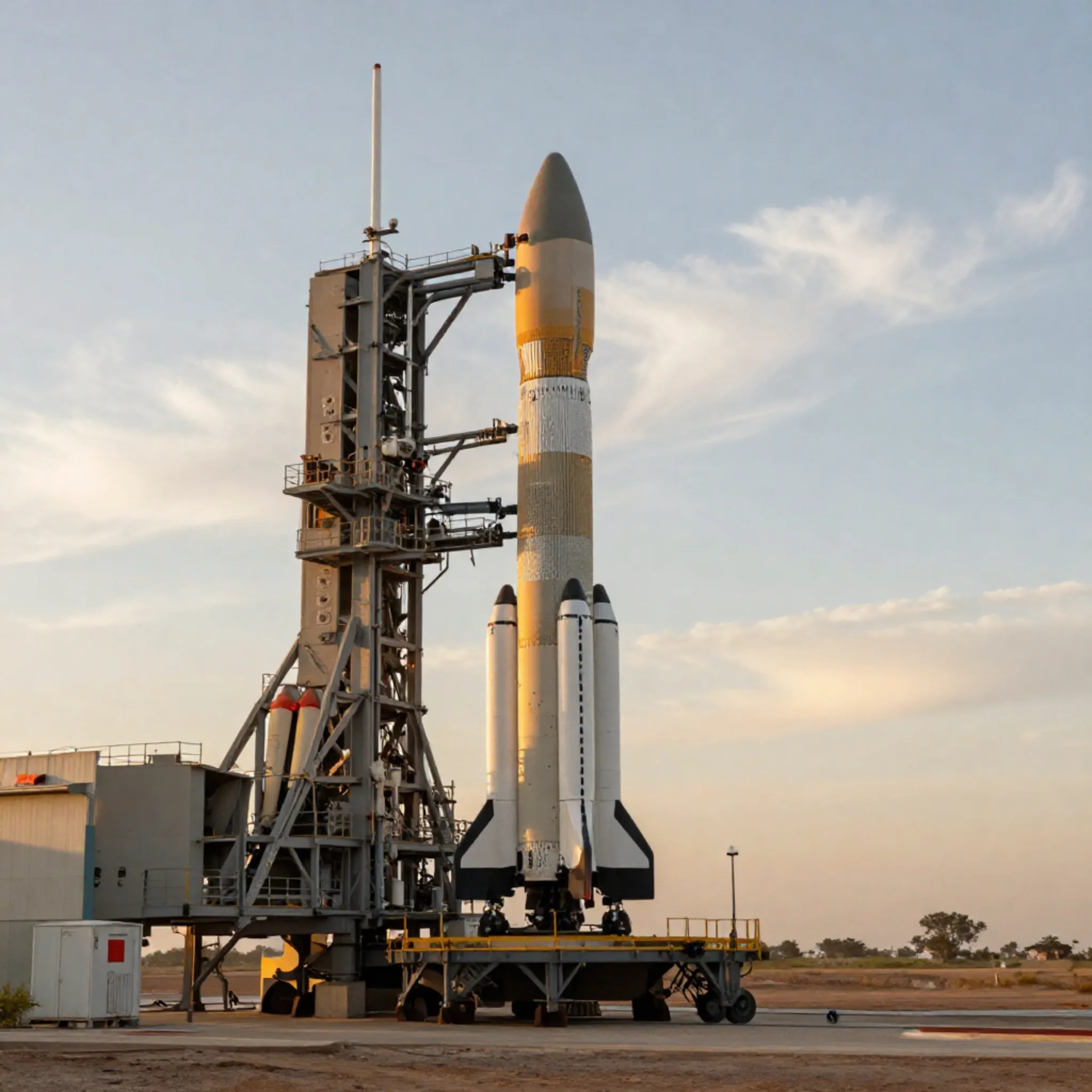
The momentum extends beyond startups. The government is increasingly positioning space as a strategic industry, aiming to expand India’s space economy to $44 billion by 2033 while reducing dependence on foreign launch providers and strengthening domestic technological capabilities. The question is no longer whether India can build a private space ecosystem, but whether it can create companies capable of competing globally.
Strategic Breakdown: From State-Led Exploration to Commercial Scale
For decades, India’s space programme was synonymous with the Indian Space Research Organisation, whose cost-efficient missions established the country’s reputation in global space exploration. The liberalisation of the sector has fundamentally altered that model. Private companies are now building launch vehicles, Earth observation satellites, satellite imaging platforms and downstream applications. The government has complemented these reforms by allowing startups to access ISRO facilities for testing and by preparing to transfer technology related to its workhorse launch vehicles to accelerate domestic manufacturing capabilities. One of the most significant milestones is Skyroot Aerospace, which is preparing India’s first privately developed orbital rocket launch after becoming the country’s first space-tech unicorn. At the same time, companies such as Pixxel and GalaxEye are developing advanced satellite capabilities targeting both commercial and strategic markets. Unlike the early years of India’s space programme, today’s growth is increasingly driven by commercial demand rather than government missions alone.
Market and Ecosystem Lens
The global space economy is becoming increasingly competitive, driven by rising demand for satellite communications, Earth observation, defence applications and space-enabled data services. Private companies now account for a growing share of innovation and investment across the sector. India’s startup ecosystem has expanded rapidly, but it remains significantly smaller than that of the United States in both funding and commercial scale. While Indian space startups have collectively raised around $730 million, companies in mature markets have benefited from substantially larger pools of venture capital and government procurement support. The ecosystem is nevertheless showing signs of maturation. Launch providers, satellite manufacturers, component suppliers and downstream analytics firms are beginning to emerge simultaneously, creating the foundations of a more integrated space economy. Recent geopolitical developments has also reinforced the strategic importance of sovereign space capabilities. Governments increasingly view satellites, launch infrastructure and Earth observation assets as critical national infrastructure, encouraging greater domestic investment alongside commercial growth.
Leadership Implications
India’s evolving space sector offers lessons beyond aerospace.
Commercial execution will matter more than technological capability.
Building launch vehicles is only the first step as sustainable revenue models through satellite services, data platforms or and recurring commercial contracts will determine long-term competitiveness.
Public-private partnerships will shape industry growth.
Continued technology transfer, regulatory support and government procurement can reduce barriers for startups while accelerating innovation.
Capital availability is soon to become a competitive differentiator.
Scaling globally will require significantly larger pools of patient capital capable of supporting long product development cycles and infrastructure-intensive businesses.
Strategic industries increasingly overlap with national security.
As governments prioritise sovereign capabilities in communications, surveillance and launch infrastructure, private space companies will play a growing role in national industrial policy. India’s search for its “SpaceX moment” is therefore not simply about producing a billion-dollar startup. It reflects a broader structural transition in which the country is attempting to build a globally competitive commercial space ecosystem that combines technological capability, private capital and strategic policy support. If this transition succeeds, it could position India as one of the world’s most important space economies over the coming decade.