
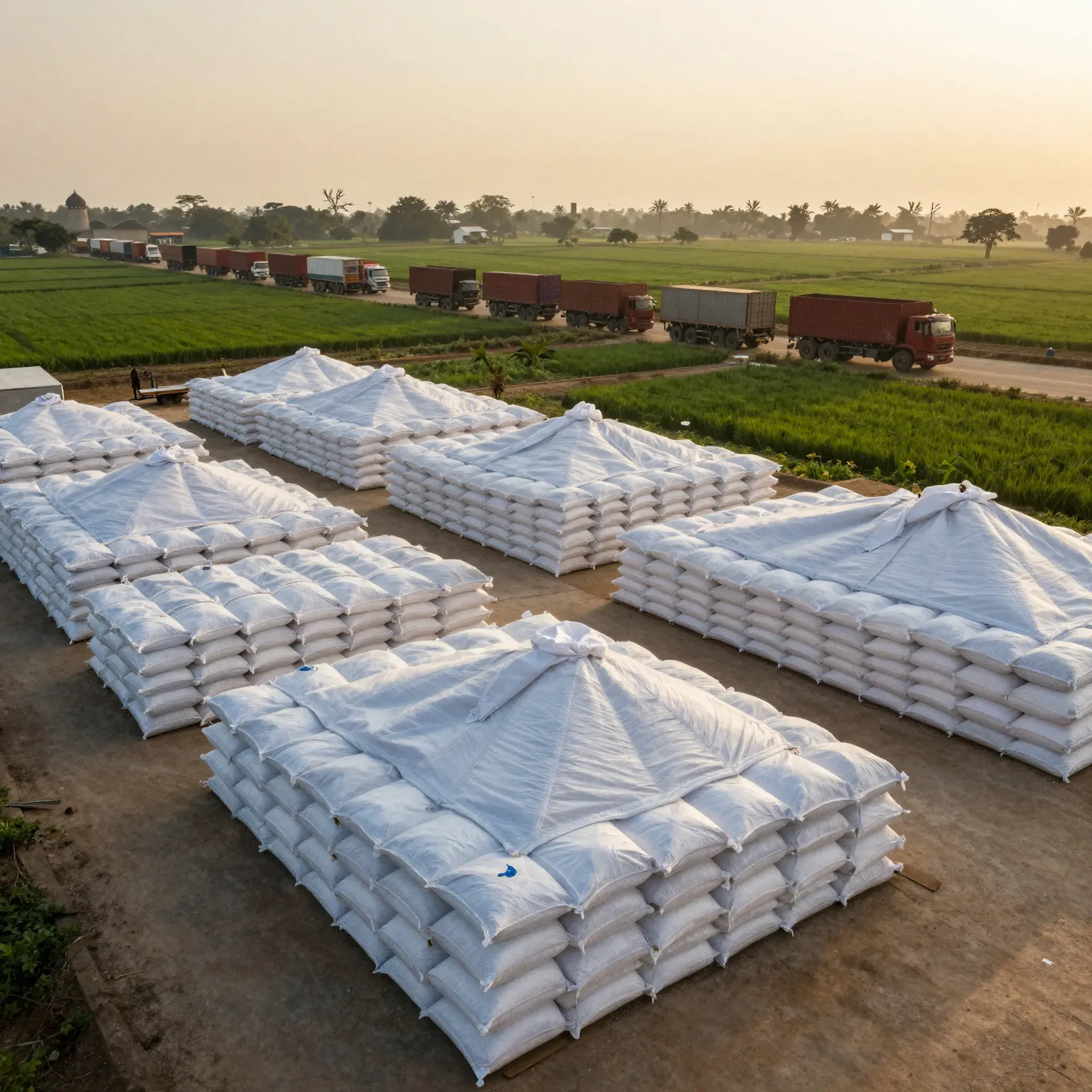
India Turns to Spot Market as Hormuz Disruption Threatens Fertiliser Supply
The government is issuing global tenders for fertilisers including NPS, buying spot LNG to keep domestic urea plants running, and expanding its supplier base beyond traditional procurement relationships. Current stock levels remain adequate this is not a response to empty shelves. It is a response to the risk of empty shelves, which is a more considered position to be acting from. The spot buying solves the immediate availability problem but creates a cost problem in the same move. Spot LNG prices are responding to the same supply disruption that made spot buying necessary in the first place. India is paying a premium at the worst possible moment fiscally, and that cost moves through the system into subsidy bills, input margins, and the broader agricultural economy.
LNG Disruption Feeds Into Urea Output as Energy and Agriculture Risk Converge
The chain of dependencies this situation exposes is what every supply chain leader should be paying attention to. Urea production requires natural gas. India sources a significant portion of imported LNG. LNG shipments move through the Strait of Hormuz. When that corridor comes under pressure, the effect does not stay in the energy market, it moves into fertiliser production, then into agricultural input availability, then into the planting decisions of farmers preparing for the kharif season. A conflict in West Asia and a farmer in Punjab waiting on fertiliser are connected by a chain that very few supply chain strategies have been built to account for.
Input Costs Rise as Geopolitical Risk Moves From Headlines Into Business Margins
The consequences of this situation are not limited to government procurement desks. Businesses across the agri-input, food manufacturing, and logistics sectors are already feeling the pressure. Higher spot LNG prices push up the cost of domestic fertiliser production, which flows into input costs for farmers, which flows into raw material pricing for food companies further up the chain. For businesses that source, distribute, or depend on agricultural commodities, margin assumptions built earlier this year are now worth revisiting. Beyond the cost impact, the bigger question is operational. Companies that rely on single-region sourcing whether for energy, raw materials, or finished goods are carrying a concentration risk that this situation has made impossible to ignore. Procurement strategies built around efficiency and cost optimisation are running into an environment that now demands flexibility and redundancy alongside them. The businesses that move fastest to diversify their supplier base and build inventory buffers will be the ones least exposed when the next disruption hits and there will be a next one.