
Oil Prices and Geopolitical Pressure
The Israeli-U.S. strikes on Iran did more than shake oil markets; they forced governments to ask a question they had been avoiding: how much longer can we rely on imported fuel when prices keep climbing? Indonesia did not take long to respond. The country spent $23.46 billion on petroleum imports in 2025, close to 10% of its total import bill. That kind of exposure is difficult to defend when crude prices are surging and there is no clear ceiling in sight. Jakarta had quietly shelved its B50 biodiesel proposal in January 2026, citing technical gaps and financing concerns. Within weeks of the oil price spike, it was back under serious discussion. This is not a knee-jerk reaction. When crude climbs high enough, palm-based biodiesel shifts from being a long-term policy ambition to being the economically sensible choice and Indonesia is making that calculation in real time.
What Is B50 and Why It Matters
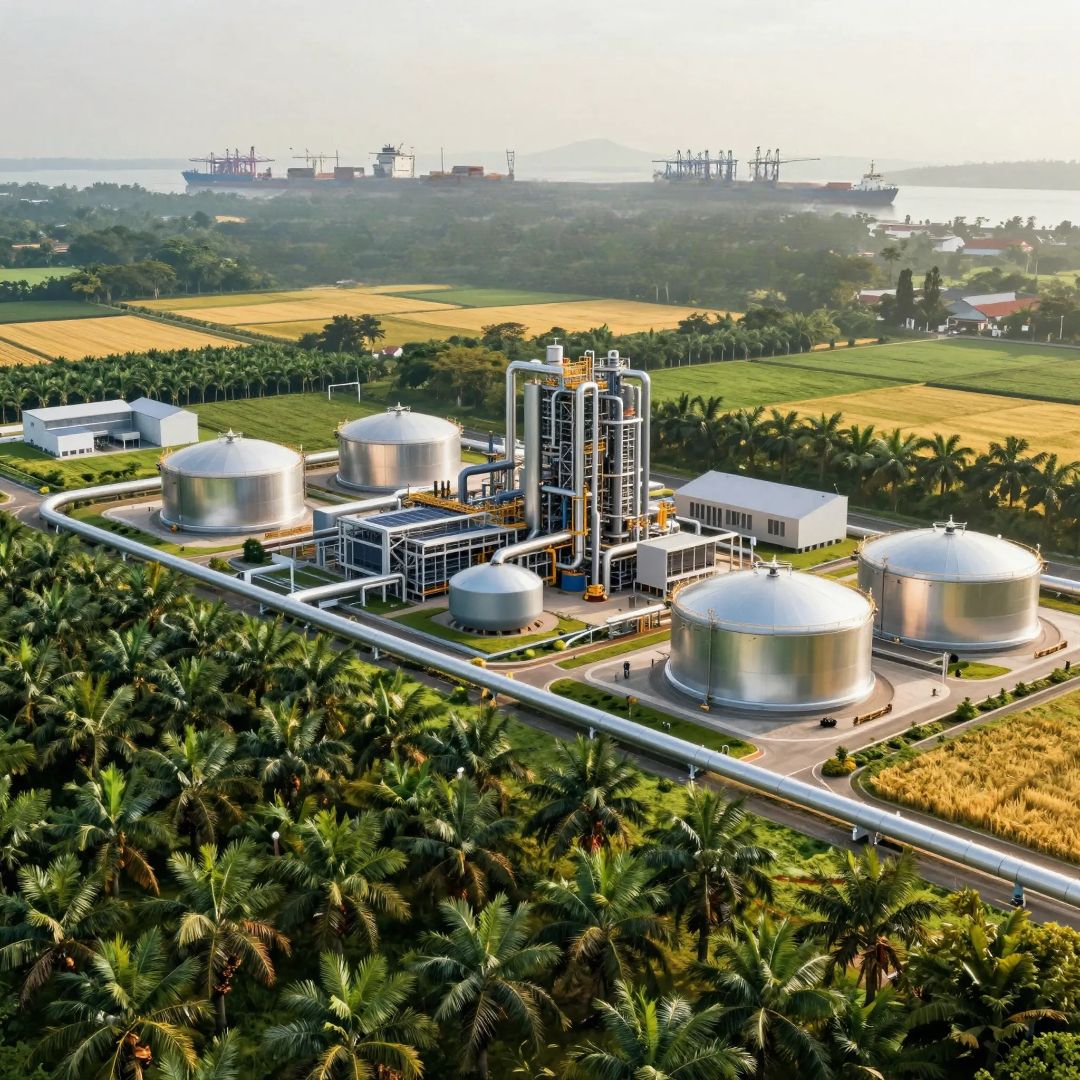
B50 is a mandated fuel blend half conventional diesel, half palm oil-based biodiesel. Indonesia has been working toward this progressively since 2008, raising its blending mandate in stages to the current B40 level. The jump to B50, however, is not just another step up. It would push Indonesia's annual domestic palm oil consumption from 12.6–12.7 million tons to as high as 15 million tons pulling an additional 2.3 million tons per year away from global export supply. Beyond the fuel economics, this effectively converts one of Indonesia's biggest commodity exports into a domestic energy shield, reducing the country's vulnerability to crude price swings in a way that monetary policy alone cannot achieve.
Ripple Effects on Global Commodity Markets
Full B50 implementation would cut Indonesian palm oil exports from 31 million tons in 2025 to an estimated 26 million tons in 2026, a 16% reduction from the supplier that dominates more than half of global palm oil trade. Markets did not wait for a formal announcement. On March 9, benchmark palm oil futures jumped 9% in a single session to RM4,774 per ton, the biggest single-day move in three years on nothing more than a government official signalling B50 revival. Analysts are now projecting prices in the RM5,000–5,500 range in H1 2026. The pressure extends beyond palm oil, driving substitution demand across soybean, sunflower, and rapeseed oils directly impacting food manufacturing margins and consumer price indices across global markets.
Trade-Offs and Structural Risks
Execution remains the critical challenge. Indonesia's biodiesel subsidy is tied to the crude oil-palm oil price differential, a gap that reached $370 per metric ton by early 2026, making financing increasingly difficult. Capacity constraints add further pressure, with an additional 4 million kiloliters needed to meet full B50 demand. Incomplete engine compatibility testing leads many market participants to anticipate a B45 outcome instead. The EU's deforestation regulation adds another layer: scaling palm oil consumption for fuel mandates intensifies land use pressure with real trade access consequences.
Conclusion
Indonesia's B50 experiment is what happens when a country's most abundant resource collides with a global energy crisis. Whether it lands at B45, B50, or a phased middle ground, its direction has already become a leading signal for global commodity markets. As geopolitical instability reshapes energy economics, Indonesia's pivot will be studied as either a model for commodity-driven energy independence or a lesson in what happens when policy ambition outruns economic reality. Follow Insight Sphere for data-driven analysis on commodity markets, energy policy shifts, and the macroeconomic forces reshaping global trade.