
Launch Program Revives
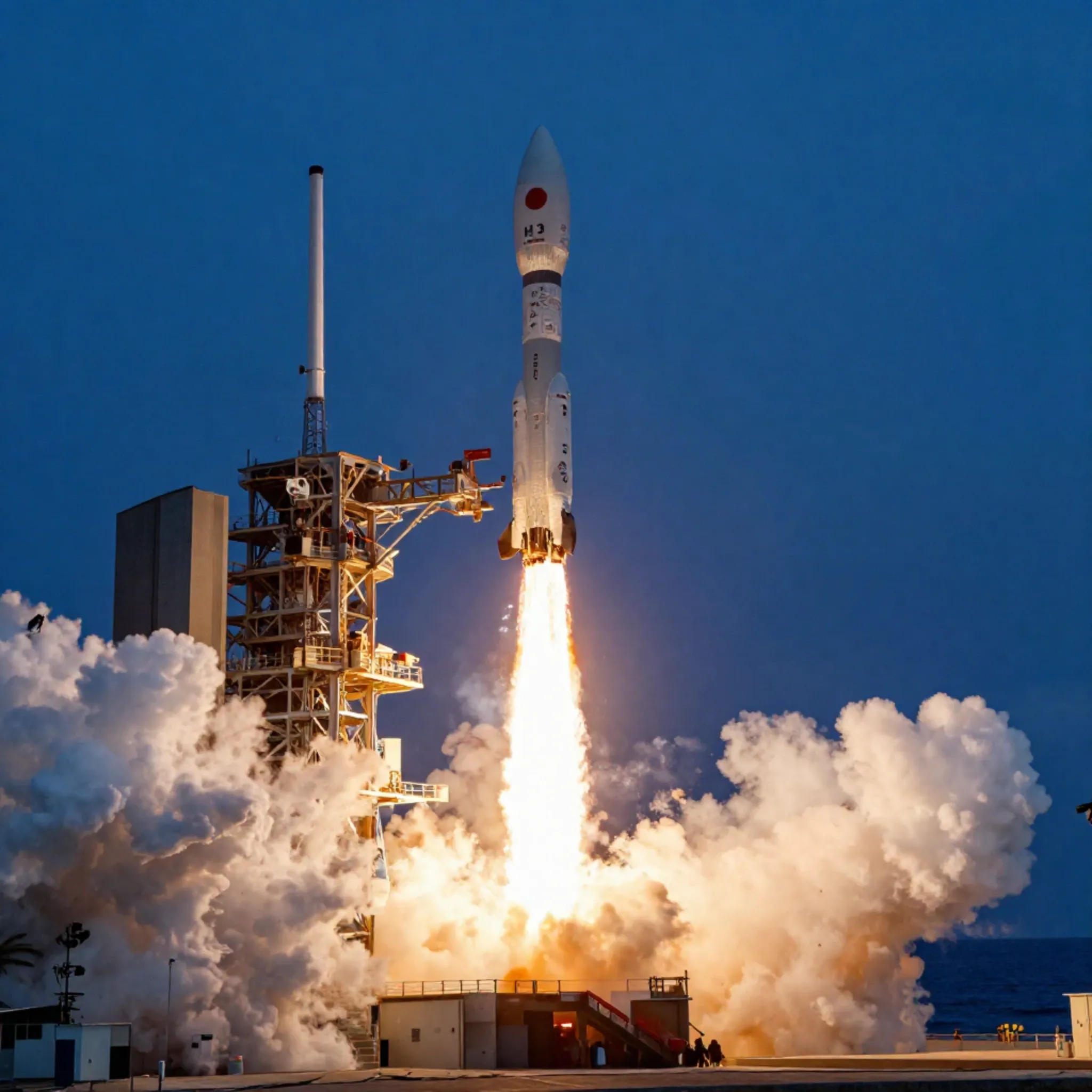
The December failure had left Japan without a reliable means of transporting payloads into space. During that ill-fated mission, the rocket's second-stage engine stopped burning earlier than planned, preventing the Michibiki No. 5 positioning satellite from reaching its intended orbit. The setback was a serious blow to a programme already under pressure to prove itself on the world stage. Friday's launch was different in both design and purpose. It marked the debut of the H3's 30 configuration, a booster-free variant powered by three first-stage liquid-fueled LE-9 engines and no solid rocket boosters, making it the lowest-cost model in the H3 series. Rather than carrying a large operational satellite, the rocket carried JAXA's Vehicle Evaluation Payload-5, a dummy satellite built specifically to collect flight data and verify performance. Six small secondary satellites developed by universities and other organisations were also carried aboard and successfully placed into orbit.
Space Competition Intensifies
The relief was palpable. MHI's H3 project manager Osamu Kitayama told reporters plainly, "It's been a long six months since December. I feel profoundly relieved." JAXA President Hiroshi Yamakawa struck a more forward-looking tone, saying the agency would remain vigilant and continue working to make Japan's space transportation system more reliable and internationally competitive. Those words carry real weight. The global launch market has been transformed by low-cost, high-frequency operators that have redefined what governments and commercial customers expect. Japan's H3 programme, developed jointly by JAXA and Mitsubishi Heavy Industries as the successor to the H-IIA rocket, is designed to meet that challenge head-on by offering greater flexibility and lower costs as satellite demand continues to grow worldwide. Beyond commercial ambition, the strategic stakes are equally high. The ability to launch its own defense, communications, and earth observation satellites means Japan no longer has to rely on other countries to access space. In a region where geopolitical tensions have been quietly rising, that kind of independence is not something any nation takes lightly anymore. Sovereign launch capability is increasingly seen not as a scientific achievement but as a pillar of national security.
Strategic Reliability Matters
The work is far from done. JAXA and MHI have outlined an ambitious launch schedule for fiscal 2026, including the Michibiki No. 7 positioning satellite, the HTV-X cargo transfer vehicle, the Martian Moons exploration probe, a space domain awareness satellite, and the Engineering Test Satellite No. 9. Delivering on that schedule will matter far more than any single launch. In a market where reliability has become as valuable as innovation, Japan has taken a meaningful step forward. Friday's launch was a recovery, but it was also a signal. The H3 is back, and Japan's space ambitions are firmly back with it. InsightSphere tracks the technologies, capital flows, and geopolitical shifts shaping the next frontier of global competition.