
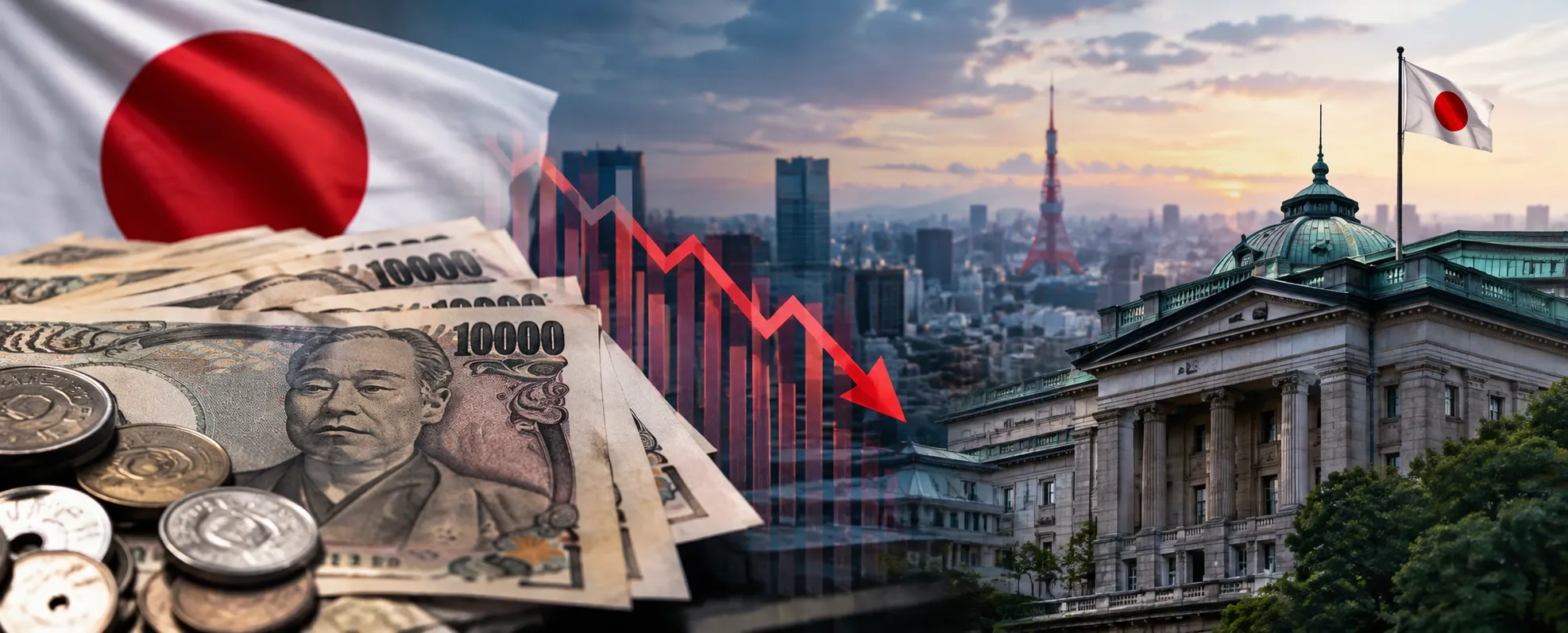
Japan Escalates Currency Intervention
According to data on Monday released by the Ministry of Finance, Japan's foreign reserves decreased by a record amount of $79.6 billion, equivalent to 6.18%, reaching $1.208 trillion in August from $1.287 trillion the previous month. This decline followed another round of substantial dollar sales and yen purchases carried out by Tokyo in an effort to combat the ongoing weakness of its currency. The magnitude of the drop demonstrates just how seriously the Japanese authorities take the depreciation of the yen, and it sends a message to global investors that monetary policy decisions made in Tokyo are now a factor that markets cannot afford to ignore.
Reserves Fund Yen Support
A large part of the fall was due to a decrease in foreign securities, specifically U.S. Treasuries, which had been accumulated during the dollar-buying interventions carried out about two decades ago and account for nearly 70% of Japan's total reserves. According to figures from the ministry, Japan spent 15.4 trillion yen on intervention between July 30 and August 26, which was the biggest single-month intervention ever recorded. This action temporarily raised the yen from the 40-year lows close to 164 yen per dollar to about 155 yen before it fell back towards 160 yen and then settled down near 155 to 156 yen in early September.
Capital Flows Face Repricing
The most notable aspect is that one element of this intervention took place in cooperation with the United States, marking the first coordinated action between the two countries since 2011 and one which surprised many market participants. In order to allay concerns about how much military power Japan still has, Tokyo and Washington have referred to a facility operated by the Fed in 2020, which had originally been set up to assist the markets during the pandemic. This facility would allow Japan to obtain dollar liquidity without having to sell its entire holdings of Treasury securities, thus reducing the financing pressure for future rounds of intervention.
Japan's Balance Sheet Matters
These figures indicate that Japan's efforts to defend its currency are no longer a rare and quiet measure but rather a continuous and expensive strategy supported by its balance sheet. The cooperation with Washington has introduced a geopolitical dimension which may influence the way other major economies deal with currency fluctuations in the future. For global investors, the point is clear: yen intervention, U.S. Treasury holdings, and the BOJ's policy are now closely connected, and a change in any one of them could cause waves to spread throughout foreign exchange, bond, and capital markets around the world.
Discover what Japan’s yen intervention signals for global markets and investors.