
Tech Momentum Slows
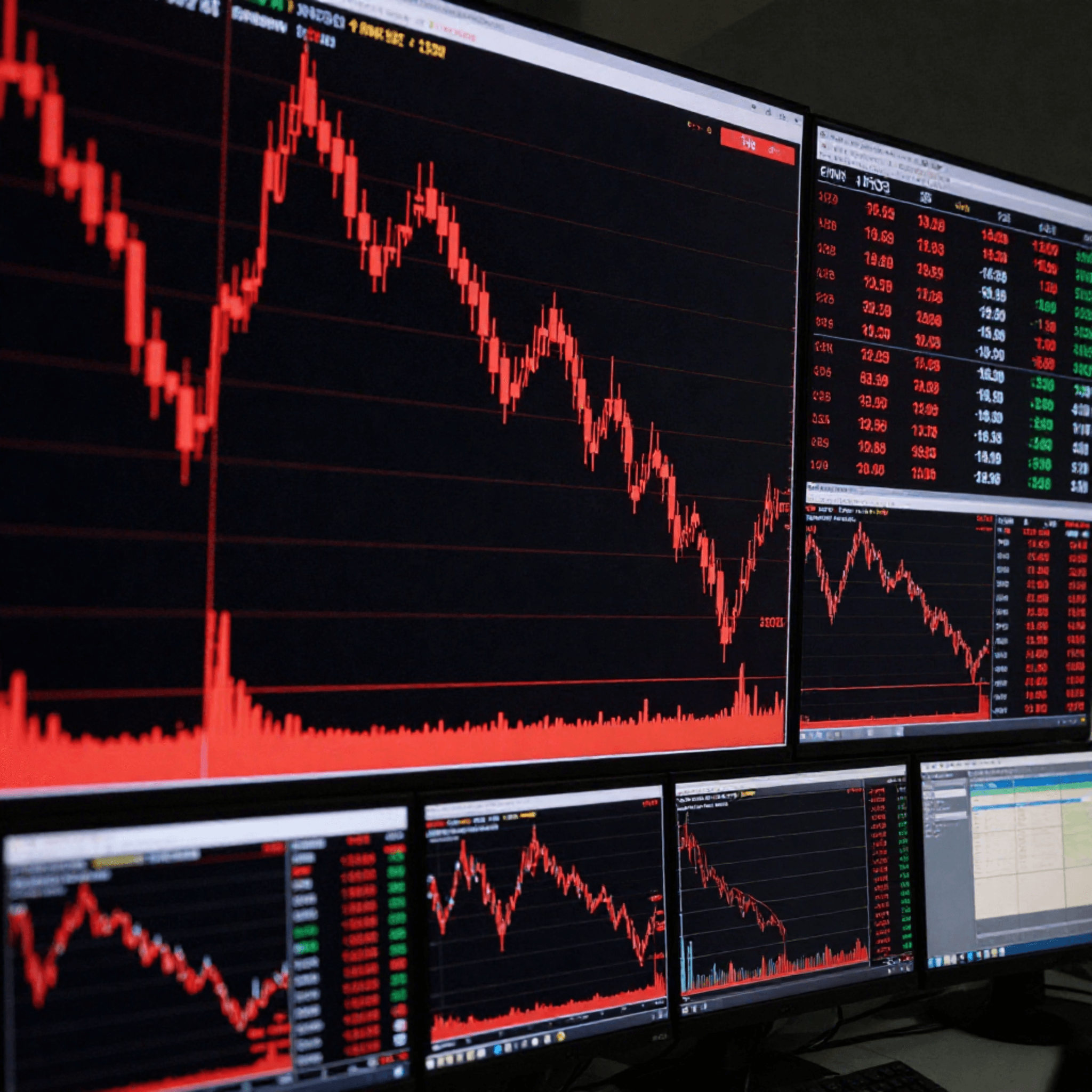
South Korea's market is structurally exposed to this kind of correction. The KOSPI leans heavily on export-driven technology companies, which means when heavyweight names sell off, the index does not absorb the blow quietly. It amplifies it. The index plunged so sharply on Monday that trading was halted for twenty minutes under a circuit breaker triggered for the third time this year, before closing down 8.3 percent. Samsung ended the day down ten percent, with SK Hynix posting similarly steep losses. The selloff was not contained to Seoul either. Japan's Nikkei fell 3.8 percent, Taiwan's Taiex dropped sharply after TSMC shed three percent, and Wall Street had already set the tone on Friday, when the Nasdaq recorded its biggest single-day fall in over a year. Rising oil prices, driven by fresh tensions between Iran and Israel, added fuel to inflation fears and gave investors one more reason to reduce risk exposure across the board.
Markets Reassess AI
The knock-on effect for businesses globally deserves attention. This correction is not a verdict on artificial intelligence as a technology or as a strategic priority. Most serious executives understand that AI is not going away and that building capability in this space remains critical. What has changed is how capital markets are choosing to reward that exposure. The days of a company simply mentioning AI and watching its multiple expansions are fading fast. Investors are asking harder questions now: Where exactly are the margins? What does demand look like twelve months from here? Is the pricing power real or assumed? Chief investment strategist Charu Chanana of Saxo noted that the burden of proof has gone up significantly, with markets demanding clear signs that AI spending is translating into real revenue. Susannah Streeter of Wealth Club echoed that sentiment, pointing out that investors are shifting toward technology companies with more reliable income streams rather than those running purely on growth expectations. The broader read for business leaders is that capital is becoming more selective and that selectivity is likely permanent, not cyclical.
Valuation Discipline Returns
There is a strong case to be made that what unfolded in South Korea this week is a preview of something playing out across global markets over the coming quarters. The AI trade is maturing, and maturing markets demand more than a good story. They demand proof. NVIDIA's Jensen Huang called the decline a buying opportunity, and South Korea's President Lee Jae-myung expressed confidence that domestic shares remained undervalued. Whether those assessments hold will depend entirely on what earnings seasons ahead actually deliver. Companies that have built genuine AI infrastructure and can point to tangible returns will continue to attract capital. Those who leaned into the theme without the substance to support it will find the road ahead considerably harder. South Korea's correction is a signal worth taking seriously. Valuation discipline has returned to the AI trade, and it is unlikely to loosen its grip anytime soon. At InsightSphere, we decode the market signals behind technology shifts, helping business leaders understand where capital, confidence, and competitive advantage are moving next.