
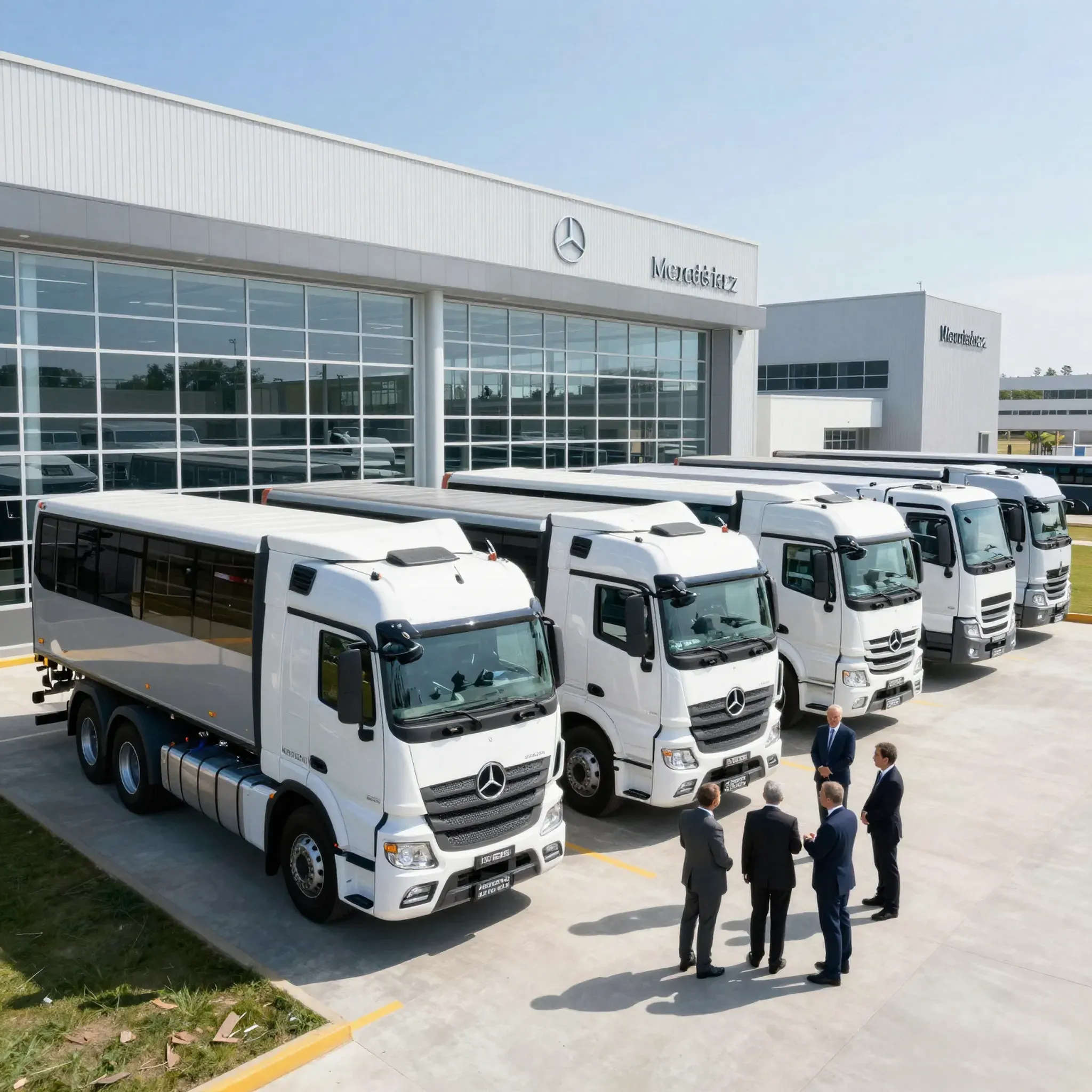
The company put approximately $110 million into this industrial center, which will handle production of trucks and bus chassis for Argentina and the surrounding South American markets. That kind of capital commitment, in this region, at this moment, tells a story that goes well beyond one company building one plant. Global manufacturers are rethinking where they produce, and Latin America is increasingly part of that answer.
Supply Chains Reposition
The Zárate plant will build the Atego and Accelo truck models along with the OH and OF bus chassis, with the capacity to turn out up to 10,000 units annually. Mercedes-Benz is moving operations from its long-running Virrey del Pino facility to Zárate, which gives the company more room to grow and far better access to transport infrastructure. That shift did not happen in isolation. The past few years taught manufacturers an uncomfortable lesson about what happens when production is concentrated in too few places. Disruptions ripple fast, and recovery is slow. Zárate's closeness to a port makes logistics considerably smoother, both for domestic deliveries and for getting products across borders into regional markets. Argentina is starting to look like a serious industrial base for commercial transport across South America, not just a market to sell into.
Freight Economy Expands
There is a reason investors pay attention when commercial vehicle plants go up. These facilities tend to show up ahead of broader industrial growth, not after it. CEO Achim Puchert framed the investment as a reflection of the company's long-term commitment to South America and the commercial vehicle market across the region. That language matters. Long-term commitment from a company of this scale is not a press release phrase; it is a capital allocation decision with years of planning behind it. Freight demand across Latin America is climbing, driven by infrastructure projects, mining activity, and an e-commerce sector that is still in relatively early stages of expansion. The plant is projected to generate hundreds of direct jobs and thousands more through suppliers, logistics companies, and connected industries. The employment story is real, but the larger story is what this plant represents for the regional supplier ecosystem that will grow around it.
Industrial Strategy Evolves
What Mercedes-Benz has done in Zárate is not simply add production capacity. It has planted a flag. The company operates as a local subsidiary of Daimler Truck, one of the world's largest truck manufacturers, which means the decision to build here carries institutional conviction. For those watching capital flows into the region, this investment is a meaningful data point. It suggests that confidence in Latin American freight infrastructure and commercial mobility is holding, even as macroeconomic headlines remain complicated. The commercial vehicle industry is no longer just about building trucks. It is about building the logistics and mobility infrastructure that underpins economies. Latin America is moving closer to the center of that conversation, and manufacturers who recognize that early will have a meaningful head start on those who wait for the picture to become clearer. InsightSphere tracks the industrial and logistics shifts redefining global manufacturing, mobility, and supply chain strategy.