
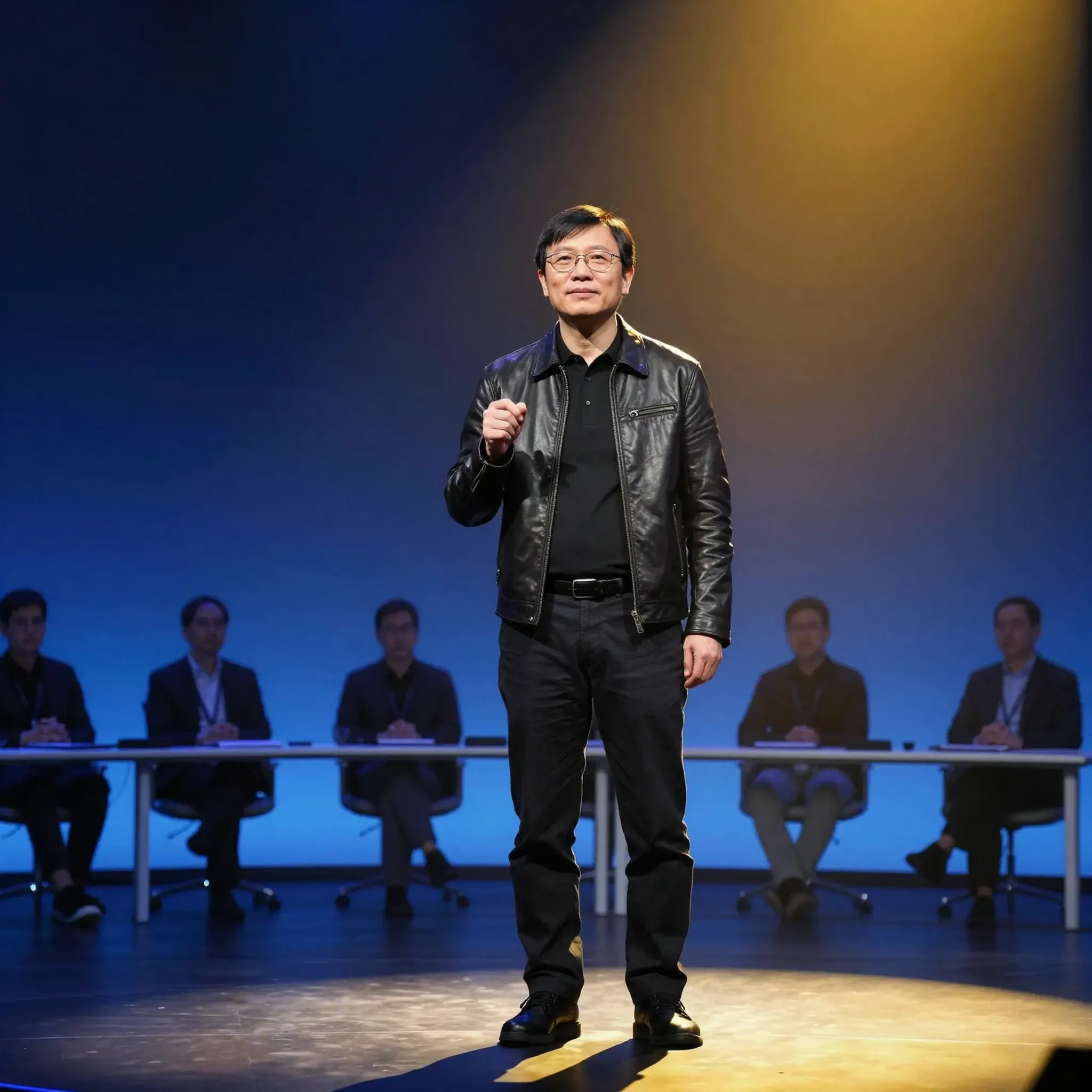
Huang mentioned that while risk exists, excessive fearmongering could affect innovation and prevent economies to fully realise the power of AI.
Changing the AI Narrative
This rapid advancement of generative AI triggered confidence and anxiety across industries. Enterprises are utilising this for automating workflows to change customer engagement delivering productivity gains. Yet public narrative always focuses on the worst case scenarios. Huang says that this amplifies fear, and the technology sector should rebalance this narrative. The most pragmatic approach would be to acknowledge the risks while emphasizing the benefits that AI can deliver. Generative AI can contribute $2.6 trillion to $4.4 trillion annually to the economy, if proper adoption and governance is maintained.
AI Adoption Across Industries
Despite the concerns and fear, AI adoption is rapidly increasing across finance, healthcare, manufacturing and retail to enhance efficiency. Gartner mentions that 70% of organizations will adopt AI in some form or another by 2027. Nvidia is a leading supplier of AI chips and infrastructure has put itself in the forefront of this transformation. Its graphics processing unit (GPUs) power various advanced AI systems for language models to autonomous technologies.
Balancing Risk
Huang appreciated the opportunity that has opened with AI, but it comes with its own challenges such as data privacy, algorithm bias, and workforce disruption. The key lies in responsible development and overregulation is often driven by innovation. The World Economic Forum points out the importance of governance frameworks to balance innovation and accountability. Effective governance and risk management can enable safe deployment while fostering continuous innovation. Countries around the world are heavily investing in AI innovation such as national security and economic growth. The United States, China, and the European Union are using AI to strengthen their workforce, from funding research and securing semiconductor supply chains. Huang’s remark highlights that tech leaders' responsibility is shaping the public narrative of AI. As technology is integrating itself in everyday life, perceptions influence adoption cycles and investment decisions. However, fearmongering can create roadblocks for investors and policymakers, and hence slowing adoption. Striking a balance between opportunities and challenge comes with AI with transparency and accountability.
Future Moment for AI
The current need for AI adoption represents a crucial decision for the technology leaders. Decisions made today will determine the future of AI in investment, regulation, and governance. Huang’s urge to avoid spreading fear is a strategic decision. Focussing on innovation, collaboration, and responsible deployment can unlock AI’s full potential while also addressing its concerns. As organizations continue to integrate AI into their operations, the focus will shift from experimentation to thoughtful execution. This transformation will determine the technological capabilities while emphasizing on thoughtful leadership. At InsightSphere, we analyse data-driven perspectives on how AI is transforming industries and how AI can lead the next generation of technological advancements.