
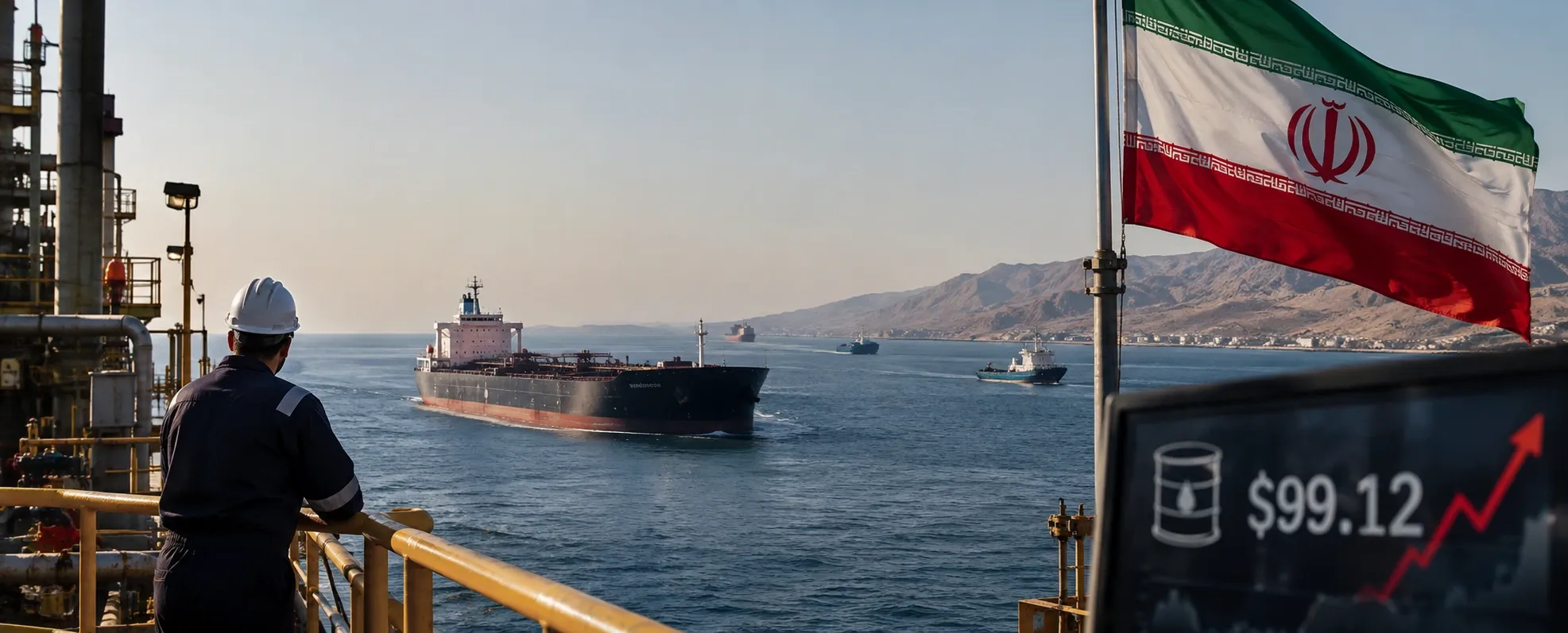
Oil Prices Enter Pressure Zone
Brent crude is nearly at $100 a barrel, being just under $3 away from reaching three figures after it rose last week due to a new escalation in tensions in the Middle East. Traders are keeping a close eye on the details of an agreement between Iran and Oman aimed at regulating shipping through the Strait of Hormuz, while heavy buying of crude oil by China continues to keep the market tight. Iran states that the agreement is about to be reached and that it would involve a temporary safe passage, even though this comes shortly after the United States is said to have attacked Iranian tankers over the weekend. Tehran has also warned that vessels near Oman are still at risk of being attacked, which does raise real questions as to how Washington might react next.
Hormuz Risk Remains Elevated
Renewed fighting between the US and Iran has ended what had been a period of relative calm, pushing oil futures higher on fears of deeper disruptions through the strait. Chinese refiners have stepped up crude purchases too, lifting prices for grades from Africa, Canada and Latin America, though that alone doesn't necessarily point to a lasting demand recovery. Brent has surged more than 30% since the US and Israel struck Iran over 6 months ago, though it remains well below the $126 peak hit in late April. Goldman Sachs analysts, including Daan Struyven, have nudged up their price forecasts, saying markets are increasingly pricing in a prolonged Middle East conflict, with risks tilted to the upside if disruptions stretch into 2027. Iran and Oman are also reportedly working to formalise control of the strait and could eventually charge transit fees, while the US continues blockading Iranian ports to curb exports.
Energy Costs Face Renewed Pressure
Despite the risks, oil is still flowing out of the Persian Gulf, with daily volumes through Hormuz holding near 10 million barrels, mostly crude, according to Vitol's Russell Hardy. Still, he flagged early signs of tightness building in product markets. Diesel and other refined fuels have climbed even faster than crude, as the Russia-Ukraine war adds another layer of pressure. Chinese crude imports actually strengthened in August, with higher purchases allowing the country to export more refined products, offering some relief elsewhere. For businesses in aviation, shipping and manufacturing, though, prices near $100/barrel are likely to feed quickly into transport and production costs, adding fresh inflation pressure just as many firms were hoping for a break.
Geopolitics Reshapes Energy Outlook
Iranian official Mohsen Rezaee said the country's posture toward US forces has shifted meaningfully, while Washington says it's given Tehran clear warning over its missile activity. As Pepperstone's Chris Weston put it, markets have seen this pattern before, hopeful progress followed by things falling apart again.
That uncertainty, more than any single price point, is what's driving the market now, and businesses and investors will need to keep watching closely.