
Oil Risk Returns
Oil prices climbed after the United States launched new strikes on Iranian targets near the Strait of Hormuz, marking its first military action in the area since late July and intensifying concerns over potential disruption to global energy shipments. The situation became more tense when President Trump uploaded a video to Truth Social asserting that Iran's Kharg Island export facility had been "blown to smithereens". Reuters processed the video using detection software and concluded that it was most probably AI-generated, with no evidence to support the idea that any strike had occurred. Iran's state oil official, Hamid Bovard, described the claim as ridiculous and stated that operations at Kharg were calm and proceeding as usual.
Hormuz Risk Escalates
The most recent point of escalation occurred when American forces attacked two Iranian rocket launchers on Larak Island, near Bandar Abbas and situated over the shipping lanes at the mouth of the Gulf. The United States stated that the launchers were being readied to fire sea mines into the strait. In reply, Iran acted swiftly by striking US-linked bases in Jordan. The Iranian Revolutionary Guards also claimed to have brought down a US drone over the waters of the Gulf.
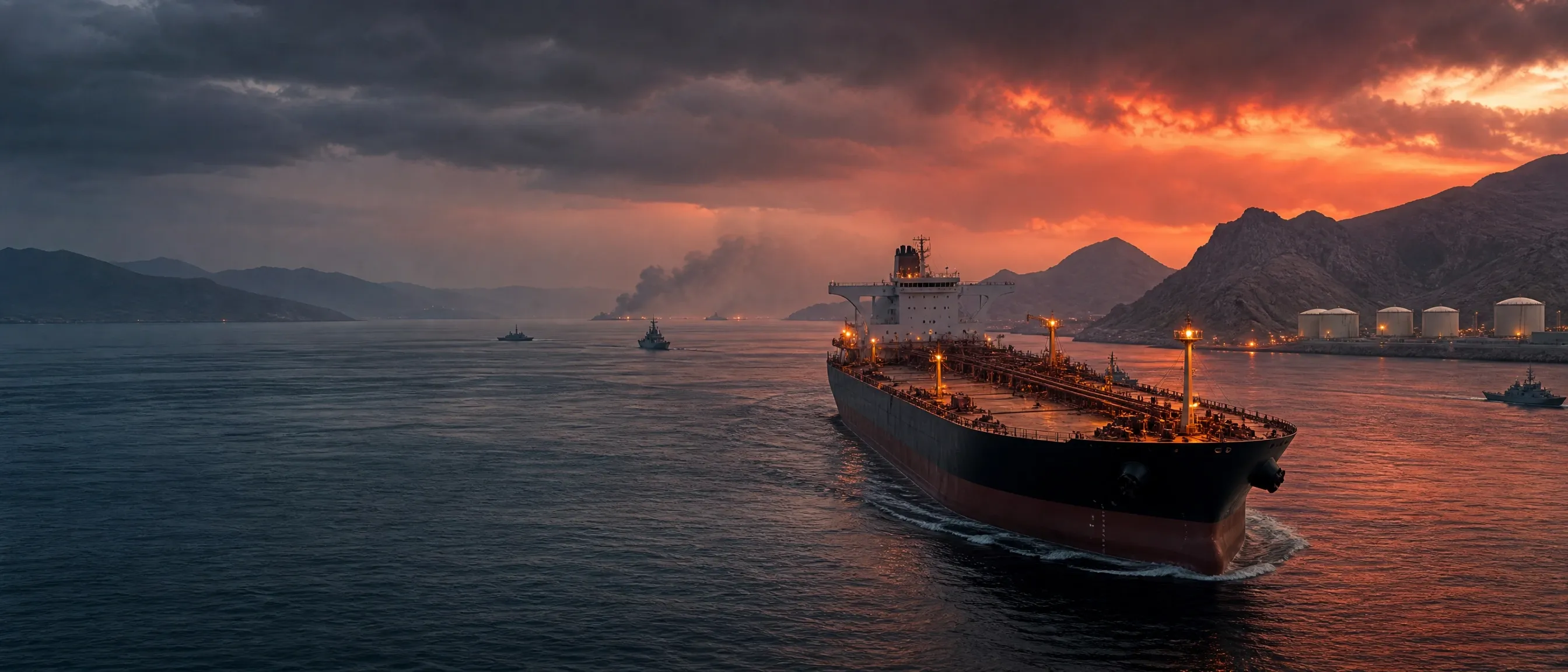
At the same time, a supertanker caught fire after having been hit by two naval mines in the southern part of the strait, the Guards saying that the mines had been aimed at a ship trying to pass through illegally. The number of tankers visibly travelling through the waterway has dropped to about five per day, although the actual figure might be higher because some vessels are switching off their tracking systems. The strait usually carries nearly 20% of the world's crude oil and LNG shipments, and Kharg alone handles about 90% of Iran's oil exports, which is the reason why even unverified threats against it cause the markets to react quickly.
Energy Shock Broadens
Together with the military escalation, Washington is also tightening its economic grip. According to Scott Bessent new secondary sanctions are expected to be imposed on a weekly basis, beginning with banks found to be holding Iranian funds, after the move against the UAE branch of Egypt's Banque Misr. Since Iran is OPEC's third-largest producer, any continued disruption to its exports has significance that extends well beyond the region, and central banks concerned about inflation will be keeping a close eye on how the situation develops.
Markets Price Uncertainty
After six months of the conflict, it is clear that oil markets are responding more to what is believed than to facts that have been confirmed. The impact on prices has been greater than that of any one verified event because of an AI-produced video, a strike on a disputed air base, and a tanker that has been mined. The combination of actual military escalation and unverified claims is likely to keep the energy markets in a state of anxiety, and business leaders should regard this volatility as a continuing risk rather than as a temporary news item.
As political tensions draw nearer to vital energy infrastructure, market prices can reflect the risk well before a real shortage of supply appears.