
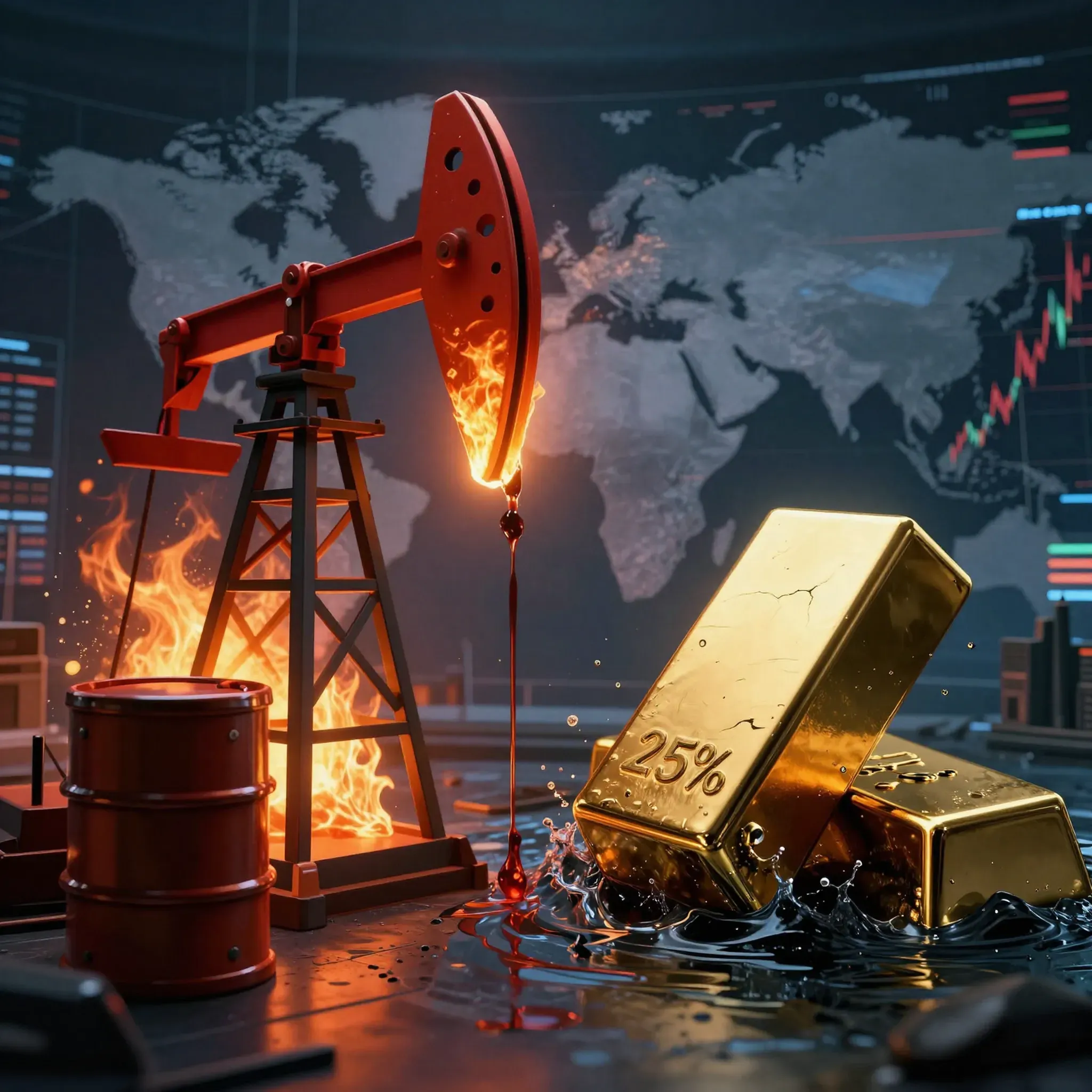
Oil prices surged nearly 25% in a single trading session marking the sharpest moves in recent years as investors reacted to potential supply chain disruptions in the Middle East. At the same time, gold considered as a safe haven asset declined by 2%, highlighting movement of dollar and inflation expectations are influencing investor behavior.
Energy Markets React to Supply Shock
The most adversely affected were the energy markets. Benchmark Brent crude oil rose to around $119.50 per barrel, highest since mid-2022. But this is estimated to increase with the US-Iran conflict everyday. As tensions escalate, several Middle Eastern producers such as Iraq, Kuwait, and the United Arab Emirates are reducing oil production due to security concerns and logistics reasons. Analysts warn that even temporary disruptions have significantly impacted economic consequences. Energy price spikes often result in inflation by increasing transportation costs to electricity costs to manufacturing expenses across the globe.
Gold Falls Despite Geopolitical Tensions
Ideally geopolitical crises convince investors towards gold, however the current market has pushed to a different outcome. Gold prices fell more than 2% primarily due to strengthening of the U.S. dollar. A stronger dollar makes gold more expensive for buyers using other currencies, reducing demand in international markets. Also, a surge in oil prices raises concerns that inflation remains elevated delaying the interest rate cuts by major central banks. High interest rates usually reduce the price of assets such as gold. The agricultural market experienced significant gains due to rising oils, and demand for biofuel has increased. Malaysian palm oil has jumped to 9%, with soybean reaching the highest since 2022. Also, wheat prices rising to the highest level since 2024 and corn reaching an all time 10 month high (Business Standard). The industrial metal like aluminium surged to the highest price in the last four years due to supply chain disruptions from the Gulf producers. Although other metals have faced a downwards pressure due to the growing US dollar.
Conclusion
The sharp rise in the oil prices due to the continued geopolitical tension between US-Iran currently driving the global commodity market. While the geopolitical crisis is the primary reason for this surge, some underlying factors such as currency, inflation and supply chain disruptions are adding to the volatility in the market. Investors and policymakers, this situation is a reason that geopolitical risks remain a powerful force capable of reshaping economic conditions change almost overnight. As the conflict continues to increase, the commodity market is likely to remain highly sensitive to developments in the Middle East region, with energy and oil being the largest supplier from this region. At InsightSphere, we analyze geopolitical events, and economic trends that act as catalysts in shaping global markets.