
Economic Momentum Weakens
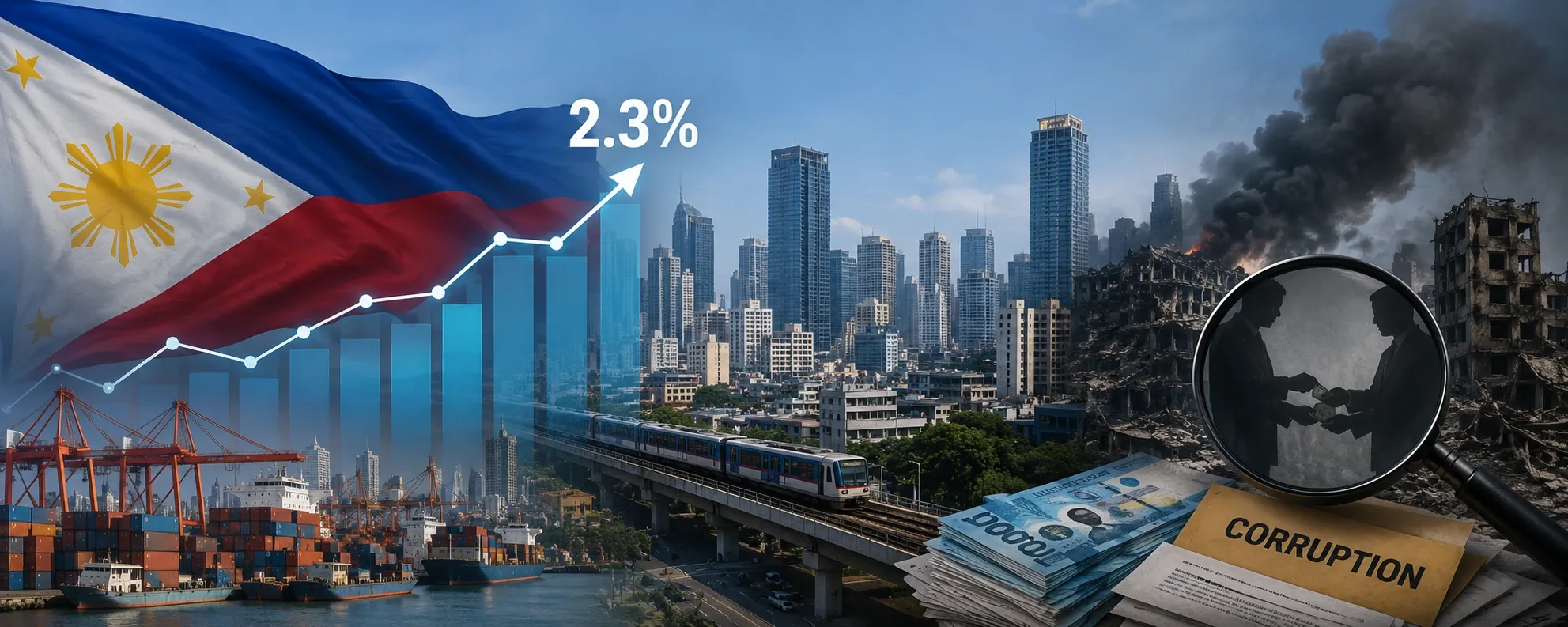
The Philippine economy expanded by only 2.3% in the second quarter of 2026, the slowest it has grown in a year since 2021 and well under the 2.8% that economists polled by Reuters had penciled in. The reading also marks a step down from the previous quarter's 2.8% expansion. For the first half of the year as a whole, growth stood at 2.6%, comfortably below the lower end of the government's own target range of 3.5% to 4.5% for 2026. The numbers confirm what many analysts had already begun to suspect: that the country's growth engine is running well below its potential at a time when both domestic and external pressures are mounting at once.
Oil Shock Ripples
A large part of the slowdown can be traced back to a sharp contraction in construction activity, which fell 14.8% in the second quarter, a much steeper decline than the 4.3% drop recorded in the first three months of the year. Investment overall shrank by 9.2%, extending a run of contraction that has now lasted four consecutive quarters. Economic Planning Secretary Arsenio Balisacan pointed to last year's corruption scandal tied to flood control projects as a key drag, noting that it had discouraged public spending and shaken investor confidence around infrastructure work. On the consumer side, household spending, which makes up more than two-thirds of the economy, grew just 2.8%, a slight easing from 3.0% in the first quarter, as inflation continued to chip away at purchasing power. Prices have averaged 5.0% so far this year, still running above the central bank's 3.0% target.
Resilience Becomes Priority
The combination of stalled infrastructure spending, weaker investment, and persistent inflation is forcing both policymakers and businesses to rethink their near-term strategies. The central bank has already raised its policy rate by 25 basis points (bps) in each of its last two reviews in an effort to keep inflation in check, and the latest growth figures will weigh heavily on its next decision, due later this month on August 27. Companies operating in the Philippines are likely to keep a close eye on how quickly infrastructure projects resume, since much of the current weakness stems from delayed public works rather than a broader collapse in demand. Balisacan struck a note of cautious optimism, pointing to improving business confidence surveys and the expectation that recently approved infrastructure projects will begin picking up pace in the current quarter.
Growth Needs Stability
What this quarter really shows is that the Philippines' growth story still hinges on two things: how fast public infrastructure spending gets back on track, and whether households have enough breathing room left in their budgets to keep spending. Inflation hasn't come down to target yet, and the infrastructure rebound the government is banking on is still in its early days. That leaves the next few months as a genuine test of whether momentum can return without prices heating up again. For businesses and investors watching this space, the coming quarters should offer the first real clue as to whether this slowdown is a passing dip or the start of something more structural.
At InsightSphere, we decode how geopolitical events, energy markets, and economic indicators reshape business strategy and investment decisions.