
Partnership Signals Stability
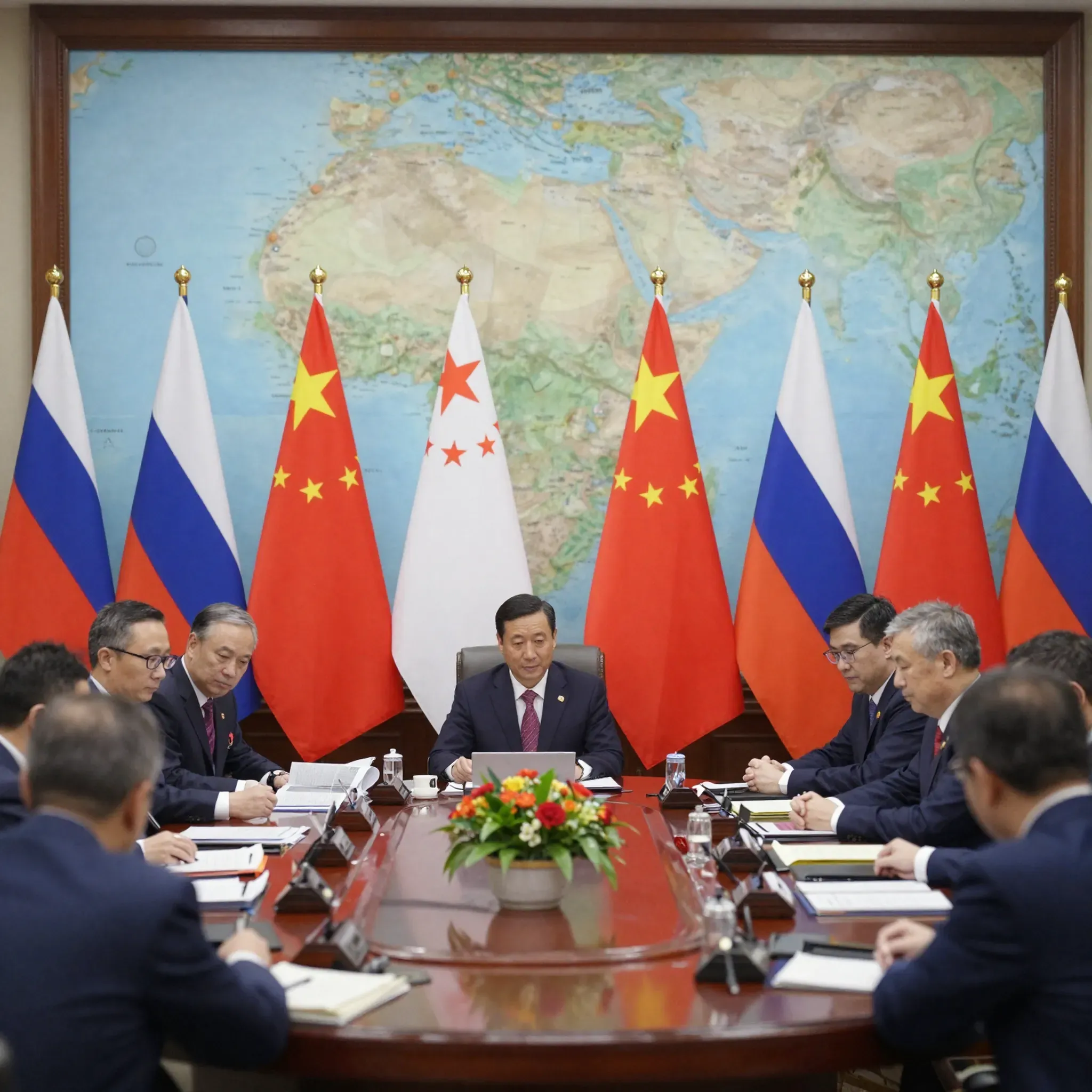
The agenda between the two leaders stretched across trade, energy, security, and diplomatic coordination. But the deeper message had nothing to do with line items. Both Xi and Putin reinforced their shared vision of a multipolar world order, one where Western institutions do not set the rules. What makes this meeting significant is not just what was said, but how clearly it was said. Xi and Putin left no room for ambiguity. The partnership is built for the long run, and it is not open to outside pressure or negotiation. That point came through loud and clear this week.
Fragmentation Reshapes Markets
For the average executive or investor watching from the sidelines, the temptation is to file this under geopolitical noise and move on. That would be a mistake. What Xi and Putin laid out in Beijing was not a temporary arrangement born out of wartime necessity. The two leaders emphasized long-term cooperation across trade, energy, and economic coordination, which means the conditions under which global business operates are being rewritten at the highest level. Energy is already deep into this transition, with Russia steadily redirecting its exports toward Asian markets and China absorbing them at scale. This is no longer a detour around Western sanctions. It is becoming the main road. The two nations have made clear they intend to build trade and energy interdependence that operates entirely outside Western-led financial and institutional frameworks. Supply chains that were designed for a globalised world are now being stress-tested by a world that is quietly splitting into parallel systems. Technology, semiconductors, and financial infrastructure are each drifting along tracks defined by geopolitical loyalty rather than market efficiency. Businesses that have not started thinking about which ecosystem they operate in, and which one they may be locked out of, are already behind. Capital markets are absorbing this reality too. Stronger China-Russia coordination reads as a signal of prolonged uncertainty, and that uncertainty is already feeding into commodity pricing, currency hedging, and where long-term investment capital chooses to sit.
Conclusion
The Beijing meeting did not create a new reality. It confirmed what has been building steadily beneath the surface of global affairs. The age of frictionless globalisation, where business could expand everywhere, and politics stayed in the background, is over. What is replacing it is a world of deliberate choices, competing spheres, and real consequences for those who move too slowly. For business leaders, the question is no longer whether geopolitics affects strategy. It already does. The question is whether your strategy reflects that yet. InsightSphere translates geopolitical complexity into strategic insight for leaders navigating an increasingly fragmented global economy.