
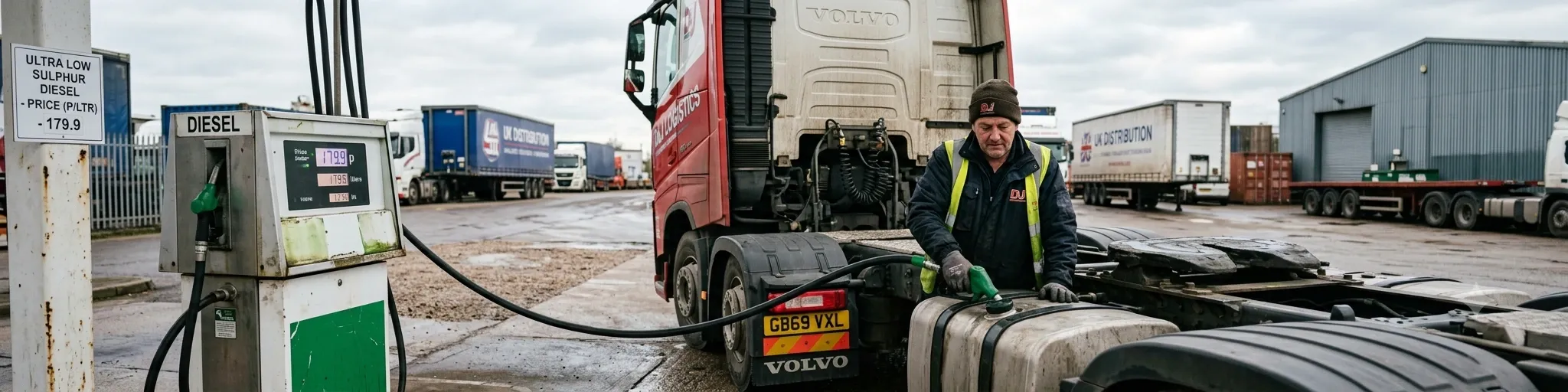
Why diesel has risen faster than petrol
Fuel duty is the same for both fuels at 52.95p a litre, so the difference comes from the cost of the fuel itself. Diesel’s pre-tax price hit a record 113.3p a litre in late summer, according to the House of Commons Library. Global supply shortages have pushed prices higher, while the UK now imports 55% of its road diesel, up from 14% in 2003, according to Fuels Industry UK.
Transport costs climb as margins shrink
Haulage firms typically run on profit margins of around 2%. At that level, fuel costs for UK businesses in the sector quickly eat into profit. Hauliers are paying about £350 more per truck each week than before the conflict. Direct Connect Logistics, which runs 22 lorries, has seen its monthly fuel bill rise from about £50,000 to £65,000.
Passing these costs on is difficult. A Road Haulage Association (RHA) survey found that only 10% of operators could pass fuel increases on in full, while 65% could do so only in part. Many are tied to fixed-price contracts. Alison Edwards, director of policy at the Confederation of Passenger Transport, said diesel costs had reached “unsustainable levels” for coach operators, most of which are family businesses.
The effect spreads beyond the road. ONS data showed prices for transport and storage services were 8.9% higher in the second quarter than a year earlier. In an August survey by Logistics UK, 69.5% of respondents said their transport costs had risen since the first quarter, and 79% expected fuel prices to climb further. Higher delivery charges usually filter through to shop prices over time.
What businesses are asking for
The government has extended the temporary 5p-per-litre fuel duty cut until 31 December. It has also reduced duty on red diesel, used by farmers and construction firms, by 36% until the end of the year. The RHA is calling for similar support for road freight operators through an “Essential User Rebate”. RHA managing director Richard Smith said operators “simply can’t keep on absorbing vastly inflated prices”.
What comes next
The temporary 5p-a-litre fuel duty cut is scheduled to end on 31 December 2026. Unless the government extends it or announces other changes, duty will rise by 3p a litre on 1 January 2027 and a further 2p on 1 March, taking the rate to 57.95p. The Autumn Budget on 28 October 2026 should clarify the government’s plans.
Hauliers’ fuel costs will depend on global oil prices and oil supplies through the Strait of Hormuz. Some are reviewing fuel costs weekly rather than monthly and adding fuel surcharges to customer contracts. However, how much of the extra cost they can recover will depend on contract terms and customers’ willingness to pay.