
Public Markets Meet Rocket Science
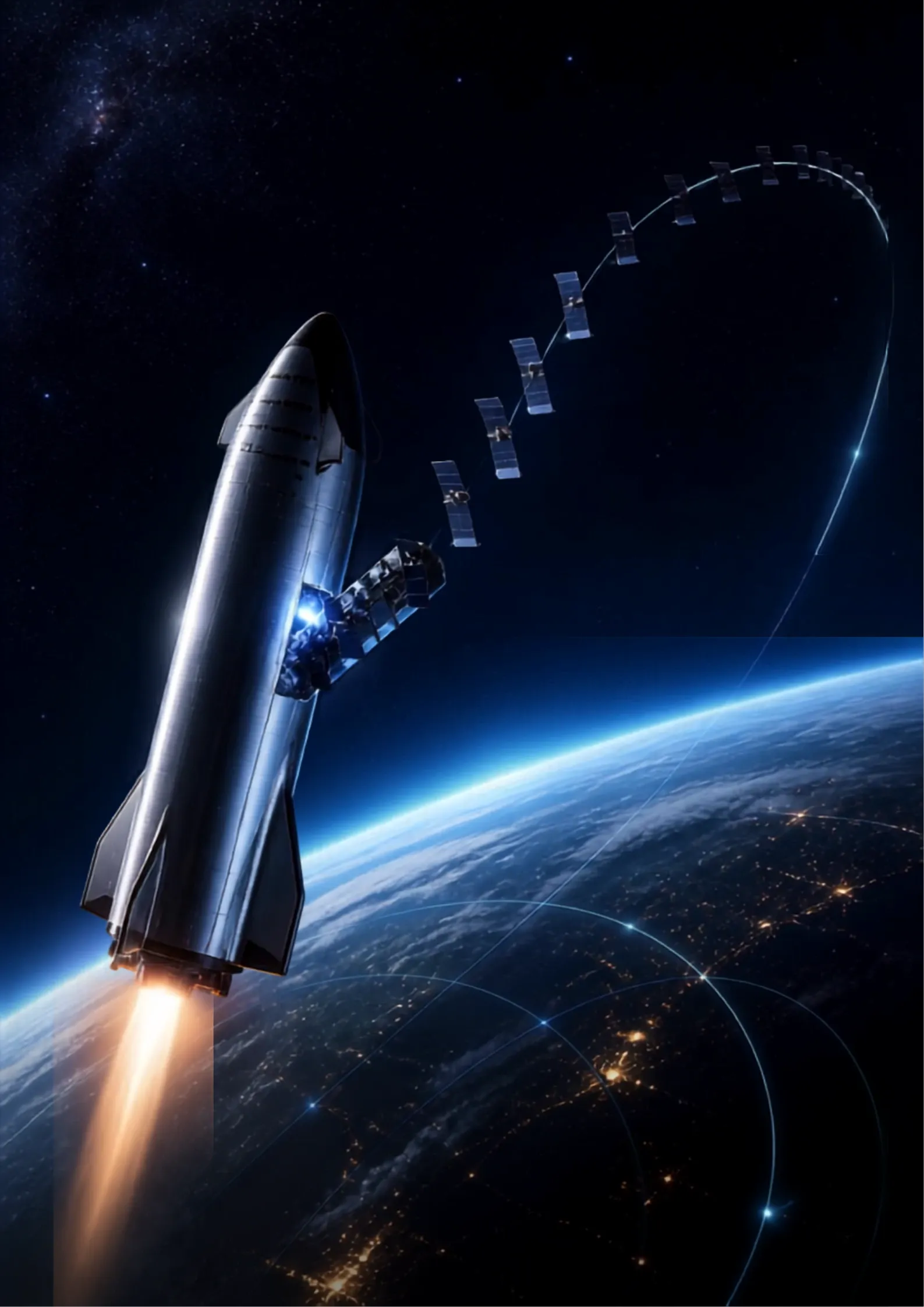
SpaceX launched its Starship rocket on Friday evening from its Starbase facility in Texas, carrying out the 13th test flight of the vehicle and the first since the company completed its record-breaking public offering last month. The mission gave the market its clearest look yet at how the rocket performs once engineering ambition meets investor expectation. The flight showed real gains in satellite deployment and heatshield performance, even as the booster once again failed to stick a clean landing. For a company that only recently began trading publicly, that mix of progress and shortfall now carries weight well beyond the launch pad.
Starship Advances Core Capabilities
About 2 minutes into the flight, the Super Heavy booster separated from the Starship spacecraft and headed toward a splashdown in the Gulf. SpaceX said the booster attempted to relight its engines for the landing burn, but only some of them fired, leading to what the company described as a hard splashdown rather than a controlled one. The upper stage fared better, coming down softly in the Indian Ocean and remaining intact, giving engineers their first real look at an undamaged heatshield after re-entry. Around 18 minutes into the mission, SpaceX released 20 of its newer Starlink V3 satellites into orbit, the first time these units were tested in actual flight conditions before burning up roughly 20 minutes later as planned. Built at a SpaceX facility in Redmond, Washington, the V3 satellites are larger and carry solar arrays capable of generating 2x the power of earlier versions.
Execution Now Moves Markets
SpaceX is also working on a new line called Starmind, satellites the company eventually hopes to operate as orbital data centers. Beyond expanding Starlink, Starship is expected to carry astronauts to the lunar surface and eventually support crewed missions to Mars, with a major NASA test flight already planned for next year. Industry analyst Tim Farrar of TMF Associates noted that while this flight showed forward movement, SpaceX still has considerable ground to cover before Starship achieves the kind of rapid reusability the program depends on. He pointed to the repeated engine relight issues as a real concern, warning that a similar failure during a landing attempt at the launch site itself could cause serious damage to the pad. The flight had already been delayed once due to weather, and an earlier July attempt was scrubbed after the booster triggered an automatic shutdown moments before ignition.
Starship Becomes Investment Thesis
Markets have not been forgiving of the uncertainty. SpaceX shares have fallen in 4 of the last 5 weeks, down 43% from their peak close in mid-June. That decline reflects a broader shift in how investors are reading Starship, not simply as an engineering milestone but as a direct input into the company's valuation story. Each test flight now doubles as a public referendum on how close SpaceX really is to the reusable, high-frequency launch system its plans depend on. From launch milestones to market implications, InsightSphere tracks the technologies redefining where capital and competition move next.