
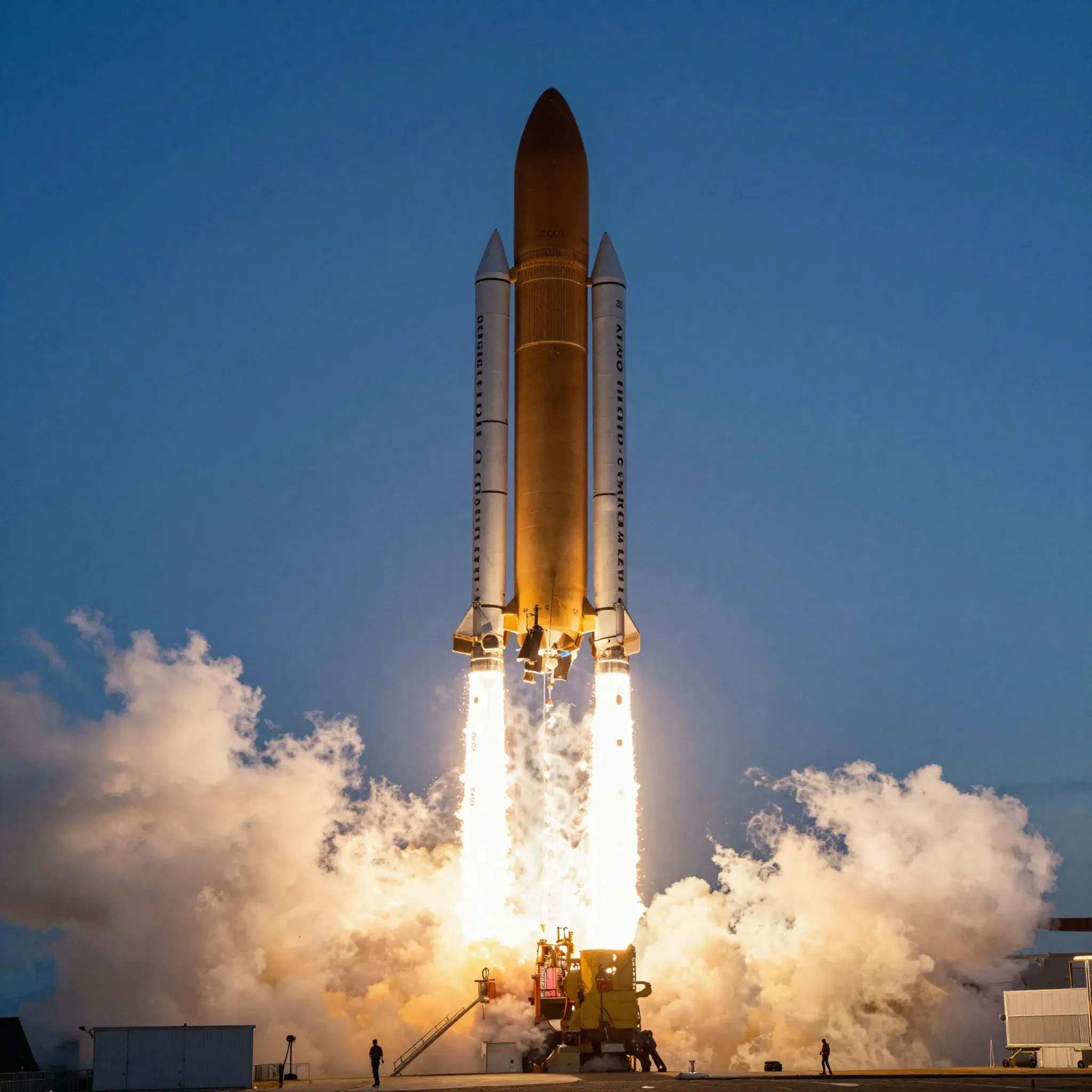
SpaceX is preparing to launch the 12th uncrewed test flight of its Starship rocket, marking the debut of SpaceX Starship V3, the largest and most powerful version of the vehicle yet, just weeks ahead of a planned public listing that could rank among the largest in market history. The launch is not simply an engineering test. It arrives at a moment when capital markets are actively pricing the future of space infrastructure, and the outcome of this flight carries direct implications for investor confidence in the economics of large-scale, reusable space transportation.
Launch Signals Readiness
After months of ground testing and engineering refinements, SpaceX is ready to put SpaceX Starship V3 to the ultimate test. The mission, designated Flight 12, is scheduled for liftoff from the Starbase facility in South Texas with a 90-minute launch window opening at 6:30 p.m. EDT, representing the first Starship flight of the year following a gap since last October. The upgraded vehicle brings a fundamentally different capability profile to the launchpad, featuring a redesigned propulsion system, updated avionics, larger grid fins on the Super Heavy booster, and hardware built specifically for ship-to-ship propellant transfer and docking, with SpaceX claiming the new version can deliver more than 100 metric tons to low-Earth orbit in a fully reusable configuration. That number deserves context. Prior Starship iterations reportedly topped out near 35 metric tons, a figure that fell below what the existing Falcon Heavy could already carry, and closing that gap while achieving full reusability is precisely what transforms Starship from a promising prototype into the backbone of a commercially viable space logistics network.
Economics Beyond Rockets
The IPO dimension makes this flight unusually consequential for capital markets. SpaceX is reportedly targeting a Nasdaq debut under the ticker SPCX with a capital raise of up to 75 billion dollars, which would surpass Saudi Aramco's 2019 record as the largest public offering in history, with the company seeking a valuation approaching 1.75 trillion dollars. Analysts at PitchBook have described SpaceX Starship V3 as the single most important pre-IPO catalyst remaining on the company's calendar, and the reasoning is straightforward. Nearly every major growth narrative in SpaceX's investor prospectus depends on the vehicle performing as advertised, from Starlink capacity expansion and a proposed network of AI-oriented data centre satellites to a 4 billion dollar NASA contract tied to the Artemis 4 lunar mission, with Musk also indicating the company expects to send the vehicle on its first uncrewed Mars voyage by the end of 2026.
Markets Watching Closely
What investors are really evaluating here is whether SpaceX can convert years of iterative testing into a reliable, high-frequency launch cadence that supports the kind of infrastructure-grade revenue model a 1.75 trillion dollar valuation demands. A clean Flight 12 for SpaceX Starship V3 would not answer all of those questions, but it would materially reduce the uncertainty discount baked into the offering, and even a partial success demonstrating upgraded propulsion and heat shield performance could be enough to shift sentiment decisively. The space economy is entering a phase where competitive advantage belongs to whoever controls the orbital logistics backbone, and this vehicle remains the clearest bid for that position yet. InsightSphere brings clarity to the technologies, investments, and industrial shifts transforming tomorrow’s economy.