
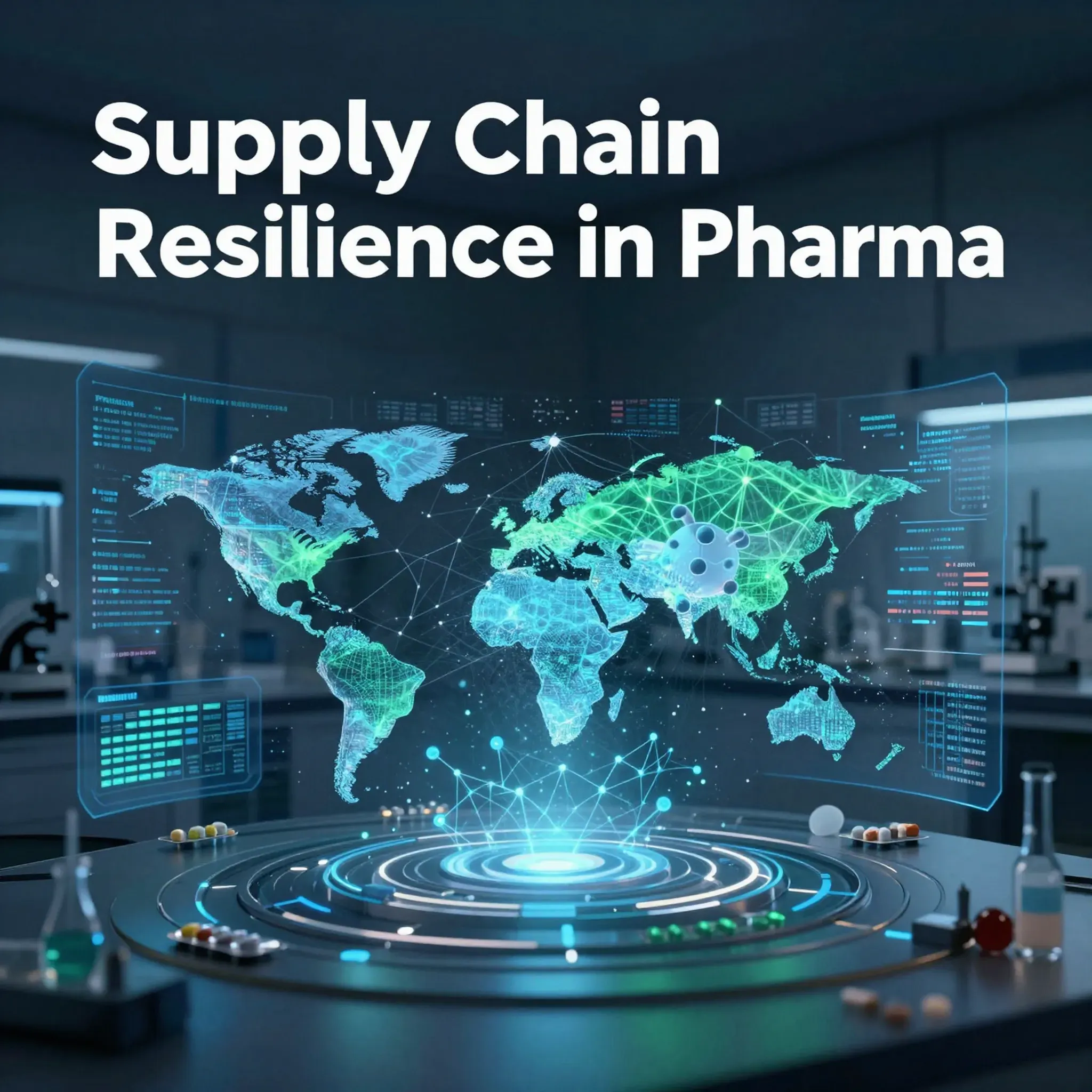
The answer continues to reside in the intersection of data, artificial intelligence (AI), and predictive analytics. Together, they are revolutionizing the way pharmaceutical businesses predict demand, control inventory, and guarantee prompt delivery of life-saving treatments. The market for digital biomarkers alone is expected to increase at a 22.74% CAGR to reach USD 32.37 billion by 2034, showing how data-driven innovation is turning into a key competitive advantage. Beyond R&D, AI is rapidly emerging as a driver of resilience throughout the pharmaceutical value chain.
From Efficiency to Intelligence
AI has a significant impact on supply chain management. With a 50% increase in prediction accuracy, predictive algorithms can now identify possible shortages, predict demand swings, and optimize distribution. For instance, Johnson & Johnson's digital command centers and Sharp's usage of AI-driven scheduling systems have allowed for near real-time insight into worldwide operations, resulting in considerable energy efficiency benefits and cost reductions of 10–20%. But beyond just automation, you need integratio,n which sets you apart. According to McKinsey's study, companies that match AI projects with strategic business goals see quantifiable effects in R&D, manufacturing, and logistics as well as 30–50% increases in productivity. CXOs are realizing that AI is an organizational transformation that needs cross-functional cooperation, ethical supervision, and cultural transformation rather than a plug-in solution.
Generative AI: The Next Leap
Generative AI (GenAI) is writing the next chapter in the digital development of pharmaceuticals. McKinsey's QuantumBlack framework proposes 21 high-impact use cases in the life sciences, ranging from chemical design and clinical trial simulation to intelligent document production in regulatory and medical affairs. For example, GenAI can speed up reviews and cut medical writing time by 50–70% in medical communications, allowing professionals to concentrate on value-driven interactions. AI-driven insight synthesis in medical affairs allows teams to gather and evaluate physician input at scale, converting thousands of discussions into useful information. The result? Better patient outcomes and faster innovation cycles. As AI progresses from pilot to enterprise size, success demands more than just algorithms. It calls for process reengineering, people upskilling, and the integration of ethical AI frameworks that guarantee openness and legal compliance. The battle for qualified people is intensifying, with AI-related job postings in the pharmaceutical industry increasing by 43% a year. To stay ahead of the curve, firms must invest in technical literacy and change management. As pharma leaders navigate this era of intelligent supply chains and predictive ecosystems, the question is how to strategically implement AI. At Insight Sphere, we combine market intelligence, trend analytics, and human foresight, and help organizations translate emerging technologies into measurable business outcomes. So, are you ready to see where data can take your business next? Let’s decode the future together.