
A Strategic Reset Begins
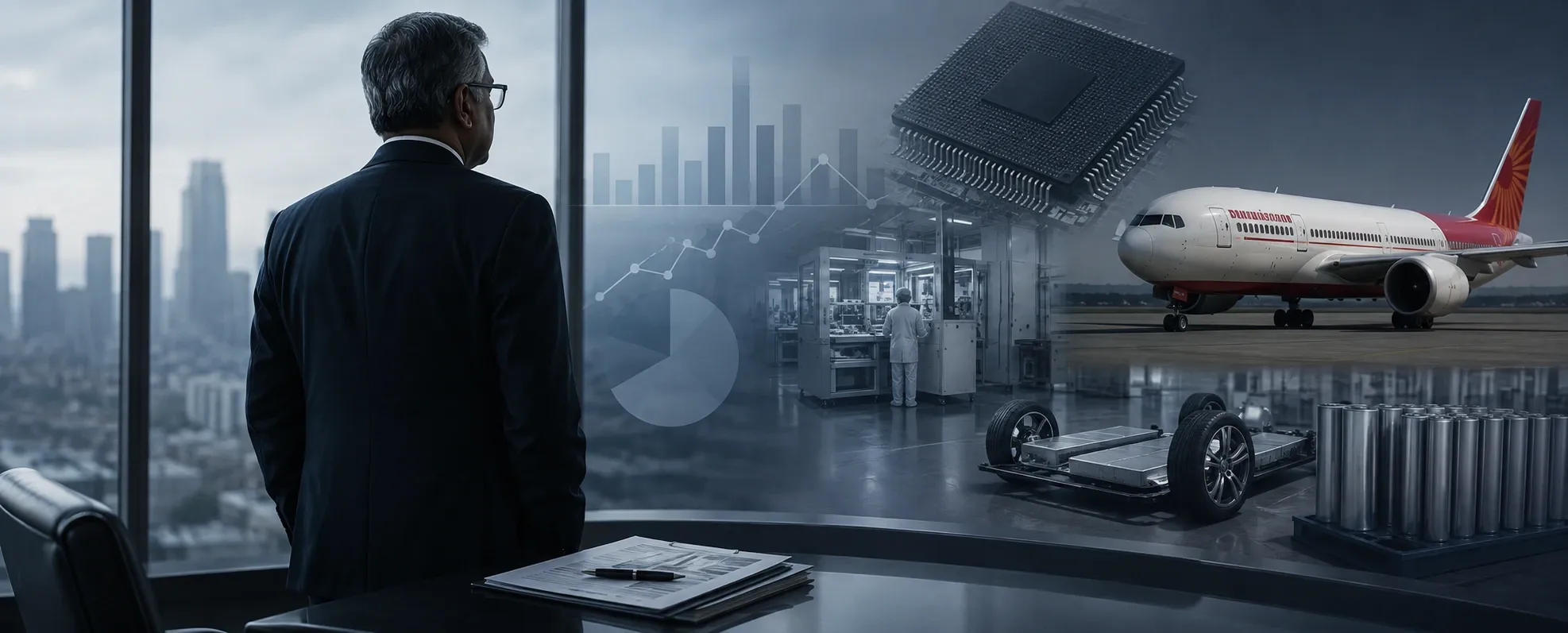
India's largest conglomerate is dealing with a moment few saw coming. N. Chandrasekaran, the first outsider in generations to lead Tata Sons, has announced he will not seek reappointment when his term ends in February 2027. The decision puts the group's $120 billion, five-year investment programme squarely in the spotlight. Over nearly a decade at the helm, Chandrasekaran pushed Tata into an expansion-heavy phase, backing long-horizon bets across semiconductors, batteries, aviation, electronics and AI infrastructure. His exit now brings a different priority to the forefront, one focused on capital discipline and how quickly those bets need to start paying off.
Expansion Meets Caution
At the centre of this shift is Noel Tata, chairman of Tata Trusts, which controls roughly two-thirds of Tata Sons through a group of 13 charities. Reports suggest Noel had been pushing back against the pace of spending for months, favouring smaller commitments with faster returns over Chandrasekaran's longer-term approach. That difference in philosophy is said to have driven the standoff that ultimately led to the resignation. Even before the announcement, Tata Sons' board had begun reassessing several capital-heavy projects, including the semiconductor fab, Air India and Tata Digital.
The chip venture continues to face technology delays, even as its Assam packaging unit stays on schedule for next year. Battery maker Agratas has pulled back from racing toward large-scale production, choosing instead to prove its technology first. Air India remains a costly turnaround story, and Tata Digital was reportedly asked for a clearer roadmap before receiving close to $1 billion in additional funding, a request that has since triggered internal restructuring.
Returns Now Drive Strategy
The broader message emerging from Tata Sons is one of shifting from ambition to accountability. Analysts note that the group has taken on far more technology risk than rivals like Reliance and Adani, who have focused on lower-risk infrastructure plays. Tata's chip fab in Dholera, in particular, carries weight well beyond the company itself, tying directly into India's push to build domestic semiconductor capacity and reduce reliance on China. A more cautious capital cycle could sharpen financial discipline across the group, though too much caution risks slowing India's entry into industries it is trying hard to build from scratch. Adding to the pressure, TCS, long considered Tata's financial anchor, is navigating softer enterprise spending and disruption from AI, even as it adds new leadership layers and explores acquisitions of its own.
Ambition Meets Accountability
Chandrasekaran leaves behind a Tata Group reshaped for a more industrial, technology-driven future, though several of its biggest bets remain unfinished business. His successor inherits more than a portfolio spanning cars, hotels, airlines and chips. They inherit a question about how much patience, and how many more billions, Tata is willing to commit before demanding proof of returns. The real test ahead is not how much the group can spend, but where its next dollar can do the most lasting good.
When leadership changes, strategy can change with it. InsightSphere follows the shifts behind the headlines.